Hosts serving a small side dish
Match the tin to the number of diners and the place beans will have alongside the rest of lunch. A 220g tin is worth considering for one person; check the stated servings before opening a larger tin.


For a shared Easter lunch side, start with a standard 400–415g tin and check its stated servings against the number of diners. A smaller tin makes more sense for one person or a modest addition; choose a reduced-salt or no-added-sugar recipe when that distinction matters to your household, comparing nutrition panels per 100g and checking the ingredients and allergens on the current pack. Multipacks are more practical when you have other meals planned.
Match the tin to the number of diners and the place beans will have alongside the rest of lunch. A 220g tin is worth considering for one person; check the stated servings before opening a larger tin.
Compare salt and sugars per 100g across the recipes you are considering. For no-added-sugar varieties, check the ingredient list if sweeteners or a different sauce recipe affect your choice.
Check the exact product’s current ingredients and allergen information. A vegan label does not, by itself, establish suitability for someone with an allergy.
Decide how many portions you need, then compare the recipes and pack instructions that matter for your table.
| Priority | What to check | Your needs |
|---|---|---|
| Salt and sugars | Compare both figures per 100g and check the stated serving size. Read the ingredients of reduced-salt or no-added-sugar recipes for sweeteners. | I’m choosing a recipe to sit alongside the rest of lunch, so I want to compare the actual nutrition panels rather than rely on the wording on the front of the tin. |
| Tin and pack size | Check net weight, stated servings and the number of tins. Compare unit prices at the point of purchase only if you expect to use the pack. | For one diner or a small side, I may prefer a smaller tin; for several planned meals, a multipack could be useful. |
| Guest suitability | Read the current ingredients, dietary statements and allergen information for the exact variant. Do not treat vegan wording as an allergy declaration. | If a guest has an allergy or a dietary requirement, I need to check the pack I will actually serve. |
| Preparation and leftovers | Follow the tin’s heating directions and its instructions for storing opened contents. Check the product-specific period for using refrigerated leftovers. | I want to prepare the side alongside other dishes without opening more beans than we are likely to eat. |
Standard and reduced-salt or no-added-sugar varieties can have different nutrition figures and ingredients, even when the tins are similar in size.
Compare salt and sugars per 100g, then check the portion you plan to serve and the other dishes on the table.
Extra unopened tins are useful only if you expect to use them; an opened tin also has product-specific storage instructions.
Count the likely servings and later meals before choosing a pack. If beans are only a small addition, compare a single smaller tin.
Marks & Spencer labels its Only 7 Ingredients Baked Beans as unsuitable for people with milk or egg allergy, despite describing the product as vegan.
Read the current pack’s ingredients and allergen information for every product you intend to serve to a guest with an allergy.
Tin sizes and pack directions differ, which matters when beans are being prepared alongside several dishes.
Use the instructions on the exact product, including any directions about the container, stirring and reheating.
These examples show why tin size, recipe and pack instructions are more useful checks than a brand name alone.
The referenced range includes standard 415g Beanz and a No Added Sugar multipack.
The referenced own-label baked beans come in a 220g tin, a size to consider for a small portion.
The referenced 4 x 400g own-label pack is a format to consider when beans are planned for more than one meal.
The referenced range includes a standard 410g tin and a reduced-salt, no-added-sugar 4 x 410g variant.
The referenced Only 7 Ingredients Baked Beans come in a 220g tin.
The referenced Essential Baked Beans in Tomato Sauce come in a 420g tin.
These Joybuy options cover standard multipacks, a reduced-sugar-and-salt multipack and a smaller tin. Choose by the portions and later meals you have planned, then check the current pack for nutrition, ingredients and allergen information.
 No image available
A four-tin option when the reduced-sugar-and-salt recipe suits your plans for lunch and later meals. Compare its current nutrition panel and ingredients with the standard recipe before choosing.
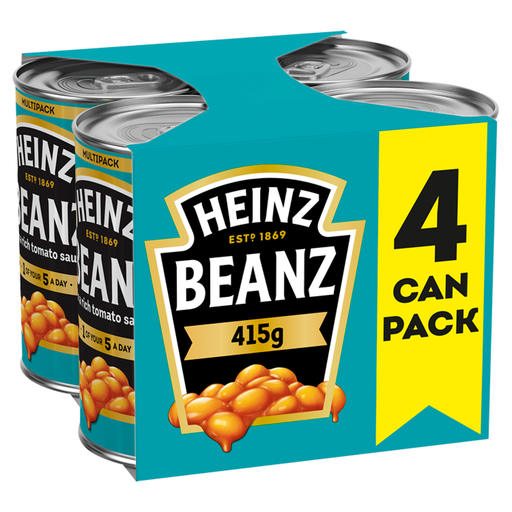 No image available
Four standard-size tins to consider when beans are planned for Easter lunch and other meals. Check the serving guidance and current label if you are comparing recipes or serving guests with dietary requirements.
 No image available
The 220g tin is a smaller-format option when beans are for one diner or a modest side. Check its stated serving, ingredients and allergen information before serving.
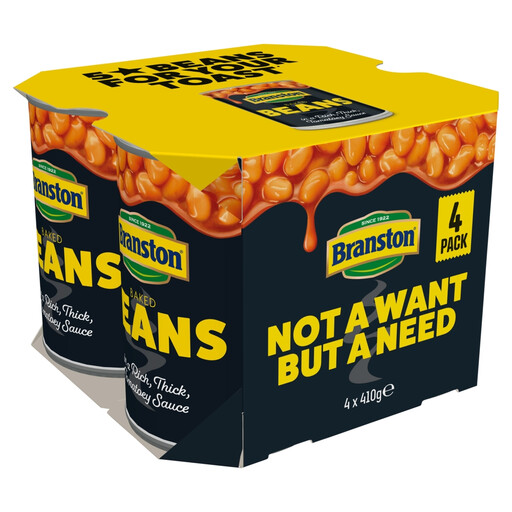 No image available
Four 410g tins may suit a shared side and further planned meals. Compare the current nutrition panel with other standard recipes, and follow the pack’s directions for opened contents.
 No image available
The six-tin format is worth considering when several meals are planned, rather than lunch alone. Check the current pack for serving guidance, ingredients and storage directions.
Start with the stated servings on the tin and decide whether beans are a shared side or a small addition for one person. The referenced Branston 410g tin is described by Waitrose & Partners as two servings; smaller 220g formats give you another portion-size option.
Not necessarily: check the exact pack’s ingredients and allergen information. Marks & Spencer marks its vegan Only 7 Ingredients Baked Beans as unsuitable for people with milk or egg allergy, so vegan wording cannot replace an allergy check.
Compare the salt figure per 100g on the current tins, then consider the amount you plan to serve. Also check sugars and ingredients if you are choosing a no-added-sugar recipe: a change to the salt figure does not describe every difference between the recipes.
Follow the instructions on the tin you opened. For example, Sainsbury's says to transfer the contents of its referenced 4 x 400g product to a non-metallic container, refrigerate them and use them within two days; Asda gives a four-day period for its referenced standard 410g product.