First-time vegan grocery shoppers
If you want a drink for cereal or coffee, distinguish a dairy-alternative coconut drink from canned coconut milk for cooking and from coconut water. Check the vegan statement on the carton you choose.


For an everyday dairy alternative, start with a coconut drink whose current pack says it is suitable for vegans, rather than assuming canned coconut milk or coconut water will serve the same purpose. Then compare sugars, added nutrients and ingredients according to how you will use it. A vegan suitability claim does not establish third-party certification or replace allergen information.
If you want a drink for cereal or coffee, distinguish a dairy-alternative coconut drink from canned coconut milk for cooking and from coconut water. Check the vegan statement on the carton you choose.
Look at the sugars value per 100ml as well as wording such as ‘no sugar’ or ‘no added sugar’. Coconut drinks with different names and uses need not have the same nutrition values.
Vegan wording does not replace an ingredient list or precautionary allergen statement. If a drink is intended as a young child’s main milk alternative, check that product’s age guidance too.
Choose the product type for its intended use, then read the exact carton for vegan suitability, nutrition, allergens and storage instructions.
| Priority | What to check | Your needs |
|---|---|---|
| Product type | For pouring over cereal or adding to drinks, look for a coconut drink sold as a dairy alternative. Check a recipe before choosing canned coconut milk instead. | I want a carton for everyday pouring, not coconut water or a cooking ingredient. |
| Vegan status | Read the current pack’s suitability statement. If independent certification matters, look for the actual third-party mark; a ‘suitable for vegans’ statement alone does not establish Vegan Trademark certification. | I need a clearly labelled vegan option, and I may want to check for a certification mark separately. |
| Sugars | Compare claims such as ‘no sugar’ and ‘no added sugar’ with the sugars value per 100ml. The Sainsbury’s Coconut Barista Drink listing, for example, gives 3.3g sugars per 100ml. | For a drink I will use regularly, I want the carton’s sugar information to match my preference. |
| Added nutrients | Check the exact product for added calcium, vitamin D, vitamin B12 and, if relevant, iodine. The NHS identifies these among nutrients to plan for in a vegan diet; fortification differs between drinks. | If I am choosing a fortified drink, I want to know which nutrients this particular carton lists. |
| Allergens | Read both the ingredients and any ‘may contain’ statement. The Sainsbury’s coconut-and-soya barista drink contains soya; Waitrose’s Plenish coconut-drink listing says it may contain nuts and soya. | If I need to avoid an allergen, a vegan claim is not enough. In a December 2023 Food Standards Agency and Ipsos UK survey of adults aged 16–75 in England, Wales and Northern Ireland, 53% of respondents with food hypersensitivity to animal-origin allergens, and 50% who regularly shopped for someone with such a hypersensitivity, already knew vegan products might present a cross-contact risk. Those figures measure awareness, not coconut-drink purchases. |
| Storage | Check whether the carton is chilled or long-life before opening, then follow its refrigeration and use-by instructions after opening. Consider carton size alongside how quickly you will use it. | I have room to store the cartons, but I only want to open as much as I can use within the stated period. |
| Children’s use | Read product-specific age guidance. Sainsbury’s states that its Coconut Barista Drink is not suitable as a main milk-drink alternative for children under 3. | If the drink is for a young child, I need to check its stated use rather than treating adult dairy alternatives as interchangeable. |
A can of coconut milk for cooking, coconut water and a pourable coconut drink serve different uses.
For cereal or coffee, choose a product sold as a coconut drink or dairy alternative. Buy canned coconut milk when your recipe calls for it.
‘Suitable for vegans’ is not proof that a carton carries the Vegan Trademark, and vegan labelling does not replace allergen information.
Check the current pack for a certification mark if you require one. If an allergy is involved, read the ingredients and precautionary allergen statement separately.
Fortification and sugars vary between the reviewed products: the Tesco listing for Alpro Coconut No Sugar names calcium and vitamins B12 and D, while Sainsbury’s Coconut Barista Drink also lists iodine and contains sugar.
Compare the nutrition panel and added nutrients on the exact carton rather than choosing by coconut flavour or vegan wording alone.
A long-life carton still has an after-opening instruction. Buying several cartons for a first shop does not remove the need to plan when each will be opened.
Check the refrigeration and use-within directions on the pack, and choose a quantity that fits your likely use.
Tesco lists Alpro Coconut No Sugar Long Life Drink as suitable for vegans, with added calcium and vitamins B12 and D.
Koko’s Unsweetened No Sugar coconut drink publishes sugars and added-nutrient values, including calcium and vitamins D2 and B12.
Tesco’s coconut-drinks category includes branded and own-label dairy-alternative drinks.
Sainsbury’s Coconut Barista Drink is labelled suitable for vegans and lists calcium, iodine and vitamins D and B12.
Waitrose lists Plenish Organic Coconut Unsweetened as vegan-friendly, with four ingredients and no added sugar.
These are coconut barista drinks for shoppers considering coffee use. Check each carton’s vegan statement, ingredients and nutrition information before including it in a first vegan food shop.
 No image available
An eight-carton barista option if you plan to use coconut drink in coffee and have space for the pack. It contains soya; check the current carton’s ingredients, sugars and vegan statement against your requirements.
 No image available
A single 1L carton to consider for coffee use. Check the current carton for a vegan suitability statement and fortification details; its listed ingredients include oats, which matter if you avoid them.
 No image available
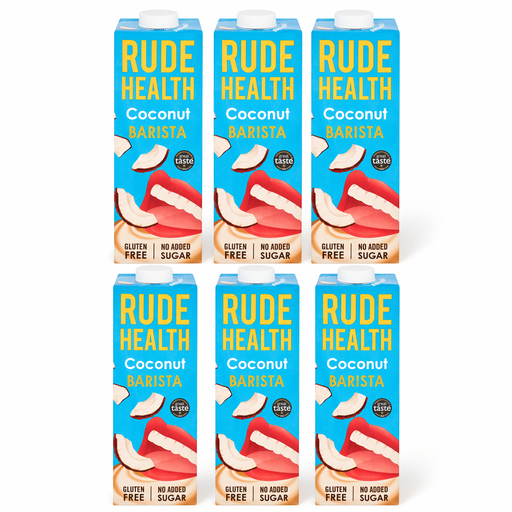
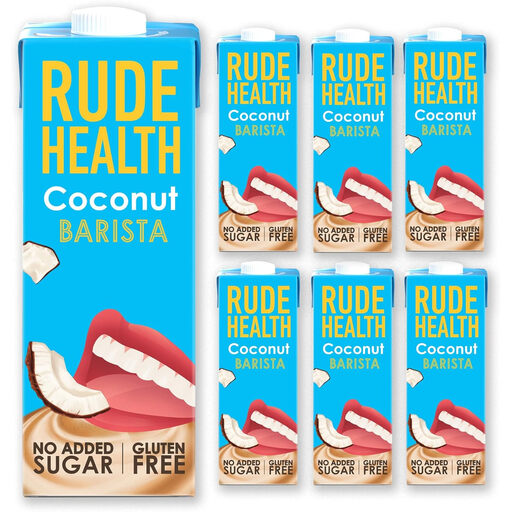
A six-carton option if your household expects to use coconut barista drink regularly. Its listed ingredients include oats; check each carton’s vegan statement, nutrition panel and after-opening instructions before choosing the larger pack.
No. For cereal, tea or coffee, look for a coconut drink sold as a dairy alternative. Check the recipe before substituting it for canned coconut milk intended for cooking; coconut water is a separate product too.
No. A suitability statement and third-party certification are different claims. The Vegan Society sets standards for its Vegan Trademark; look for the mark on the current pack if that particular certification matters to you.
Do not use the vegan label as an allergen check. The Food Standards Agency warns that vegan products may present a cross-contamination risk for people with food hypersensitivities. Read the current pack’s ingredients and precautionary allergen information for the allergens you need to avoid.
Compare the nutrients actually listed on each carton, including calcium, vitamin D, vitamin B12 and iodine if these matter to your food choices. The NHS identifies these among nutrients to plan for in a vegan diet; their presence varies by product.
Follow that carton’s refrigeration and use-within instructions. The Sainsbury’s Coconut Barista Drink listing says to use it within 3 days of opening, while the Waitrose listing for Plenish Organic Coconut Unsweetened says within 4 days. Long-life storage before opening does not replace those instructions.