Vegans looking for a lower-fat milk alternative
Choose an animal-free drink, not lactose-free dairy milk. Compare the specific product’s fat, saturates and sugars, alongside any nutrients added to it.


Choose a plant-based drink labelled suitable for vegans if avoiding animal-derived milk is essential: lactose-free dairy milk is still dairy. For a low-fat choice, compare fat and saturates on the nutrition labels rather than relying on words such as ‘vegan’, ‘oat’ or ‘lactose-free’. If milk allergy is a concern, check ingredients and precautionary allergen statements as well.
Choose an animal-free drink, not lactose-free dairy milk. Compare the specific product’s fat, saturates and sugars, alongside any nutrients added to it.
Lactose-free dairy milk may be an option if dairy is otherwise suitable. A skimmed version offers a different route from a plant drink, but it does not meet a vegan requirement.
Neither ‘lactose-free’ nor ‘vegan’ settles the allergy question. Check the individual product’s ingredients and precautionary allergen statement.
Decide whether you need to avoid dairy altogether, then compare nutrition labels and allergen information on the drinks that meet that requirement.
| Priority | What to check | Your needs |
|---|---|---|
| Vegan suitability | Look for explicit vegan suitability and read the ingredients. Lactose-free dairy remains milk-derived, even though it is intended for people avoiding lactose. | I need a drink without animal-derived milk, not simply one without lactose. |
| Fat and saturates | Compare both figures per 100 ml where the labels use that basis. The NHS advises checking nutrition labels for fat, including saturated fat; the drink category alone does not establish its values. | For a low-fat choice, I want to compare the cartons I would actually buy rather than assume every plant drink has the same profile. |
| Other nutrients | Check sugars, protein and listed fortification, including calcium where relevant. Read the figures on the particular variant rather than transferring them from another oat or soya drink. | If I am replacing dairy milk regularly, I want to know what the alternative contributes besides its fat content. |
| Allergens | Read the ingredients and any precautionary allergen statement on the pack. The Food Standards Agency advises checking precautionary statements on vegan food and drink when allergy to animal-origin allergens matters. | When shopping for someone with a milk allergy, I cannot use vegan wording alone as an allergy-safety guarantee. |
Lactose-free dairy milk is still animal-derived. Arla LactoFREE Skimmed, for example, declares milk as an allergen, so it is not a vegan alternative.
If you need a vegan drink, look for explicit vegan suitability and check the ingredients and allergen information.
Fat, saturates, sugars, protein and added nutrients differ by product and variant. A ‘No Sugars’ name does not tell you the whole nutrition profile.
Compare the values that matter to you using the same per-100 ml basis where possible.
A vegan product can still carry precautionary allergen information relevant to someone with a milk allergy.
Check both the ingredients and any precautionary statement on the exact pack. The Food Standards Agency specifically advises checking such statements on vegan food and drink.
These ranges illustrate the distinction between lactose-free dairy and plant-based drinks; suitability and nutrition depend on the specific product.
A lactose-free dairy range that includes skimmed, semi-skimmed and whole milk drinks.
A plant-based range that includes Oat No Sugars for shoppers seeking an alternative to dairy milk.
A plant-based oat-drink range with a No Sugars option.
These oat and soya drinks are options for shoppers considering a vegan alternative to lactose-free dairy milk. Compare the exact pack’s nutrition and allergen information before choosing.
 No image available
An oat-drink option when you need a plant-based alternative. Check the pack’s fat and saturates per 100 ml, and read its oat and precautionary allergen information if relevant.
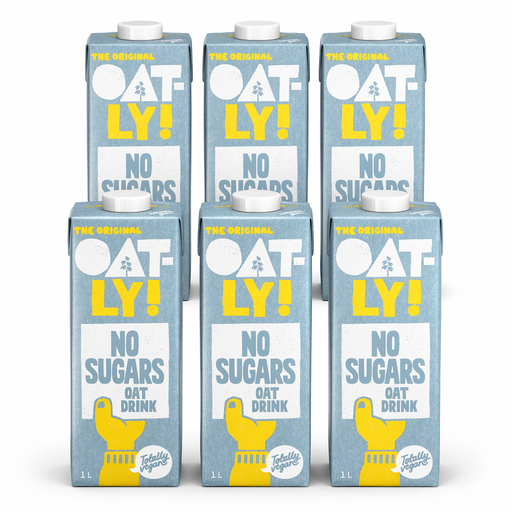 No image available
A plant-based oat-drink option for avoiding dairy. Compare the nutrition panel on this pack rather than applying figures from a different Oatly No Sugars variant; check oat allergen information where relevant.
 No image available
A soya alternative to the oat drinks in this selection. If protein is part of your comparison, check its per-100 ml value alongside fat and saturates; read the soya allergen information.
 No image available
An Original oat-drink variant for the plant-based route. Compare its sugars as well as fat and saturates with a No Sugars variant; ‘no added sugars’ and ‘no sugars’ do not mean the same thing. Check oat allergen information.
 No image available
A plant-based oat variant described for coffee and other hot drinks. Compare its nutrition panel with the everyday oat drinks if fat and sugars matter to your choice, and check oat allergen information.
No. The Vegan Society defines vegan dietary practice as excluding animal-derived products, and lactose-free dairy milk remains milk-derived. Look for a plant-based drink labelled suitable for vegans if that is your requirement.
Compare fat and saturates per 100 ml on drinks labelled suitable for vegans. The NHS advises checking nutrition labels for fat, including saturated fat; also check sugars and any listed fortification if those affect what you want from a milk alternative.
Not on its own. The Food Standards Agency advises checking precautionary allergen statements on vegan food and drink. Read the ingredients and any precautionary milk statement on the exact pack.
Lactose-free dairy products can be suitable for people with lactose intolerance, according to the NHS, if dairy is otherwise appropriate for them. They are not vegan and should not be confused with products for people who need to avoid milk because of allergy.