Shoppers seeking vegan certification
If a general vegan claim is not enough, check the exact carton for the Vegan Trademark and confirm its registration through The Vegan Society. The Society says its trademark is not an allergen certification.


Start with the exact carton: GOV.UK says a vegan label concerns intentionally used ingredients, not the absence of allergen cross-contact. If third-party certification matters to you, check for the Vegan Trademark and confirm the product through The Vegan Society’s Trademark search; then compare the carton’s nutrients and whether you mainly use it for cereal, porridge or coffee.
The most useful label checks depend on whether certification, everyday breakfast use or coffee preparation drives your choice.
If a general vegan claim is not enough, check the exact carton for the Vegan Trademark and confirm its registration through The Vegan Society. The Society says its trademark is not an allergen certification.
If oat drink is part of most breakfasts, compare nutrients on the current carton. The UK SACN and COT assessment says the nutrient content of plant-based drinks varies considerably.
If the carton also goes into a latte or cappuccino, look at its stated hot-drink use and frothing purpose. Check vegan status and nutrients separately rather than assuming a barista label covers them.
Check vegan and allergen information on the exact carton first, then compare the details that matter for your usual breakfast.
| Priority | What to check | Your needs |
|---|---|---|
| Vegan assurance | Read the vegan claim on the exact carton. If you require third-party certification, check for the Vegan Trademark and confirm the product through The Vegan Society’s search. | I want to know whether a vegan claim meets my requirements or whether I need independently assessed certification. |
| Fortification | Compare the current ingredient and nutrition labels for calcium, iodine and listed vitamins. The UK SACN and COT assessment says fortification varies considerably between plant-based drinks. | Oat drink is a regular part of my breakfast, so I want to know which nutrients this particular carton lists. |
| Sugars | Read the sugars figure per 100 ml and the ingredients, as well as any no-sugars wording. Compare the exact varieties you are considering. | When choosing between cartons for a routine breakfast, I care about their stated sugar and sweetener content. |
| Everyday uses | Check whether the maker describes the drink for cereal, porridge, smoothies or hot drinks. Oatly describes its Oat Drink Semi for tea and coffee; Minor Figures describes Everyday Oat for cereal, tea and smoothies. | I would rather use one carton across several breakfast foods and drinks than choose solely for coffee. |
| Coffee preparation | Look for product-specific statements about steaming or frothing. Compare nutrients and vegan information separately: a barista name does not establish either. | My breakfast often includes a latte or cappuccino, so the drink’s stated coffee use matters to me. |
| Allergens and gluten | Read the allergen declaration and precautionary wording on the exact carton. GOV.UK says a vegan label does not guarantee the absence of animal-origin allergen cross-contact. | If I need to avoid milk, wheat or gluten, I cannot use vegan wording alone to decide whether a product is suitable. |
GOV.UK says vegan labelling does not guarantee the absence of animal-origin ingredients through cross-contamination. The Vegan Society also says its trademark is not an allergen certification.
For an allergy, check the exact product’s allergen declaration and precautionary wording rather than relying on its vegan claim or trademark.
The UK SACN and COT assessment says plant-based drinks vary considerably in nutrient content and fortification.
If particular nutrients matter to your choice, compare the current labels of the exact cartons you might buy.
Minor Figures lists calcium, iodine and vitamins for Everyday Oat. Its Barista Oat page describes a different coffee-focused product, so Everyday Oat’s nutrient list should not be transferred to it.
Check the variant name, ingredients and nutrition panel when moving between everyday and barista oat drinks.
These examples describe particular oat drinks, not every product made by each brand. Check the current carton before applying a detail to a different variant.
Oatly positions Oat Drink Semi as an everyday drink for hot drinks, cooking and baking.
Alpro Oat No Sugars Long Life Drink is a named option for shoppers comparing sugar and sweetener wording.
Minor Figures describes Everyday Oat for cereal and other drinks, while positioning Barista Oat for coffee.
Tesco lists its own-label Oat Drink as suitable for vegans.
M&S lists separate Semi Oat Drink and coffee-focused Barista Oat Drink products.
These cartons cover no-sugars-labelled, everyday and coffee-focused oat-drink choices. If certification or an allergen restriction determines your purchase, check the exact pack before choosing.
 No image available
A no-sugars-labelled choice for a routine breakfast. Compare the exact carton’s nutrition panel, vegan wording and allergen declaration if those determine your choice.
 No image available
An everyday oat-drink option to compare for cereal and hot drinks. Check the exact carton for its vegan claim, listed nutrients and allergens, particularly if iodine or gluten-related suitability matters to you.
 No image available
For a breakfast centred on coffee, this is the barista-labelled Alpro option. Check the exact carton’s vegan wording, allergens and nutrient panel separately from its coffee use.
 No image available
A barista-labelled oat drink to consider when coffee is part of breakfast. Confirm vegan suitability on the exact carton, and check its allergens and listed nutrients rather than inferring them from the barista name.
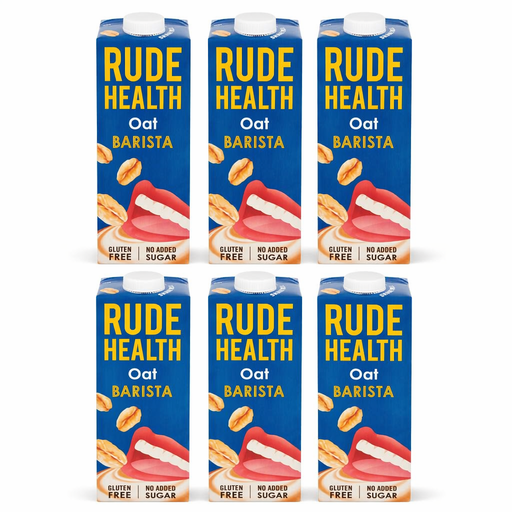 No image available
A 1 L barista-labelled option for comparing coffee-focused cartons. Read the exact pack for vegan and allergen information and for any nutrients relevant to your regular breakfast.
No. GOV.UK explains a vegan label in terms of ingredients intentionally used; it does not itself show third-party certification. If certification is required, look for the Vegan Trademark on the exact carton and confirm the product through The Vegan Society’s Trademark search.
Do not assume so. GOV.UK says vegan labelling does not guarantee the absence of animal-origin allergen cross-contact. Read the exact product’s allergen declaration and precautionary wording rather than using its vegan claim as an allergy check.
Compare the exact cartons’ nutrition and ingredient labels for the nutrients that matter to your choice. The UK SACN and COT assessment says plant-based drinks vary considerably in nutrient content and fortification, so one oat drink’s details cannot be assumed for another.
Check the named product’s intended uses. Oatly describes Oat Drink Semi for hot drinks as well as general use, while Minor Figures and M&S describe separate barista products for coffee preparation. Compare vegan wording, allergens and nutrients whichever route you choose.
Follow the exact carton’s storage instructions. Tesco’s listing for its Oat Drink says to refrigerate after opening and consume within five days; do not apply that product-specific timing to every oat drink.