Who is this for?
The relevant label checks depend on how the drink will be used and whether the person has dietary restrictions or concerns about their food intake.
Older vegans using an oat drink every day
For someone adding it to cereal, porridge, tea or coffee, the NHS recommends fortified dairy alternatives as part of a varied vegan diet. Check the particular carton for calcium, vitamin D, vitamin B12 and iodine rather than assuming every oat drink contains them.
Family members shopping for an older person
If calcium and vitamin D are priorities, compare the nutrition panels of the drinks the person will use. An oat drink is one food choice, not a substitute for individual vitamin D advice, particularly for someone who spends little time outdoors.
People managing coeliac disease, allergies or a small appetite
Check the current gluten and allergen statements for each carton: vegan labelling alone does not establish suitability. If the person is eating very little or losing weight unintentionally, seek advice from their GP rather than trying to address the concern through a drink choice alone.
What should you check?
Start with the nutrients the drink needs to contribute, then check protein and any dietary restrictions. Compare like-for-like amounts on the current nutrition panels; a vegan label does not tell you how a drink is fortified.
| Priority |
What to check |
Your needs |
| Fortification |
Look for calcium, vitamin D, vitamin B12 and iodine on the current carton. Check which nutrients are listed per 100ml, rather than treating all oat drinks alike. UK government guidance notes that plant-based drinks vary considerably in their fortification. |
I use oat drink regularly and want it to contribute these nutrients alongside the rest of a varied vegan diet. |
| Protein |
Compare protein per 100ml and consider the other foods eaten with the drink. Royal United Hospitals Bath NHS Foundation Trust guidance for people over 65 emphasises choosing foods with slightly more protein, calcium, folate and vitamin B12. |
If meals are small, I do not want to mistake a drink in tea or cereal for the main protein-containing part of a meal. |
| Vitamin D |
Check whether vitamin D is listed as well as calcium. The NHS advises adults to consider a daily vitamin D supplement during autumn and winter; a fortified drink does not replace that advice. |
The person I shop for spends little time outdoors, so I need to consider their wider vitamin D advice as well as the carton. |
| Gluten and allergens |
Read the current allergen statement and any gluten-free designation. Minor Figures labels Everyday Oat gluten free, while Marks & Spencer states that its checked Whole and Semi Oat Drinks are not suitable for coeliacs or people with a wheat allergy. |
I need a drink that meets the person’s specific dietary restrictions, not merely one labelled vegan. |
| Vegan certification |
Distinguish a vegan suitability statement from a third-party certification mark. If certification is required, check the mark on the particular carton. |
I want to know whether the product meets my certification requirement before choosing it. |
Brand and product-line references
Fortification and allergen statements apply to individual drinks, not every product from the same brand. Use these examples to identify what to compare on the carton.
Oatly
Oatly lists its Oat Drink as containing added vitamin D, riboflavin, vitamin B12, calcium and iodine.
- The named Oat Drink has the nutrient pattern relevant to this vegan dairy-alternative choice.
- Oatly’s professional guidance says its fortified drinks contain less protein than semi-skimmed cow’s milk. Check the particular product rather than relying on the brand name.
Alpro
Alpro labels Oat Original as vegan and lists calcium, iodine and vitamins B2, B12 and D2 for that product.
- Alpro’s Oat Original panel lists 120mg calcium and 22.5 micrograms iodine per 100ml.
- The same panel lists 0.8g protein per 100ml. Confirm the current pack if vegan labelling or a particular formulation matters.
Minor Figures
Minor Figures labels Everyday Oat gluten free and lists added calcium, vitamin D, vitamin B12 and iodine.
- The product’s gluten-free statement makes it a relevant carton to examine when that designation is required.
- Check its current allergen and nutrition information against the individual’s needs; a gluten-free label does not answer the wider protein question.
M&S
The M&S range includes fortified Plant Kitchen oat drinks and a three-ingredient oat drink that Marks & Spencer explicitly describes as unfortified.
- Its Whole, Semi and Barista oat drinks list added calcium, iodine, vitamin B12 and vitamin D.
- Marks & Spencer states that the checked Whole and Semi drinks are not suitable for coeliacs or people with a wheat allergy. Compare individual cartons within the range.
Sainsbury’s
Sainsbury’s lists its Oat Drink 1L as fortified with calcium, iodine, vitamin D and vitamin B12.
- Its product panel lists 120mg calcium and 22.5 micrograms iodine per 100ml.
- The same panel lists 0.7g protein per 100ml. Sainsbury’s notes that ingredients may change, making the physical pack important to check.
Joybuy oat drink options
These oat drink options are relevant to checking fortification for everyday use. Their pack formats and label details differ; assess each carton against the older person’s diet, including any vegan-certification or allergen requirement.
 No image available
Alpro Oat No Sugars Long Life Drink 8 x 1L
For a no-sugars oat drink in an 8 x 1L pack, compare the current carton’s calcium, vitamin D, vitamin B12, iodine and protein declarations. Check its vegan and allergen statements, and look for a certification mark if one is required.
View on Joybuy
 No image available
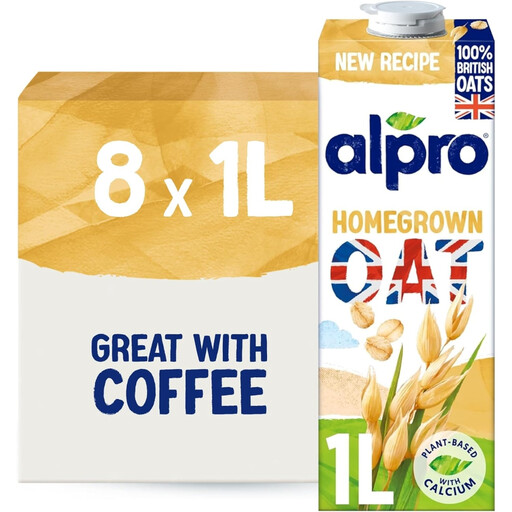
Alpro Oat Original Long Life Drink 8 x 1L
For everyday cereal or drinks, this 8 x 1L pack is described by Joybuy as suitable for vegans and fortified with calcium, iodine and vitamins B2, B12 and D2. Joybuy lists 0.8g protein per 100ml; plan protein-containing foods separately and check the carton if third-party vegan certification is required.
View on Joybuy
 No image available
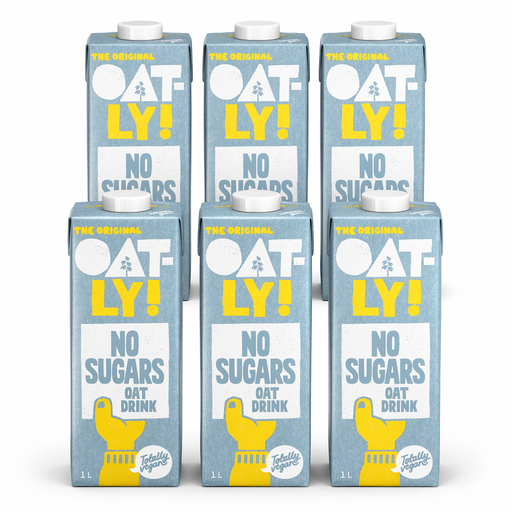
Oatly No Sugars Oat Drink 6 x 1L
For a six-carton no-sugars oat drink pack, check the current carton’s fortification and protein information before treating it as part of a regular dairy-alternative choice. Confirm vegan suitability and any required certification on the particular pack.
View on Joybuy
Questions about choosing oat drinks
What should I look for on an oat drink label for an older vegan?
Check the current carton for calcium, vitamin D, vitamin B12 and iodine, then read its protein and allergen information. The NHS includes fortified dairy alternatives in its vegan-diet guidance, while UK government guidance notes that plant-based drinks differ considerably in nutrient content.
Can an oat drink meet an older person’s protein needs on its own?
Do not rely on the drink alone for protein. Royal United Hospitals Bath NHS Foundation Trust guidance emphasises protein-containing foods for people over 65; compare protein per 100ml on the carton and consider what the person eats alongside it.
Is an organic oat drink necessarily a fortified dairy alternative?
No. The UK Office for Health Improvement & Disparities states that UK plant-based drinks labelled organic cannot be fortified with nutrients. If calcium, vitamin D, vitamin B12 or iodine from the drink is important to the choice, check the label rather than assuming those nutrients are present.
Is every vegan oat drink suitable for someone with coeliac disease?
No; suitability depends on the product. Minor Figures labels Everyday Oat gluten free, whereas Marks & Spencer states that its checked Whole and Semi Oat Drinks are not suitable for coeliacs. Read the current carton for the specific drink being purchased.
What if the older person is eating very little or losing weight?
Speak to their GP rather than relying on a different oat drink to address the concern. Northern Ireland’s nidirect guidance advises people concerned about weight loss to talk to their GP; individual advice can take account of the person’s wider food intake.


