Vegan shoppers comparing protein per bar
The word “protein” on the front of a wrapper does not tell you how much is in one bar. Compare the per-bar figure and check that the exact flavour is suitable for a vegan diet.


For these vegan examples, TREK states 9g plant protein per Protein Flapjack, Eat Natural lists 8g per 40g maple syrup, pecans and peanuts bar, and Portion Solutions lists 7g for the nākd. Peanut Butter Protein Bar. Compare those amounts alongside the exact flavour’s ingredients and allergen wording: Nature Valley’s Protein Peanut & Chocolate bar contains milk ingredients, while GOV.UK cautions that vegan labelling does not rule out allergen cross-contact.
The word “protein” on the front of a wrapper does not tell you how much is in one bar. Compare the per-bar figure and check that the exact flavour is suitable for a vegan diet.
Read both the ingredient list and any “may contain” statement. A vegan label does not establish that a bar is free from milk, peanut, tree-nut or soya cross-contact.
For a bar to take to work or on a journey, compare its protein with the bar size, fibre and energy shown on the nutrition panel, as well as its ingredients.
Establish whether the exact bar suits your vegan and allergen requirements before comparing protein amounts and the rest of its nutrition panel.
| Priority | What to check | Your needs |
|---|---|---|
| Vegan suitability | Check the exact flavour’s vegan statement and full ingredients. Nature Valley lists lactose and milk flavouring in its Protein Peanut & Chocolate bar, despite its soya protein ingredient. | I want the whole bar, not just its protein ingredient, to fit a vegan diet. |
| Protein per bar | Compare grams per individual bar and its weight, not just the product name. TREK states 9g for its Protein Flapjacks; Eat Natural lists 8g per 40g maple syrup, pecans and peanuts bar; Portion Solutions lists 7g for the nākd. Peanut Butter Protein Bar. | When I pack one bar, I want to know how much protein that portion provides. |
| Allergen information | Read declared allergens and precautionary wording on the current pack. GOV.UK notes that vegan labelling does not eliminate the chance of cross-contact with allergens of animal origin. | Peanuts, tree nuts, soya or milk may affect which exact recipe I can choose. |
| Whole-bar nutrition | Compare the stated serving size, energy and fibre per bar on the nutrition panel. Keep per-bar and per-100g figures distinct. | Protein matters to me, but I also want to understand the size and nutrition of the snack I am carrying. |
A plant-derived protein ingredient does not make the complete recipe vegan. Nature Valley’s Protein Peanut & Chocolate bar lists lactose and milk flavouring.
Check the vegan statement and ingredients for the exact flavour you plan to buy.
Bars promoted around protein can provide different amounts in one serving; the bar sizes can differ too.
Read the protein figure per bar, then compare the serving size and energy on the nutrition panel.
GOV.UK cautions that vegan labelling does not rule out cross-contact with allergens of animal origin. Nut- and soya-based recipes also need checking against individual allergy requirements.
Read both the ingredients and any “may contain” statement on the current pack.
An oat-flapjack route for shoppers comparing vegan bars by protein per serving.
Its maple syrup, pecans and peanuts protein bar is listed by Eat Natural as vegan.
A fruit-and-nut style to consider alongside oat flapjacks and nut-based protein bars.
Its Protein Peanut & Chocolate bar illustrates why protein branding and vegan suitability need separate checks.
Graze says the majority of its snacks are vegan; that statement is not a protein figure or vegan confirmation for every bar.
Alpen Protein Bars appeared on a Weetabix Food Company product list dated November 2021.
These options include TREK flapjacks and a nākd. Peanut Delight bar. Check each exact pack’s vegan statement, protein figure and allergen information before deciding.
 No image available
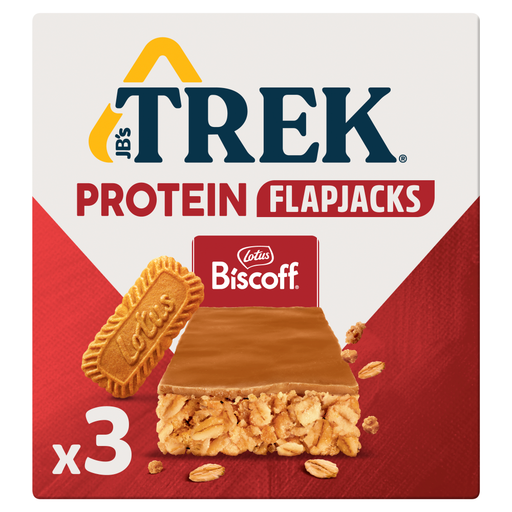
An oat-based flapjack option for comparing individual snack portions. The pack contains three 50g bars; check its current vegan statement, protein per bar and allergen wording, including soya and any precautionary warnings.
 No image available
A cocoa-and-oat flapjack multipack for shoppers who want to compare protein per individual bar. It contains sixteen 50g bars; read the exact pack for its vegan statement, protein figure, soya ingredients and precautionary allergen wording.
 No image available
A peanut bar option if you prefer a fruit-and-nut style snack. The title specifies four 35g bars; check the current pack for its vegan statement, protein per bar and peanut, tree-nut and soya allergen wording.
No. A plant-based protein ingredient does not establish the suitability of the whole recipe. Nature Valley lists soya protein in its Protein Peanut & Chocolate bar, but also lactose and milk flavouring; check the exact product’s ingredients and vegan statement.
No. GOV.UK cautions that vegan labelling does not eliminate the chance of cross-contact with allergens of animal origin. Check the current pack’s ingredients, highlighted allergens and any precautionary statement.
TREK states 9g plant protein per Protein Flapjack, Eat Natural lists 8g per 40g maple syrup, pecans and peanuts bar, and Portion Solutions lists 7g for the nākd. Peanut Butter Protein Bar. These are figures for the specified products, not every flavour or bar from those brands.
Yes. Eat Natural’s maple syrup, pecans and peanuts bar contains peanuts, pecans and soya; Portion Solutions lists peanuts and precautionary soya and nut wording for the nākd. Peanut Butter Protein Bar. Check the exact TREK flapjack recipe for soya and other allergen statements too, rather than relying on a general vegan description.