
24/7 Customer Support

Free returns

Same-day & Next-day Delivery

Quality Guaranteed

Unlock Your Welcome Offers: FREE Delivery | Up to 80% OFF | Free 30-day JoyPlus trial
Download the APP
Shopping for vegan and vegetarian food and drinks in the UK can be convenient, but attractive packaging does not always tell you what you need to know. A drink labelled “plant-based” may still contain allergens, while a meat-free product may be vegetarian rather than vegan. Large multipacks can also appear economical until you discover that the flavour does not suit your routine.
This guide focuses on the practical details that matter: ingredients, nutrition, storage, preparation and value for money.
Vegetarian products may contain egg or milk, even when they are marketed as meat-free. For example, Quorn Plain Fillets contain rehydrated free-range egg white, and Quorn Crispy Nuggets contain both egg and milk proteins. These products may suit vegetarians, but they are not suitable for a vegan diet.
Always check the full ingredients list rather than relying only on the front-of-pack description.
A no-sugar plant milk may still contain carbohydrates, fat, fibre, protein and added vitamins or minerals. Compare the per 100ml information, particularly if you use a large amount in coffee, cereal or smoothies.
For instance, the listed no-sugar oat drink provides 43 kcal and 0g sugars per 100ml, while the no-sugar soya drink provides 33 kcal, 0g sugars and 3.3g protein per 100ml. These are different products for different preferences.
UHT plant-based milk alternatives are useful for cupboard storage before opening, but most need refrigeration after opening and should be used within five days. Frozen vegan food requires freezer space and must be handled according to the pack instructions.
Check the pack size, storage temperature and opened-life guidance before choosing a multipack.
UK food labels identify regulated allergens in the ingredients list, commonly using bold type. Relevant examples in this category include:
If you are buying for a household with allergies, do not assume that “vegan”, “vegetarian” or “dairy-free” covers every dietary requirement. Check the latest packaging before consumption.
Use the nutrition panel to compare products on the same basis. For plant-based milk alternatives, look at:
A plant drink should not automatically be treated as nutritionally interchangeable with dairy milk. It is more useful to compare the exact nutrient profile with how you plan to use it.
Choose the format around your routine:
The best value depends on how consistently you will use the product, not simply on the number of units in the box.

Why This Fits Their Persona: A cupboard-friendly multipack for shoppers wanting a no-sugar soya milk alternative for cereal, smoothies and savoury cooking.
The pack states 0g sugars per 100ml and gives clear soya allergen information, helping buyers avoid assuming all plant milks have the same profile.
UHT format; 3.3g protein per 100ml; fortified with calcium and vitamins B2, B12 and D.
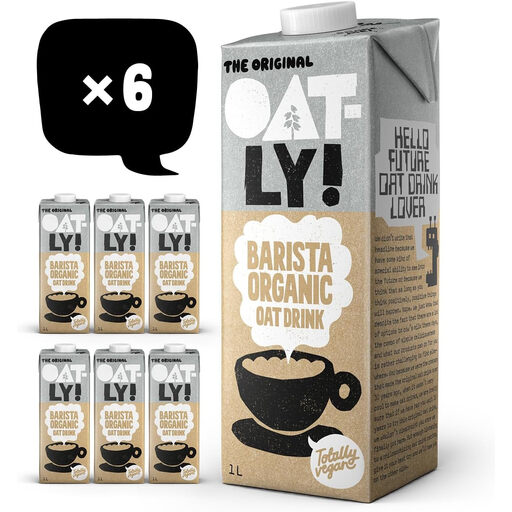
Why This Fits Their Persona: Suits coffee drinkers who want an organic barista oat drink for hot drinks, baking and cooking.
The ingredients are stated as an organic oat base, rapeseed oil, sea salt and potassium carbonate, making the formulation straightforward to check.
Organic ingredients; dairy-free and soya-free; designed to blend with coffee.

Why This Fits Their Persona: Designed for households making frequent flat whites, cappuccinos or lattes at home.
It is specifically described for heating and frothing, rather than relying on a general-purpose drink to produce the same coffee texture.
No added sugars; UHT storage before opening; suitable for hot or iced coffee.
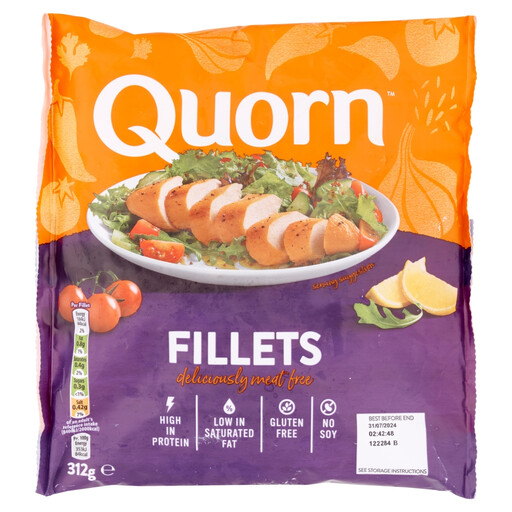
Why This Fits Their Persona: A frozen vegetarian fillet for batch cooking, wraps, stir-fries and weekday meals.
The listing clearly identifies egg as an allergen and states that the product must be cooked thoroughly, avoiding confusion with vegan or ready-to-eat options.
Keep-frozen format; 84 kcal per 100g as listed; suitable for varied recipes.
We have compiled a complete, real-time list of products that fully satisfy these strict selection criteria and UK safety regulations.
Choose a product labelled barista oat drink or barista-style plant drink if you want to heat and froth it. These products are formulated for coffee use. Standard oat, almond or soya drinks may still work in tea and coffee, but the texture and foaming performance can differ.
The listed UHT drinks should be refrigerated between 1°C and 7°C after opening and used within five days. Always follow the date and storage instructions printed on the carton, as packaging guidance takes priority.
Not necessarily. Check the ingredients and allergen statement. Some products contain egg, milk, soya or wheat. A clearly labelled vegetarian item can be suitable for vegetarians while remaining unsuitable for vegans or people with specific allergies.