
24/7 Customer Support

Free returns

Same-day & Next-day Delivery

Quality Guaranteed

Unlock Your Welcome Offers: FREE Delivery | Up to 80% OFF | Free 30-day JoyPlus trial
Download the APP
If you are serious about fitness, you know that recovery is just as important as the workout itself. While traditional foam rollers have been a staple in gyms for years, the vibrating foam roller has emerged as a powerful upgrade, promising to ease muscle soreness and improve flexibility more effectively.
However, the market is now flooded with options, and not all are created equal. Many fall short, leaving users with a noisy, ineffective and ultimately expensive gadget gathering dust. As a Joybuy Product Recommendation Officer, my role is to help you see past the marketing hype. This guide will break down the common traps to avoid and the key features to look for, ensuring you invest in a muscle recovery tool that genuinely delivers.
Before you add any electric foam roller to your basket, be aware of these common issues that can turn a promising recovery tool into a frustrating waste of money.
To ensure you are getting a high-performance tool, focus on these non-negotiable specifications.
The most crucial feature is multiple vibration frequencies. Look for a roller with at least three, and ideally five, distinct intensity levels. This allows you to customise the treatment for different muscle groups and sensitivity levels. For example, you can use a lower frequency for a gentle foam roller for back pain session (targeting the muscles, not the spine) and a higher frequency for a deep tissue massage roller effect on large muscles like the hamstrings.
Advanced models may also be a smart foam roller, offering Bluetooth connectivity to an app. These apps can provide guided routines and allow you to control the device from your phone, which is a practical benefit when you are in an awkward rolling position.
The feel and effectiveness of a roller are determined by its construction.
A practical electric foam roller should fit into your lifestyle. Check for a battery life of at least 120 minutes to avoid constant recharging. The inclusion of a standard USB-C charging port is a significant advantage over proprietary cables.
For portability, consider the roller's size and weight, especially if you plan to take it to the gym. Finally, look for mentions of noise-dampening technology. Brands like Therabody use terms like QuietRoll Technology, indicating that the device has been specifically engineered to minimise sound and vibration transfer to the surrounding environment.
Based on the criteria above, here are a few options from our catalogue matched to different user needs.
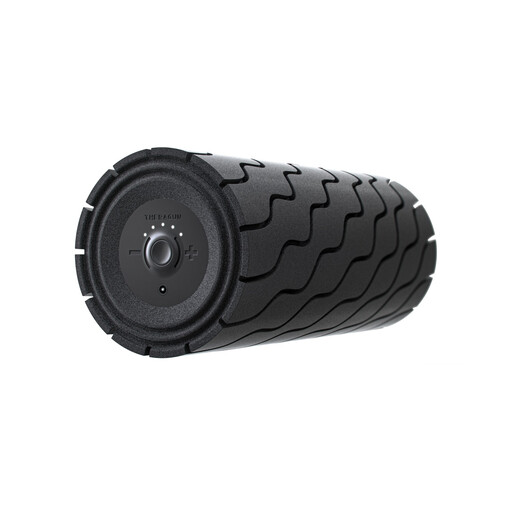
Why This Fits Their Persona: For the dedicated athlete or fitness enthusiast who prioritises performance and data-driven recovery. This user is willing to invest in a high-quality tool that integrates with their tech-focused lifestyle.
It directly counters the pitfalls with five customisable vibration settings, app control for guided routines, a 180-minute battery life and QuietRoll technology to minimise noise.
The seamless Bluetooth connectivity to the Therabody app provides structured, effective recovery sessions. The wave-textured, high-density foam enhances traction and massage intensity.
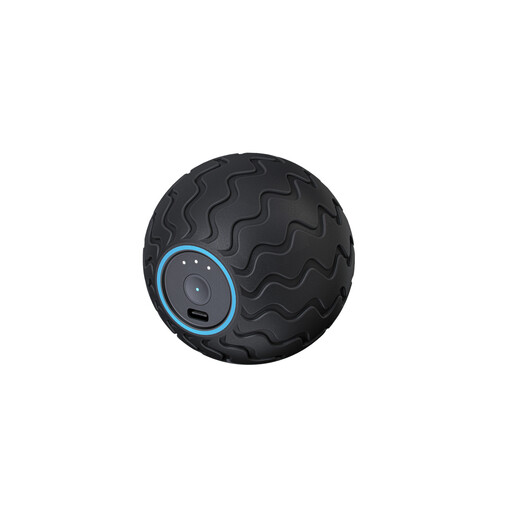
Why This Fits Their Persona: Ideal for the person who needs to target small, hard-to-reach muscle groups like the feet, shoulders or hip flexors. Its compact size makes it perfect for travellers or those with limited space.
Despite its small size, it offers three adjustable vibration frequencies and QuietRoll technology, avoiding the one-size-fits-all and noise pitfalls. It charges via a standard USB-C cable.
Its ultra-portable, spherical shape allows for pinpoint pressure on areas a traditional roller cannot effectively reach. It comes with a protective carrying case for easy transport.
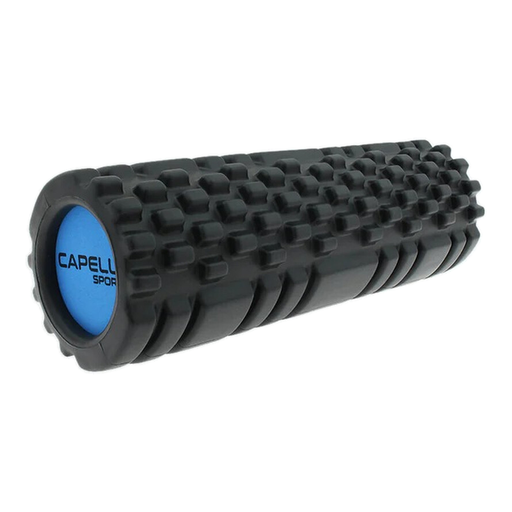
Why This Fits Their Persona: Perfect for those new to foam rolling who want to experience the benefits of myofascial release without the higher initial investment of an electric model.
As a non-electric roller, it inherently avoids all the pitfalls of vibration, noise and battery life. It provides a reliable, manual experience where the user has full control over pressure and speed.
Its high-density construction offers firm, consistent support for an effective deep tissue massage. It's a durable, portable and highly affordable entry point into muscle recovery.
Yes, many people find a vibrating foam roller beneficial for relieving tightness in the upper and mid-back. The key is to use it correctly: focus on the thick muscles on either side of your spine and avoid rolling directly on the vertebrae. For lower back pain, it is often more effective to roll connected muscle groups like the glutes, hip flexors and hamstrings, as tightness in these areas can contribute to lower back discomfort. If you have a pre-existing back condition, it is always best to consult a doctor or physiotherapist before use.
The lifespan depends on build quality and use. The physical roller, if made from high-density foam, should resist deforming for several years. The more critical component is the rechargeable battery. In a quality model, the battery should provide reliable performance for at least two to three years of regular use before you notice a significant decline in its ability to hold a charge. Look for products that offer at least a one-year manufacturer's warranty for peace of mind.
A smart foam roller that connects to an app can be a valuable investment, particularly for beginners or those who thrive on structure. The guided routines remove the guesswork, ensuring you are using the tool effectively and safely for different recovery goals. However, if you are an experienced user who is confident in your rolling technique and prefers manual control, a standard electric foam roller with multiple intensity settings will likely serve you just as well for a lower price.