
24/7 Customer Support

Free returns

Same-day & Next-day Delivery

Quality Guaranteed

Unlock Your Welcome Offers: FREE Delivery | Up to 80% OFF | Free 30-day JoyPlus trial
Download the APP
As a Joybuy Product Recommendation Officer, my role is to help you navigate the crowded market of home technology. When it comes to choosing a video baby monitor, the options can feel overwhelming and it's easy to fall for marketing hype that doesn't deliver real-world peace of mind. Many new parents find themselves with a device that either fails to meet their needs or comes with unexpected costs.
Before you buy, be aware of these common pitfalls that UK consumers often encounter:
To make an informed choice, focus on the core specifications that directly impact performance and usability. Here are the parameters you should always check.
Your first decision is how you want to view the feed.
A monitor is only as good as its night-time performance.
Babies don't stay still for long. A camera's field of view is critical.
Based on these practical considerations, we've matched a few standout products to different user needs. These recommendations focus on objective features and reliable performance.
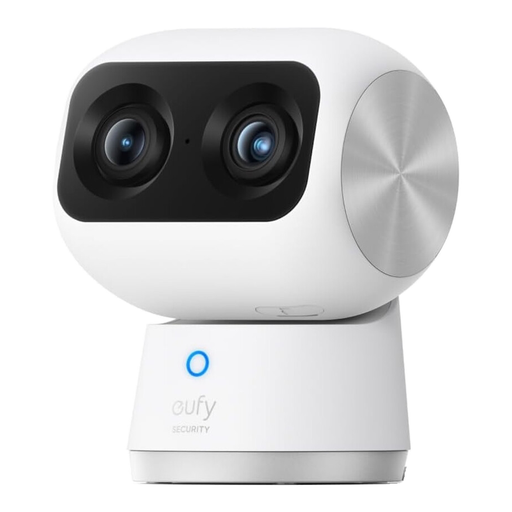
Why This Fits Their Persona: For the parent who wants maximum detail and smart functionality. The dual-camera system provides both a wide-angle view and a powerful zoom, while AI tracking automatically follows movement, ensuring you never miss a thing. It's a high-performance device for comprehensive monitoring.
This camera counters the "HD Illusion" by pairing its 4K resolution with high-quality optics and a dual-camera system, delivering genuinely superior clarity and an 8x hybrid zoom that actually works.
Dual-camera 4K zoom for exceptional detail. AI-powered human and pet tracking keeps the subject in frame automatically.
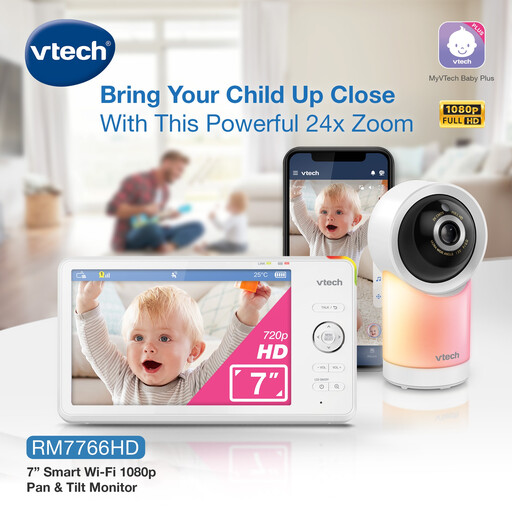
Why This Fits Their Persona: This user prioritises reliability over complex tech. The large 7-inch parent unit provides a stable, direct connection that won't drop with the Wi-Fi, while the option for app-based viewing offers flexibility when needed. It's a robust, all-in-one solution.
It solves the connectivity dilemma by offering a hybrid system. You get the rock-solid reliability of a dedicated parent unit for overnight use and the convenience of a Wi-Fi app for checking in remotely.
Large 7-inch parent unit for clear, local viewing. Hybrid connectivity (direct and Wi-Fi) for ultimate flexibility.
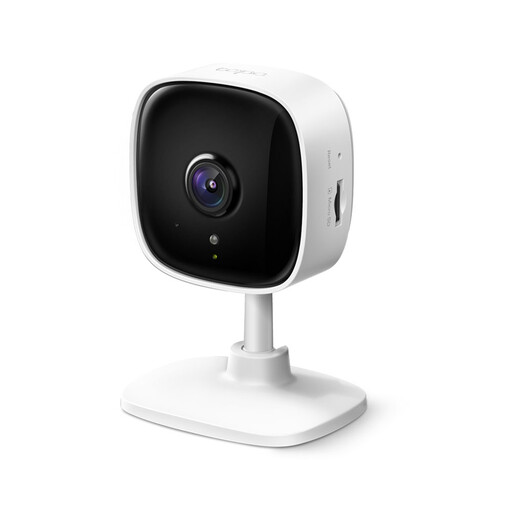
Why This Fits Their Persona: This user needs a functional, affordable device that can serve as a baby monitor now and a general home camera later. The Tapo C100 delivers all the essential features—1080p video, night vision and two-way talk—at an accessible price point.
It sidesteps the subscription trap by offering local storage via a microSD card. You can record footage and access core features without any mandatory ongoing fees, making it a transparent and cost-effective choice.
Excellent value for a 1080p smart camera. No required subscription for local storage and core alerts.
We have compiled a complete, real-time list of products that fully satisfy these strict selection criteria and UK safety regulations.
This is a valid concern for many parents. Reputable manufacturers use end-to-end encryption to protect the video stream between the camera and your device. To enhance security, always change the default password during setup, enable two-factor authentication (2FA) if available and ensure your home Wi-Fi network is password-protected with a strong, unique password.
Most non-Wi-Fi monitors state a range of up to 300 metres (around 980 feet). However, this is an open-field measurement. In a typical UK home, brick walls, floors and other electronic devices will reduce this range significantly. Before committing, consider the size and construction of your home. For most houses, the range is sufficient to cover all rooms, but it's worth checking user reviews for real-world performance.
Yes, absolutely. Many modern indoor security cameras, sometimes marketed as a pet camera with app or nanny cam, are excellent for monitoring a nursery. They often include key features like high-definition video, night vision, motion alerts and two-way talk. The main difference is that dedicated baby monitors may include baby-specific features like a room temperature sensor, pre-loaded lullabies or a VOX mode that activates the screen only when sound is detected. If you don't need those extras, a quality indoor security camera can be a very practical and versatile choice.