For a collage lesson filmed across a desk, choose the light around your colour conditions and where you can place a softened source without casting hand shadows. A dimmable bi-colour COB light offers adjustment when surrounding light changes; a fixed-daylight COB light suits a controlled, daylight-balanced setup. If you need to pack the light away or film without a nearby socket, consider a compact battery light, but plan for its runtime and check whether it covers the whole working area.
Who needs which light?
Colour-conscious portfolio makers
If paper, paint, ink and fabric need to look consistent across clips, prioritise control of the light’s colour temperature and your camera’s white balance. Published colour-rendering figures can help you compare specified models, but they do not guarantee how materials will appear in a recording.
Overhead craft demonstrators
If you film your hands working across a desk, allow room for a diffuser or softbox and a stable stand. Position the light so your hands and camera rig do not block it from the collage.
Creators using shared spaces
If you set up and clear away for each lesson, consider the light’s carrying weight, power supply and storage needs. Check fan-noise information if you record narration beside the light.
What matters when choosing?
Bi-colour COB light
Choose when: Daylight or room lighting changes and you need to adjust the light’s colour temperature.
Allow for: A compatible modifier and stable mounting position to spread the light across the desk.
Fixed-daylight COB light
Choose when: You can keep the setup controlled and daylight-balanced between takes.
Allow for: No colour-temperature adjustment if surrounding light changes; diffusion and mounting still need space.
| Concern |
What to check |
Who this matters to |
| Consistent material colours |
Check the exact light’s colour-temperature range and published CRI/TLCI figures. Set a fixed camera white balance for each take. |
If my portfolio clips show different whites or shifting paper colours, judging the materials becomes harder. Around 42% of consumers put colour consistency first. |
| Desk coverage and shadows |
Confirm modifier compatibility and space for a stand outside the camera and hand-working path. |
When I film from overhead, I need my hands and tools to stay visible across the collage, not cast distracting shadows over it. Roughly 33% of consumers prioritise coverage and shadow control. |
| Portable recording |
Check power options, stated runtime at the intended setting, included accessories and fan-noise information if recording speech. |
If I share the workspace, I need to set up, record and put the light away without relying on an inconvenient socket. About 25% of consumers make that portable workflow their primary concern. |
Mistakes to avoid
-
Choosing by wattage or a single lux figure
A quoted illuminance figure applies to a particular reflector and measurement distance. It does not tell you how evenly a diffused light will cover your collage.
Compare the stated measurement conditions, then check the intended framing with the modifier and stand you plan to use.
A point-source light may also need a compatible diffuser or softbox, mounting accessory and stand.
-
Leaving mixed room light uncontrolled
Daylight and warm lamps can change how white paper and coloured materials appear during a lesson.
Where practical, reduce competing light sources. Set the video light deliberately and lock the camera’s white balance before recording.
-
Assuming a battery light covers the whole session
SmallRig states 45 minutes at full power and 75 minutes in ECO mode for the RC 60B; those modes call for different recording plans.
Check runtime at your intended brightness and confirm the charger and power accessories included with the exact configuration.
Longer sessions may require a compatible USB-C PD supply or another supported power arrangement.
-
Placing the light in the camera’s or your hands’ path
Even a bright light will leave part of the work in shadow if the overhead rig or moving hands obstruct it.
Position the camera first, move the light off-axis and check the full working area through the recording camera.
Brands to consider
SmallRig
SmallRig’s RC 60B is a compact bi-colour COB option for a setup that needs an integrated battery.
- SmallRig specifies a 2,700K–6,500K range and states 45 minutes of full-power runtime or 75 minutes in ECO mode.
- Plan power for a longer lesson and check whether the chosen configuration includes a suitable USB-C PD charger.
amaran
The COB 60x S offers bi-colour adjustment, while the COB 60d S is a fixed-daylight option for a controlled setup.
- amaran specifies a Bowens accessory mount for both models; the 60x S adjusts from 2,700K to 6,500K, while the 60d S is fixed at 5,600K.
- Check the exact bundle for a suitable modifier and stand rather than assuming the light head includes them.
Godox
The compact ML60II Bi offers bi-colour adjustment and several specified power methods; the SL60IIBi is a mains-powered option for a fixed workspace.
- Godox specifies a 2,800K–6,500K range for both models and lists optional battery-power arrangements for the ML60II Bi.
- Check the accessories needed for the chosen power method. For the mains-powered SL60IIBi, plan socket access and cable routing around the overhead setup.
Joybuy product choices
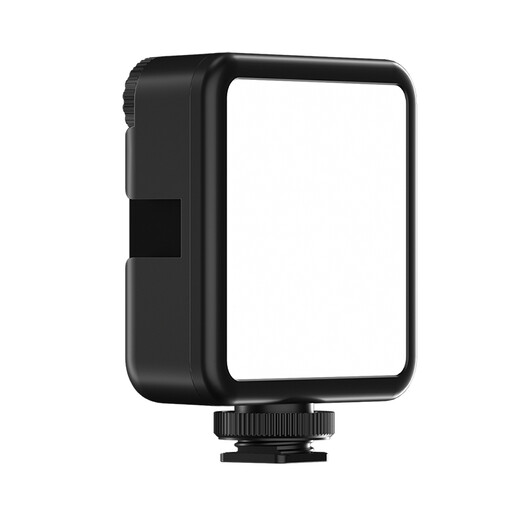
This compact camera light is relevant if you need a portable source for filming. Check its coverage in your intended framing before relying on it to light an entire collage desk.
 No image available
ULANZI VL81 rechargeable camera light, 3000mAh
For a portable camera setup where adjustable brightness and colour temperature matter.
The product title specifies a 3000mAh rechargeable battery and a cold-shoe mount.
Check whether its light covers your full working area, how long it runs at your chosen brightness and which power accessories are included.
Joybuy
Frequently asked questions
Should I choose a ring light, panel light or COB light for a collage lesson?
Choose according to the area you must light and where the source can stand, rather than its category name alone. A COB light with a compatible diffuser or softbox gives you a way to shape light around an overhead camera, but confirm the mount, stand and desk clearance. Test the framing before relying on any compact light to cover the whole collage.
What colour temperature should I use for paper and mixed-media collage?
Use a stable colour-temperature setting for each take and set the camera’s white balance manually. A bi-colour light lets you adjust when surrounding light changes; a fixed 5,600K daylight light suits a setup you can keep daylight-balanced.
Will a compact battery light last through a whole lesson?
It may not last through an uninterrupted lesson at the output you need. SmallRig states 45 minutes at full power or 75 minutes in ECO mode for the RC 60B. For a longer recording, check the exact light’s runtime and whether it supports a suitable power supply while in use.
What conformity information should I check for a mains-powered video light?
Check the information applicable to the exact light and where it will be supplied. GOV.UK guidance for Great Britain says CE marking continues to be recognised alongside or instead of UKCA marking in relevant cases; Northern Ireland follows a different process. Ask the seller which product-safety and conformity information applies to your order.


