Close-up miniature instructors
If your camera needs to show construction steps, paint and surface texture, you need to control shadows and reflections as well as brightness. Colour rendering matters when viewers need to distinguish finishes.


For miniature-building lessons, choose a video light you can soften and position to keep small details visible without distracting glare. A bi-colour COB light offers a route to shaping the light with a modifier, while a compact battery-powered light can simplify moves between shared benches; check the mounting, power arrangement and recorded sound before deciding.
If your camera needs to show construction steps, paint and surface texture, you need to control shadows and reflections as well as brightness. Colour rendering matters when viewers need to distinguish finishes.
If you move your setup around a workshop, consider where a stand can sit and how the light will be powered without putting a lead in other users' way.
If you record speech beside the workbench, consider the light's cooling noise alongside its position relative to the microphone. A stated noise figure cannot tell you how a particular recording will sound.
For miniature lessons in a shared workshop, work out how you will control colour and reflections, then check whether the light's sound, mounting and power arrangement suit the bench.
| Concern | What to check | Who this matters to |
|---|---|---|
| Paint and material colour | Check the exact model's stated CRI and adjustable colour-temperature range; set camera white balance for the lighting you use. | If paint shades need to look consistent on camera, I want to avoid a visible clash with the workshop's other lights. Around 29% of consumers would put colour accuracy and matching first. |
| Shadows and glare | Check how the light can be softened and mounted, and whether output figures use the intended distance and reflector. | When my hands, tools or glossy pieces catch a hard reflection, viewers can lose sight of the step I am demonstrating. Roughly 29% of consumers would make shadow and glare control their primary concern. |
| Workshop disruption | Consider fan noise at the microphone, a suitable power supply and a cable route clear of other users. | If I teach while recording sound at a shared bench, I need the light and its lead not to interrupt the lesson or others' work. About 24% of consumers would prioritise low-disruption workshop use. |
| Moving between benches | Compare mounting and carried kit with battery runtime at the output mode you expect to use. | For short sessions at changing positions, I want to move and set up the light without rebuilding a larger rig. Around 18% of consumers would put portability and flexible power first. |
Brightness does not establish how faithfully paints appear on camera. Output figures also depend on conditions such as distance and whether a reflector is fitted.
Compare the exact models' stated colour-rendering figures and colour-temperature ranges. For output, compare measurements taken under equivalent conditions rather than treating bare-light and reflector figures as interchangeable.
Active cooling can be audible during spoken instruction. A manufacturer's noise figure depends on its measurement distance and operating mode, not your microphone position.
Check the intended light and microphone positions in a trial recording; where suitable, try a lower output setting or move a fan-cooled fixture farther from the microphone.
A light head or panel may not, on its own, give you the softened illumination or stable bench position needed for close-up filming.
Check the exact package contents and confirm that the modifier, mount, stand and power option you intend to use work together.
Separate accessories can also increase the kit you need to carry and set up between benches.
For UK workplaces, the Health and Safety Executive says there is no universal requirement to test every portable appliance annually. Testing alone does not replace checking the equipment's condition.
Inspect the light and its lead before use, consider the workshop environment and arrange competent inspection or testing where the risk assessment calls for it.
The amaran 60x S is a compact bi-colour COB example for a setup built around positioning and modifying the light.
The ML60II Bi is a compact bi-colour COB example with several stated power options.
The RC 60B is a battery-integrated compact COB example for positions where external power arrangements are awkward.
These compact rechargeable lights are choices to examine for moving between workshop benches or adding light near the camera. For a miniature lesson, assess each one against your need to soften the light, match room lighting and record speech; they are not substitutes for a modifier-based COB setup in every situation.
 No image available
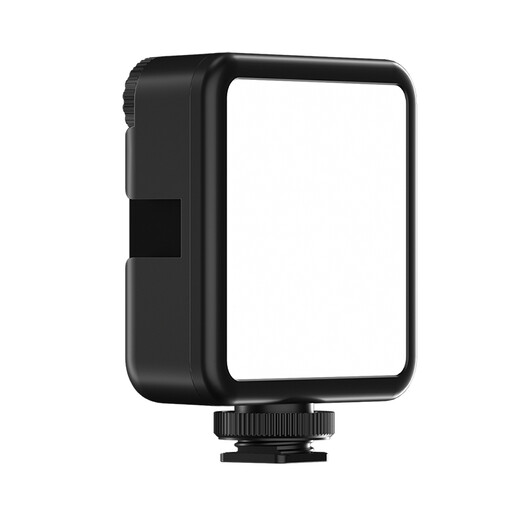
Consider this camera-oriented fill light if you need a small rechargeable light near the filming position. The listing names a 500 mAh battery, three brightness levels, fixed 5800 K output and CRI ≥95.
Check that its attachment fits your exact camera and that fixed-colour light will work with the workshop lighting. Confirm how you would soften it and how long it will run during recording.
 No image available
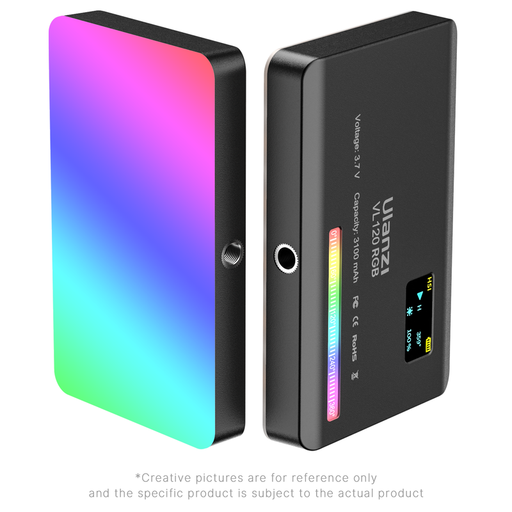
This is an option to examine for a camera-mounted setup that moves between benches. Its listing describes a 3000 mAh rechargeable battery, cold-shoe mounting, adjustable brightness and a softer lighting effect.
Check the colour-rendering specification and colour-temperature range if paint shades are important. Confirm the runtime, recorded sound and whether the supplied setup softens the light enough for reflective pieces.
 No image available
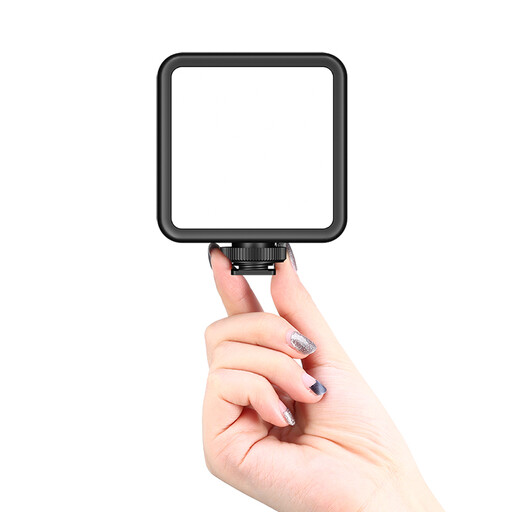
Consider this compact light if adjustable colour temperature is useful as you change filming positions. The listing states a 2500–9000 K range, CRI ≥95 and an integrated 3100 mAh battery; its RGB modes and effects are separate from the need for clear lesson lighting.
Check how it mounts and can be softened for glossy miniatures, as well as its runtime and sound in your recording setup.
 No image available
This light may suit a compact camera or rig setup that needs repositioning around a bench. Its listing states a 2000 mAh battery, dimming, a 2500–9500 K range, a magnetic back and cold-shoe mounting.
Check the exact model's colour-rendering specification, runtime and recorded sound. Plan how to soften and position it before relying on it to show reflective details.
 No image available
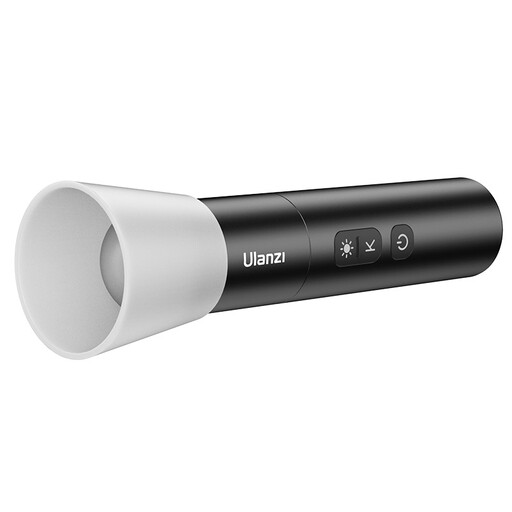
Consider this handheld light when a repositionable beam is more useful than a fixed bench light. The listing describes a zoomable flood-to-spot beam, a 2000 mAh rechargeable battery and three stated colour settings: 2000 K, 5500 K and 8000 K.
A zoomable beam does not establish soft illumination. Check its colour-rendering specification, runtime and sound, and whether you can keep harsh shadows and glare off the miniature.
Check the exact light's stated colour-rendering index (CRI), as well as its colour-temperature adjustment. Elgato describes CRI above 90 as good for camera use and above 94 as a stronger target for colour accuracy; neither figure replaces setting white balance or managing other light in the workshop.
Battery power can make repositioning easier when a mains lead would be awkward, but runtime may limit a recorded lesson. For the RC 60B, SmallRig states maximum runtimes of 45 minutes at full power and 75 minutes in ECO mode; check the relevant mode and power options for the light you choose.
The Health and Safety Executive says UK regulations do not set a universal annual portable appliance testing schedule. Electrical equipment must be maintained to prevent danger, with inspection and testing suited to the equipment, its use and the risks of the workshop environment.
Check that the light and supply are suitable for the intended work and that the equipment is in good condition. The Health and Safety Executive advises checking for damage to the cable, plug and outer covering; switch off and unplug before inspecting, and have damaged cable dealt with by a competent person rather than making an unsuitable repair.