What matters when choosing a light?
Decide how much of the puzzle table must be lit, then assess colour rendering, power and recording conditions for that shot. A small fill light for piece close-ups and a light intended to illuminate the whole table need not meet the same coverage requirement.
| Concern |
What to check |
Who this matters to |
| Colour accuracy |
Check the exact model’s stated CRI and, where available, TLCI. Assess adjustable colour temperature separately. |
When piece colours and packaging artwork are central to my demonstration, I want them to look dependable on camera; roughly 29% of consumers put colour accuracy first. |
| Tabletop illumination |
Compare lux at matching distances and with comparable modifiers and colour-temperature settings; check dimming for closer shots. |
A full-table view needs light across more than one piece, while a close-up may need less output. For roughly 29% of consumers, controllable table coverage is the primary concern. |
| Portability and power |
Check the carrying weight, power connection and runtime at the brightness you intend to use. |
If I film in different rooms or away from a socket, I need a setup I can move and power for the session; roughly 24% of consumers prioritise mobility. |
| Sound and continuity |
Look for fan-noise measurements with stated conditions and check whether quieter or lower-output modes affect runtime. |
When I narrate beside the puzzle, audible fan noise or a light stopping mid-recording could disrupt the take; uninterrupted, quiet operation comes first for roughly 18% of consumers. |
Brands to consider
These model examples show which specifications are worth comparing; their stated figures and conditions do not apply to every light from the same brand.
amaran
The amaran 60x S is a compact bi-colour COB example for a tabletop setup where adjustable colour temperature and published output measurements matter.
- Aputure lists 2700 K–6500 K, CRI 97 and TLCI 97 for the 60x S, with separate bare-light and reflector photometric figures at several distances.
- Aputure says individual-unit luminance may vary slightly. Compare its output figures only under the stated measurement conditions.
Godox
Godox offers distinct examples for a mains-powered tabletop station and for smaller supplementary product shots: the SL60IIBi and LED6R.
- Godox lists 2800 K–6500 K, CRI of at least 96, TLCI of at least 97 and 0–100% dimming for the SL60IIBi. Its stated maximum of 25,100 lux is measured at 1 m with the standard reflector.
- The LED6R manual describes product-shooting use, but that does not establish comparable full-table output. The SL60IIBi’s quoted maximum must not be carried over to another modifier setup.
SmallRig
The RC 60B is a compact COB example for sellers who need an integrated battery or a USB-C PD power option when filming away from a regular workstation.
- SmallRig states a 650 g body, integrated 3400 mAh battery, CRI 97+ and TLCI 98+ for the RC 60B.
- SmallRig quotes up to 45 minutes at full power or 75 minutes in ECO mode, and lists a 100 W PD charger separately. Check which power arrangement suits the intended recording length.
Joybuy lights for close-ups and portable setups
These compact lights are options to assess for puzzle-piece close-ups, supplementary fill or a movable camera setup. Before relying on one to light an entire puzzle table, check its output and coverage for your shooting distance.
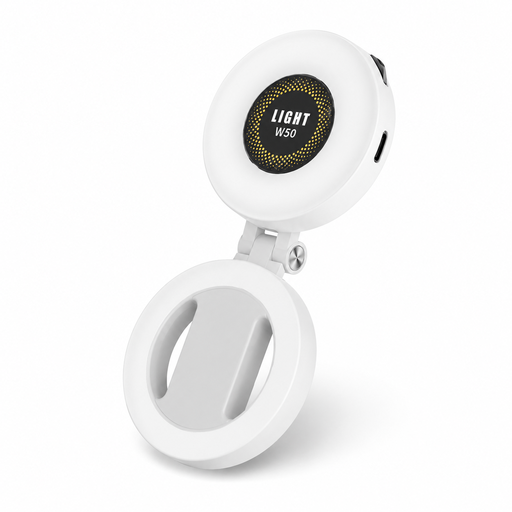 Image unavailable
VoxorAI M28 magnetic fill light with mirror
Consider this portable fill light for a close view of individual puzzle pieces rather than assuming it will illuminate the whole table.
The product name states CRI 95+, a 360° design and compatibility with iPhone and Android. Check the colour-rendering claim and suitable coverage for your shot, and confirm the exact battery capacity and runtime before planning an away-from-mains recording.
View on Joybuy
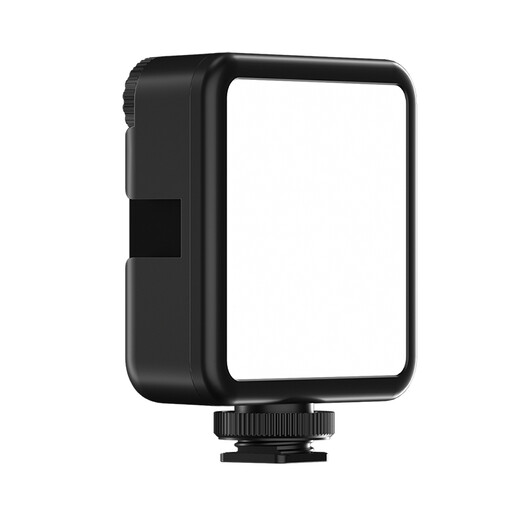 Image unavailable
ULANZI VL81 rechargeable camera light
Its camera-light format may suit a movable product-shot setup or a closer view of the puzzle.
The product name specifies a cold-shoe mount, adjustable brightness and a 3000 mAh battery. Check the exact model’s colour-rendering figures, tabletop coverage and runtime against your recording needs.
View on Joybuy
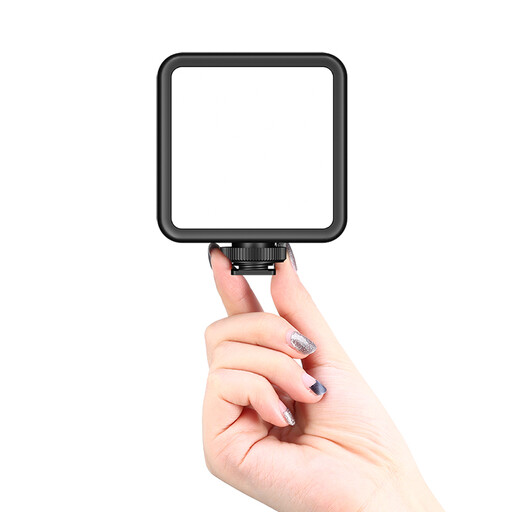 Image unavailable
Ulanzi VL49 compact video light with magnetic back
This compact light is worth considering for movable close-ups or supplementary illumination when filming puzzle details.
The product name specifies dimming, a 2500 K–9500 K colour-temperature range and a 2000 mAh battery. Confirm colour-rendering figures, coverage at your shooting distance and runtime rather than inferring them from those specifications.
View on Joybuy
Frequently asked questions
Is a bright light enough to show puzzle colours accurately?
No. Brightness describes light output, while colour rendering is a separate consideration for how piece and packaging colours appear. Check the exact model’s stated CRI and, where available, TLCI; Elgato describes CRI above 90 as a useful starting point and above 94 as a stronger target for colour-sensitive camera work, not a guarantee of the finished image.
How can I compare lux figures for a puzzle-table shot?
Compare lux figures only when their distance, colour temperature and modifier conditions are comparable. Aputure gives separate bare-light and reflector readings for the amaran 60x S, while Godox’s stated 25,100-lux maximum for the SL60IIBi is at 1 m with its standard reflector.
Can a rechargeable light last through a whole demonstration?
It can if its runtime at the output you need covers the recording and the power arrangement suits your location. For example, SmallRig quotes up to 45 minutes at full power and 75 minutes in ECO mode for the RC 60B; check the required charger or USB-C PD source as well as the session length.
What should I check when buying an electrical video light for use in Great Britain?
Check the specific model’s identification and supplier documentation against the applicable requirements rather than relying on a generic marking statement. GOV.UK guidance for Great Britain says CE marking continues to be recognised alongside or instead of UKCA marking where the relevant UK requirements align; Great Britain guidance should not be assumed to settle the position for Northern Ireland.


