What matters when choosing a light?
Start with the colour and softness you need on the page, then decide how much space, power and repositioning your setup allows.
Compact bi-colour COB light
Consider it when: you film close to a desk and want to move an adjustable fill light as the window light changes.
Allow for: a separate way to soften or bounce a small, direct source; check each fixture’s modifier options.
Mains-powered Bowens-mount light
Consider it when: you want to use Bowens-mount modifiers and can accommodate a mains-powered stand-and-light setup.
Allow for: more weight and desk-side space. Godox specifies an approximately 1.5 kg body for the SL60IIBi, before a stand or modifier.
| Concern |
What to check |
Who this matters to |
| Daylight and artwork colour |
Check the adjustable colour-temperature range and stated CRI and TLCI; test white balance with the actual paper and media. |
I want paper and pigment colours to remain convincing as daylight changes, so matching the fill light matters most to me. Around 36% of consumers would put colour matching first. |
| Softness and reflections |
Check the available diffusion, bounce or softbox arrangement and the space it needs around the desk. |
When my hands cross the page, hard shadows or shiny highlights can hide the marks I am showing. For around 29% of consumers, soft, controlled light would be the primary concern. |
| Portability and recording |
Check fixture weight, battery runtime or power requirements, and the conditions of any stated noise figure. |
I move the light while filming alone and record audio nearby, so a manageable setup comes before other refinements. Around 21% of consumers would prioritise portability and recording practicality. |
| Output after softening |
Compare output at the stated distance and with the stated modifier; check the dimming range too. |
With a bright window or a larger page, I need fill that remains useful after I soften it. Output and modifier headroom would come first for around 14% of consumers. |
Joybuy product choices
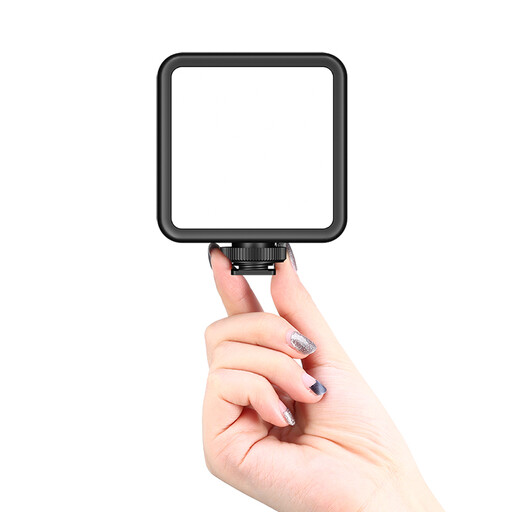
This compact, battery-equipped light is a choice for movable fill beside a window. Check how it renders and softens light on your own sketchbook before relying on it for a colour-sensitive review.
 No image available
Ulanzi VL49 LED video light, 2000 mAh, 2500K–9500K
For a sketchbook setup that needs repositionable fill, its stated adjustable colour temperature offers a way to tune the light beside a window.
The product name specifies dimming, a 2000 mAh battery, a 2500K–9500K range and a magnetic back. Check runtime, colour-rendering figures, diffusion options and mounting suitability for your recording setup.
View on Joybuy
Frequently asked questions
Do I need a bi-colour light beside a window?
A bi-colour light is useful when window daylight contributes to your sketchbook footage because you can adjust the fill rather than work with one fixed colour temperature. Set the camera’s white balance after positioning the light, and check a short clip of the actual paper and artwork.
Why might a bright light still make the paper look harsh?
Brightness alone does not control hard hand shadows or reflections from the page. Use suitable diffusion, a softbox or bounce, then assess the light at the sketchbook; a manufacturer’s reflector-based output figure does not describe that softened arrangement.
Can a battery-equipped light cover a whole recording session?
It can if its runtime at the setting you need covers the session. For the SmallRig RC 60B, SmallRig states up to 45 minutes at full power and 75 minutes in ECO mode; it supports USB-C PD use while charging, while the stated 100 W PD charger is sold separately.
Which product marking should I check in Great Britain?
For applicable products placed on the market in England, Scotland or Wales, GOV.UK guidance dated 31 March 2026 says CE marking continues to be recognised alongside or instead of UKCA marking. Check the documentation for the particular light before purchase; Northern Ireland has different market processes and needs its own applicable checks.
How should I manage a video light’s power lead at home?
Keep leads away from where you walk, avoid overloading extension leads and fully unwind any cable-drum extension. The London Fire Brigade gives the unwinding advice to reduce overheating risk; stop using plugs or sockets that become hot, show scorch marks or repeatedly trip a breaker, and seek advice from a qualified electrician.


