What to prioritise
For a single-monitor virtual hill-climb setup, choose a format only after checking what your host can output and where the screen will sit. The three formats below solve different parts of that decision.
27-inch QHD
Consider it when: You want a conventional 16:9 screen for cycling and general gaming; the cited ASUS and Dell QHD models specify 2560 × 1440.
Trade-off: A QHD panel does not guarantee the app’s frame rate, and the cited models have different maximum refresh modes through HDMI and DisplayPort.
27-inch 4K
Consider it when: 4K output matters for your wider computer use and your host can support the settings you intend to use. Dell specifies a 4K mode for its AW2725QF.
Trade-off: Zwift Support says GPU capability affects visual quality and frame rate; the monitor’s 4K mode does not establish what your host will deliver in the app.
34-inch ultrawide
Consider it when: A wider image from one screen is your priority and the display fits your riding position. LG describes its 34GS95QE-B as a curved 21:9 model.
Trade-off: A larger screen needs more room; check the app’s output and your viewing distance rather than assuming the format will suit every trainer position.
| Concern |
What to check |
Who this matters to |
| Host capability and resolution |
Check the device running the app, its graphics capability and the resolution you intend to output. |
If I want a sharper image, I need to know whether my computer can run the app at the settings I have in mind. Around 33% of consumers put host capability and usable resolution first. |
| View and trainer-space fit |
Measure the available width and depth, then assess the screen from your riding distance. |
A wider view matters to me only if the screen fits comfortably in front of the trainer; roughly 25% of consumers prioritise that fit and field of view. |
| Connections and adjustment |
Compare port-specific modes and cables; check stand adjustment or mounting requirements. |
I need the screen at a workable height and want the mode my device can actually connect to. About 25% of consumers place connection and positioning needs first. |
| Mixed use and after-sales terms |
Compare features for your other games, and read the seller’s returns process and the model’s warranty terms. |
If I also play other games, I want features I will use and clear terms if there is a problem. Around 17% of consumers make mixed use and after-sales certainty their main concern. |
Joybuy monitors for these setups
These monitors cover conventional QHD, 4K and wider-screen options for a single-display setup. Choose between them according to your host output and the space in front of your trainer; a listed refresh rate does not establish the frame rate your virtual-cycling app will achieve.
 No image available
Samsung Odyssey G6 S27DG612 27-inch QHD OLED 240Hz
Consider this for a conventional 27-inch single-screen position if QHD also suits your other gaming. The product title specifies an OLED panel and 240Hz; check the mode available through your host output and cable before buying.
Joybuy
 No image available
LG UltraGear G8 27G850A 27-inch 4K Nano IPS
Consider this 4K route if higher-resolution output matters beyond cycling and your host can drive the mode you want. The product title lists dual 240Hz and 480Hz modes; check their respective resolutions and your device’s output before relying on either.
Joybuy
 No image available
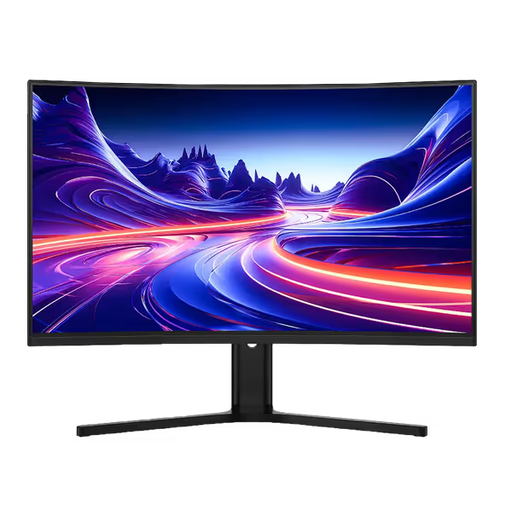
Dahua 32-inch QHD 180Hz curved VA monitor
This is a larger curved QHD option if it fits your trainer position. The product title specifies 2560 × 1440, HDMI and DisplayPort 1.4 inputs; check the refresh mode available through the connection you will use.
Joybuy
 No image available
Philips Evnia 6000 34M2C6500 34-inch WQHD
Consider this 3440 × 1440 screen when a wider single display fits your riding position. The product title lists up to 175Hz through DisplayPort and 100Hz through HDMI; check your host output and cable against the mode you intend to use.
Joybuy
 No image available
LG UltraGear 34GX900A-B 34-inch OLED WQHD 240Hz
This wider-screen option suits a setup with room to position a 34-inch display and a host capable of the intended output. The product title specifies OLED and 240Hz. Consider the listing’s burn-in warning if your use involves extended static images, and review its screen-protection guidance.
Joybuy
Frequently asked questions
Will a higher-spec monitor make virtual hill climbs smoother?
Not by itself. Zwift Support says graphics performance depends heavily on the GPU, with lower-end GPUs potentially affecting visual quality and frame rate. Check the device running the app before choosing a higher resolution or refresh mode.
How can I use a monitor’s advertised refresh mode?
Match the host output and cable to the exact model’s port-specific specification. Dell, for example, lists QHD up to 144Hz through HDMI and 180Hz through DisplayPort on the AW2725DM; those limits should not be assumed for another model.
Is an ultrawide always preferable for one trainer screen?
No. A wider format is worth considering if it fits your space and viewing position. LG describes its 34GS95QE-B as 34% wider than standard 16:9, while noting that viewing assumptions vary with distance and posture; also check your host and app output.
What if I change my mind after buying a monitor online in the UK?
For an eligible UK online sales contract, the cancellation period normally ends 14 days after you or a nominated person receives the goods, under the Consumer Contracts Regulations 2013. Check how the seller handles cancellation and whether an exception applies. This right is separate from remedies for faulty goods and any voluntary returns policy.
What should I do with an old monitor?
Check electrical-waste collection or take-back arrangements rather than putting a monitor in general rubbish. GOV.UK describes the UK waste electrical and electronic equipment framework as supporting recovery, reuse and recycling; your retailer and local authority can explain the arrangements available to you.


