
24/7 Customer Support

Free returns

Same-day & Next-day Delivery

Quality Guaranteed

Unlock Your Welcome Offers: FREE Delivery | Up to 80% OFF | Free 30-day JoyPlus trial
Download the APP
"Five more minutes!" It's a phrase every parent and teacher knows well. But for a child, what does 'five minutes' actually mean? The abstract nature of time can be a source of frustration, leading to difficult transitions, rushed mornings and unfocused homework sessions. A visual timer for kids can transform this challenge by making time a tangible, visible concept.
These simple yet effective tools show the passage of time, helping children understand when an activity will begin or end. This can reduce anxiety, encourage independence and improve focus. Whether you're managing classroom activities, structuring homework or simply trying to make bedtime a little smoother, a visual timer is a valuable addition to your toolkit. This guide will walk you through what to look for and highlight some of our top recommendations for 2026.
Finding the right timer depends on your specific needs. Here are a few key factors to consider before making a choice.
Visual timers generally come in two styles. Analogue timers, which often feature a coloured disc that shrinks as time elapses, are highly intuitive for younger children. The clear visual representation of "time running out" is easy to grasp without needing to read numbers. Digital timers, on the other hand, offer more precision and can include extra features like multiple alarms or customisable displays. They are often a good fit for older children or adults using them as a study timer.
For many situations, silence is golden. A silent classroom timer is essential for avoiding disruption during individual work. Likewise, a quiet timer can be a game-changer for children who are sensitive to noise or easily distracted, making it a useful ADHD timer for kids. Look for models with adjustable volume settings, including a mute or vibrate option. The type of alarm is also worth noting; some offer gentle chimes or music, while others have a more traditional beep.
Consider how and where you will use the timer. A portable, battery-operated model is great for moving between rooms, while a rechargeable timer can be more convenient for a dedicated spot like a desk. For kitchen use, a simple kitchen countdown timer with a loud alarm might be the priority. For automating home routines, a programmable plug-in timer switch offers a different but powerful way to manage time-based environmental cues, like turning lights on or off.
Here are a few options that cater to different needs, from helping a child with their daily routine to managing tasks in a busy household.
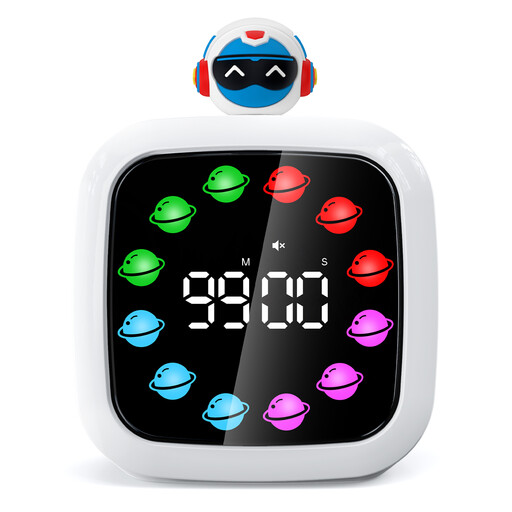
Why It Stands Out: This timer combines the precision of a digital display with the intuitive nature of a visual one. Its engaging planet design and customisable colour blocks make it a fun and functional tool for both children and adults. The rechargeable battery also adds a layer of convenience.
Pros:
Who is it for? This is a great choice for parents of school-aged children who need a versatile study timer. Adults using productivity techniques will also appreciate its customisable features and longer time limit.
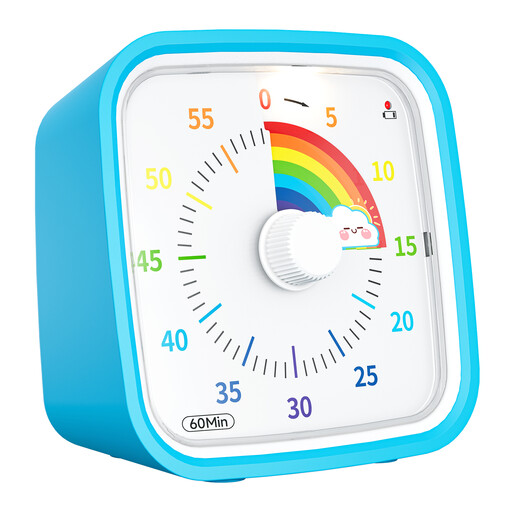
Why It Stands Out: The strength of this timer lies in its simplicity. The rainbow disk that disappears as time passes is an incredibly clear and easy-to-understand visual cue. It operates silently, making it ideal for sound-sensitive environments.
Pros:
Who is it for? An excellent option for parents of young children, preschools and primary school teachers. Its silent operation and clear visual make it a particularly effective ADHD timer for kids or a silent classroom timer.
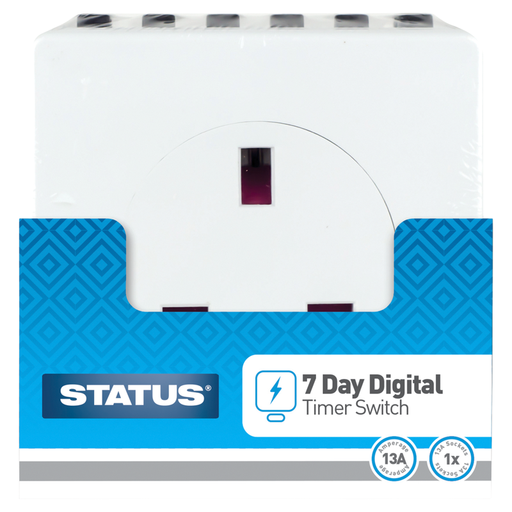
Why It Stands Out: This product takes a different approach to time management. Instead of counting down a single task, this plug-in switch automates your home environment. You can schedule when lamps, radios or other small appliances turn on and off, creating consistent time-based cues throughout the day.
Pros:
Who is it for? This is for anyone looking to build structure into their environment. It's a practical tool for parents wanting to automate bedtime or morning routines, or for general household use as a versatile time management clock.
If these specific models don't quite fit what you're looking for, or if you'd like to see other styles, there are many more tools available to help manage time effectively.
Explore our full range of desk timers to find the perfect match for your home, office or classroom.
For a child with ADHD, managing time and staying on task can be particularly challenging. A visual timer makes the abstract concept of time concrete. Seeing how much time is left can reduce the anxiety associated with transitions and help them better self-regulate their focus. It provides a constant, non-verbal reminder to stay on task, which can be less intrusive than verbal prompts.
Yes, they are an excellent tool for the Pomodoro Technique. This popular time management method involves working in focused 25-minute intervals separated by short breaks. You can set a visual timer for 25 minutes to help you stay on task without constantly checking the clock, then reset it for a 5-minute break.
In many classroom settings, a silent timer is preferable. A ticking or beeping timer can be a distraction for other students, especially during quiet reading or independent work. A silent classroom timer provides the necessary visual cue for one student or a small group without disrupting the entire class, fostering a more focused learning environment.