
24/7 Customer Support

Free returns

Same-day & Next-day Delivery

Quality Guaranteed

Unlock Your Welcome Offers: FREE Delivery | Up to 80% OFF | Free 30-day JoyPlus trial
Download the APP
Feeling tired, struggling to maintain focus or looking for a convenient way to support normal energy metabolism can make vitamin B complex supplements appealing. However, a colourful label and a high microgram figure do not automatically make a product suitable for your needs.
The useful comparison is not simply “more vitamins for less money”. Check the full formula, the dose per serving, the delivery format and whether the product fits your diet and existing supplement routine.
A high-strength vitamin B complex may provide much more than the UK Nutrient Reference Value (NRV) for several nutrients. That can be appropriate for some adults, but it also makes it important to avoid doubling up with a multivitamin, separate B12 supplement or fortified energy product.
Pay particular attention to vitamin B6. Some high-potency products contain substantially more than the NRV, and long-term excessive intake can be unsuitable. Follow the label and seek advice from a healthcare professional if you take medication, are pregnant or breastfeeding, or have a medical condition.
B vitamins do not work like caffeine. They contribute to normal energy-yielding metabolism, but they are not a replacement for sleep, food or treatment for unexplained fatigue. Be cautious of wording that promises an instant lift, prevents every energy crash or treats tiredness.
A practical vitamin B complex for energy should be assessed by its nutrient profile and authorised nutrition claims, rather than dramatic promises.
Capsules may suit a simple morning routine, while liquids, sprays, powders and vitamin B complex gummies can be preferable if you dislike swallowing tablets. Yet each format has trade-offs: gummies may contain sugar, liquids require storage after opening and powders need accurate mixing.
Consistency matters more than an elaborate delivery system. Choose a format you can follow at the labelled dose.
A complete formula commonly includes B1, B2, B3, B5, B6, folate, B12 and biotin. Some B-complex capsules also add choline or inositol, although these are not substitutes for the essential B vitamins.
Compare the actual amounts per daily serving, not only the front-of-pack phrase “B50” or “high strength”. For B12, shoppers may see cyanocobalamin or methylcobalamin. Both are used in supplements, but the form and amount should be clearly listed.
For people following a vegan or vegetarian diet, confirm that both the active ingredients and capsule shell suit your requirements. A vegan vitamin B complex may use a hydroxypropyl methylcellulose capsule, but always check the current label.
A sustained-release vitamin B complex may appeal to busy adults who prefer a once-daily tablet, but the release description should not distract from checking the dose and directions.
Calculate the number of daily servings rather than comparing bottle prices alone. A 30-capsule pack taken once daily provides roughly one month, while a 60-capsule product may require two capsules per serving and last less time than expected.
Also check whether the product is a general formula or a targeted option. A B12 liquid may be more suitable for someone seeking a single nutrient and a pill-free format, whereas a full complex is designed to provide several B vitamins together.
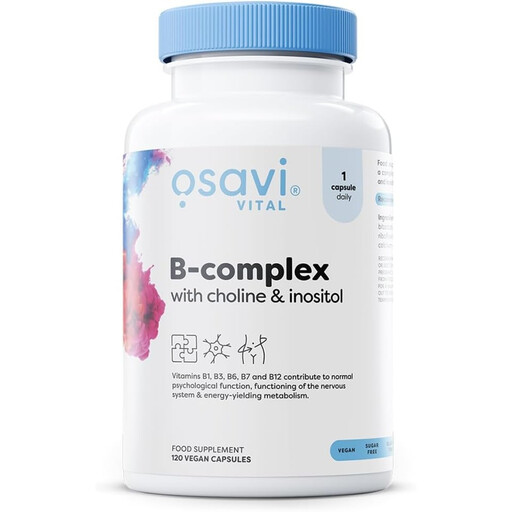
Why This Fits Their Persona: A once-daily vegan capsule with 120 servings makes it practical for shoppers comparing ongoing cost and convenience.
The label lists each B vitamin and its amount per one-capsule serving, helping prevent misleading comparisons based only on a “complex” claim.
Contains eight B vitamins plus choline and inositol; vegan, gluten-free, dairy-free and free from added binders and fillers according to the listing.
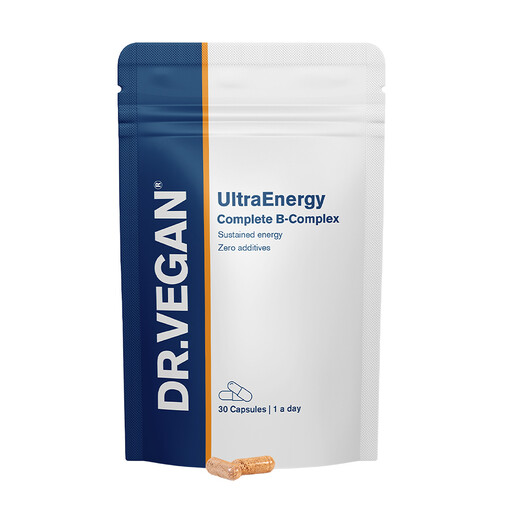
Why This Fits Their Persona: Suits adults wanting a high-strength, sugar-free capsule for a focused morning or daytime routine.
It provides a complete ingredient and nutrition table, rather than relying only on general “energy” language, and states that extra B12 is not needed alongside it.
Includes B vitamins, methylcobalamin, methylfolate, choline and biotin; free from added sugar, gluten, wheat, soya, dairy, artificial flavours, colours and preservatives according to the listing.
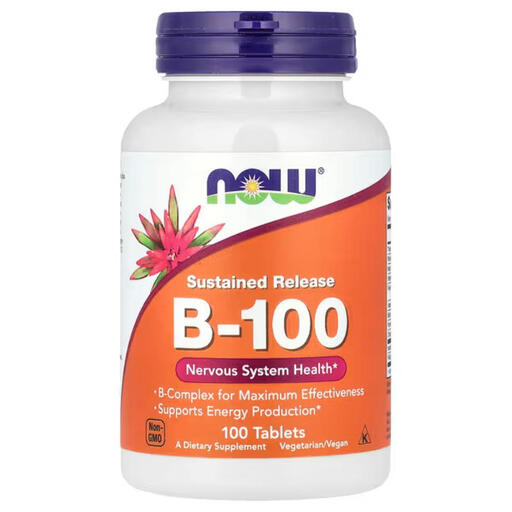
Why This Fits Their Persona: Designed for adults who prefer a once-daily sustained-release tablet and a larger 100-tablet supply.
The sustained-release direction is explicit: take with a meal and do not crush or chew, reducing the risk of using the format incorrectly.
Provides B1, B2, B3, B5, B6, folate, B12 and biotin, with added choline, inositol and PABA; listed as free from gluten, dairy, soya and artificial additives.
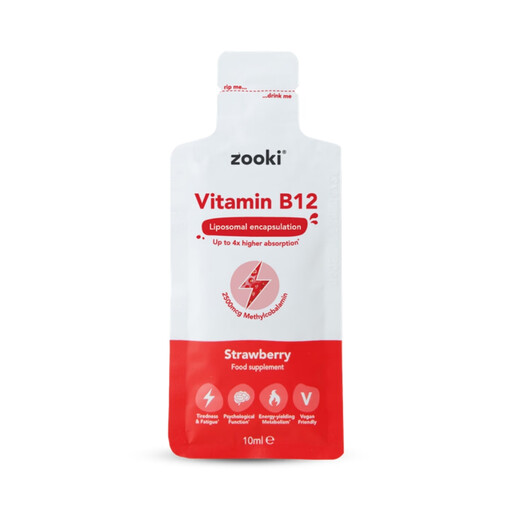
Why This Fits Their Persona: A compact liquid option for adults, including people on plant-based diets, who prefer a direct or drink-mixed serving.
It is a targeted B12 product rather than a full complex, so shoppers can avoid paying for nutrients they do not want to add to their routine.
Provides 2,500 micrograms of methylcobalamin per 1 ml serving; the listing states that it is sugar-free, gluten-free, soya-free, dairy-free and vegan.
We have compiled a complete, real-time list of products that fully satisfy these strict selection criteria and UK safety regulations.
Follow the product label. Many capsules and tablets are intended for one daily serving with food, often in the morning or daytime. Do not exceed the recommended intake and do not combine several high-strength products without checking their overlapping nutrients.
Divide the number of capsules, tablets or servings by the stated daily dose. For example, 30 capsules taken once daily provide 30 days, while a product requiring two capsules each day will last 15 days. Liquids and sprays should also be checked for serving volume and post-opening storage instructions.
Some are, but not all. Look for a vegan capsule or gummy base and check the ingredient list for gelatine, dairy or other animal-derived ingredients. Also confirm the current packaging, allergen advice and dosage before purchase, as formulations can change.