
24/7 Customer Support

Free returns

Same-day & Next-day Delivery

Quality Guaranteed

Unlock Your Welcome Offers: FREE Delivery | Up to 80% OFF | Free 30-day JoyPlus trial
Download the APP
For many UK adults, vitamin D3 supplements are a practical consideration during autumn and winter, when sunlight exposure is limited. They can also suit people who spend most of the day indoors, cover most of their skin outdoors or prefer a consistent daily routine.
However, choosing a suitable product is not simply a matter of selecting the highest number on the label. Dosage, delivery format, dietary suitability and overlapping ingredients can all affect whether a supplement fits your routine. This guide explains what to check before buying and highlights selected options available through Joybuy.
Vitamin D3 1000 IU equals 25 micrograms (µg), while vitamin D3 2000 IU equals 50µg. A 3000 IU product provides 75µg, and a 4000 IU product provides 100µg.
The UK Government generally advises adults to consider a daily supplement containing 10µg of vitamin D during autumn and winter. The NHS also advises adults not to take more than 100µg (4000 IU) daily unless advised by a healthcare professional. This makes vitamin D3 4000 IU a high-strength option rather than an automatic everyday choice.
Check the total amount from all supplements, including multivitamins and calcium products, before adding another dose.
Terms such as “advanced absorption” or “liposomal” can sound persuasive, but they do not remove the need to check the actual dose, directions and ingredients. A vitamin D3 oral spray may be more convenient for someone who dislikes swallowing tablets, while vitamin D3 tablets or vitamin D3 capsules may offer a familiar routine at a lower cost per serving.
Liquid vitamin D3 can also be useful when adjustable drops are preferred, but precise dosing depends on following the dropper instructions carefully.
Vitamin D3 is also known as cholecalciferol. It may come from lanolin, derived from sheep’s wool, or from algae. Shoppers seeking vegan vitamin D3 should look specifically for an algae-derived source and a suitable capsule or gummy shell.
Other details worth checking include gelatin, sugar, dairy, gluten, soya, coconut and flavourings. “Vegetarian” does not always mean “vegan”, and a product described as sugar-free may still contain sweeteners or glycerin.
Use the conversion 40 IU = 1µg:
The Nutrient Reference Value shown on many labels is 5µg, so a 1000 IU product may display 500% NRV. That percentage is not a personal dosage recommendation. Choose according to your needs, the label directions and advice from a pharmacist or healthcare professional where appropriate.
Consider when and where you will take the supplement:
Read the physical packaging before use because formulations and instructions can change. Check the source of D3, capsule shell, sweeteners, oils and preservatives. If you take medicines, have a medical condition, are pregnant or breastfeeding, ask a healthcare professional before using high-strength vitamin D3.
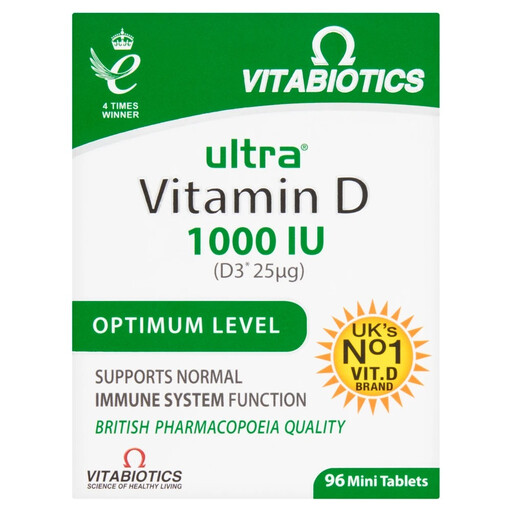
Why This Fits Their Persona: A straightforward 1000 IU tablet format for adults who want a simple daily supplement during darker UK months.
The dose is clearly stated as 1000 IU (25µg), avoiding vague high-strength wording.
96 tablets; one-tablet daily directions; contributes to normal immune function and calcium absorption.
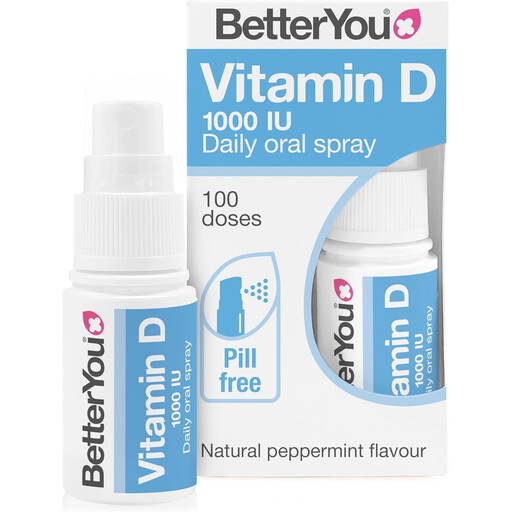
Why This Fits Their Persona: The compact 15ml spray is suitable for keeping in a work bag or using when travelling without carrying water.
It specifies one spray as the daily serving, so the user does not need to estimate a drop or split a tablet.
1000 IU per spray; peppermint flavour; listed as suitable for vegetarians and coeliacs.
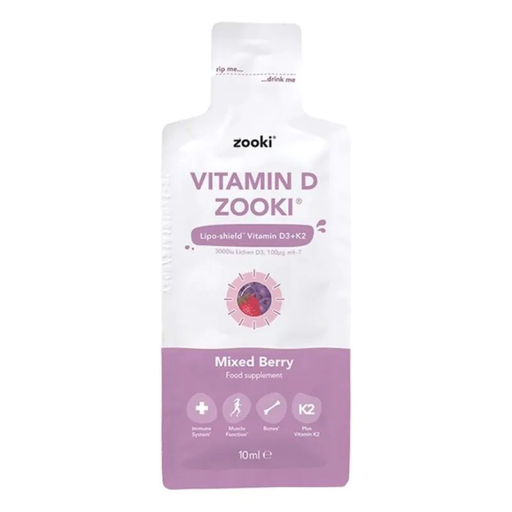
Why This Fits Their Persona: A berry-flavoured 10ml sachet for shoppers wanting vegan vitamin D3 without capsules or tablets.
The label identifies algae-derived D3 and states that the formula is free from gluten, soya and dairy.
3000 IU D3 plus 100µg vitamin K2 per sachet; sugar-free; take directly or mix into a cold drink.
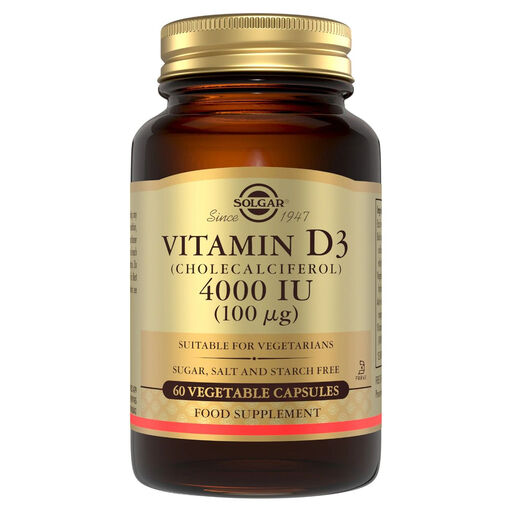
Why This Fits Their Persona: This is for adults specifically looking for high-strength vitamin D3 and comfortable checking dosage with a healthcare professional.
The 4000 IU dose is displayed clearly, with directions stating one capsule daily and a warning not to exceed it.
100µg D3 per vegetable capsule; 60-capsule pack; free from gluten, dairy, soya, sugar and artificial colours.
We have compiled a complete, real-time list of products that fully satisfy these strict selection criteria and UK safety regulations.
Shelf life varies by product. Tablets and capsules should generally be kept tightly closed in a cool, dry place, away from direct sunlight. Sprays and liquids may have specific storage instructions after opening. Always follow the best-before date and packaging directions rather than assuming an opened product remains usable until that date.
Many vitamin D3 products advise taking them with a meal, particularly one containing some dietary fat, because vitamin D is fat-soluble. Follow the individual product label. Oral sprays may be taken with or without food where the instructions allow it.