Who might use each recorder?

Repeat-and-review learners

If you record short pronunciation exercises, look for playback you can start immediately and controls that help you find a particular phrase. ZOOM describes speaker and headphone listening on the H1essential; Sony describes search and skip controls on the ICD-UX570.

Learners practising in variable rooms

If your speaking level or surroundings change, consider how you will position the microphone as well as how the recorder handles levels. ZOOM and Tascam describe 32-bit-float recording on the H1essential and DR-05XP respectively, while Sony describes a speech-focused recording mode on the ICD-UX570. None of those features replaces a suitable recording position.

Tutor-supported and computer-based learners

If you transfer exercises to a computer or practise live online, decide whether you need file transfer, a USB microphone or an external-microphone input. Those are different functions: Sony describes direct USB file transfer for the ICD-UX570, while ZOOM and Tascam describe live USB-audio capabilities for their named models.

What matters when choosing?

Compact voice recorder

Choose when: Short speech recordings and quick navigation are your main tasks; Sony describes both for the ICD-UX570.

Consider: If you need live USB audio or a particular recording format, check those capabilities on the exact model rather than assuming file transfer provides them.

32-bit-float handheld recorder

Choose when: Your speaking level varies and you want less manual level-setting; ZOOM also describes playback-speed adjustment on the H1essential.

Consider: Keep the recorder suitably close to your voice; 32-bit float will not remove disruptive room noise.

Handheld recorder with USB interface

Choose when: You also plan to record through a computer or connect an external microphone; Tascam describes both options for the DR-05XP.

Consider: Those connections add little to a routine limited to brief, standalone self-review.

ConcernWhat to checkWho this matters to
Immediate replay Check for a speaker or suitable headphone output, plus the skip, search or playback-speed controls you would use. I want to hear a short phrase again without moving the file to a computer. Around 42% of consumers would put repeat-and-review access first.
Speech capture Consider microphone placement and whether a speech mode or 32-bit-float recording fits your changing speaking level. When my voice level or room conditions vary, I need a recording I can use to assess my speech. Reliable capture comes first for around 33% of consumers.
Computer workflow Confirm whether the exact model offers file transfer, live USB audio or an external-microphone input; these are separate capabilities. I need recordings on my computer or want to develop a connected practice setup. Around 25% of consumers would make that workflow their primary concern.

Mistakes to avoid

  • Assuming recording controls also make replay easy

    A recorder can capture an exercise yet make phrase-by-phrase review awkward if listening or navigation takes too many steps.

    Check playback on the exact model. ZOOM describes a speaker, headphone output and playback-speed adjustment on the H1essential; Sony describes Easy Search and Time Jump on the ICD-UX570.

  • Expecting a recording mode to fix any room

    According to ZOOM and Tascam, 32-bit-float recording reduces level-setting work on their named models. Sony describes speech-focused settings on the ICD-UX570. Neither type of feature guarantees intelligible speech from a distant speaker or in disruptive noise.

    Try a suitable position close to your voice in your usual practice space, then decide which recording controls you need.

  • Confusing USB transfer with live USB audio

    Moving a saved exercise to a computer is different from using a recorder as a microphone or audio interface during a live session.

    Choose the connection for your intended task: Sony describes direct file transfer for the ICD-UX570, ZOOM describes USB-microphone use for the H1essential, and Tascam describes a USB-C interface for the DR-05XP.

Brands to consider for these recorder types

Sony

The ICD-UX570 represents a compact, speech-focused voice recorder for capturing and finding practice clips.

  • Sony describes Auto Voice Recording, Easy Search, Time Jump, direct USB transfer, 4GB internal storage and microSD expansion for this model.
  • If live USB audio or 32-bit-float recording is essential, confirm that capability on the model you intend to buy rather than assuming it follows from USB transfer.

ZOOM

The H1essential represents a handheld option for learners who want recording, on-device listening and playback-speed practice.

  • ZOOM lists 32-bit-float recording, playback-speed adjustment, a speaker, headphone output and USB-microphone use for the H1essential.
  • Check the storage, power requirements and accessories for the package you choose; 32-bit float does not replace careful microphone placement.

Tascam

The DR-05XP represents a handheld recorder for practice that may also involve a computer or external microphone.

  • Tascam lists 32-bit-float recording, built-in microphones, low-cut options, a 2-in/2-out USB-C interface and external mic/line input for the DR-05XP.
  • If you only record brief solo exercises, decide whether you will use the additional connections before choosing that workflow.

Joybuy recorders for language practice

These voice recorders offer different ways to capture language exercises. Compare their replay method and file workflow against your own practice routine rather than assuming every model has the same controls.
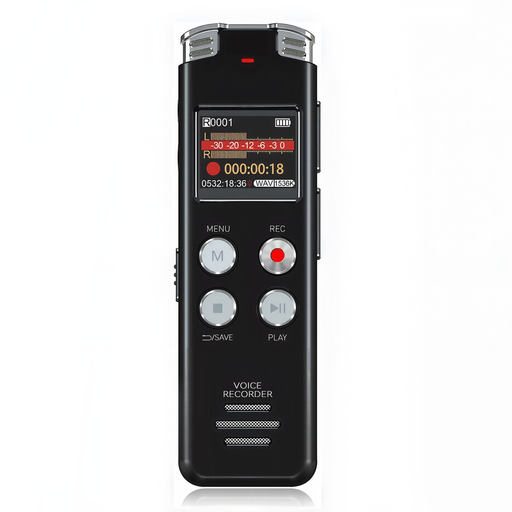
Rexsun L357 128GB voice recorder in grey

Rexsun L357 128GB Voice Recorder, Grey

Consider this portable recorder for short spoken exercises if its replay controls suit how you practise.

The named variant has 128GB storage and an LCD screen. Confirm how you will listen back and navigate between phrases before buying.

Joybuy

Rexsun L810 64GB one-touch voice recorder in grey

Rexsun L810 64GB One-Touch Voice Recorder, Grey

One-touch recording may suit brief exercises when starting a take quickly matters to you.

This named variant has 64GB storage. If you repeatedly revisit individual phrases, confirm its navigation and playback-speed controls before choosing it.

Joybuy
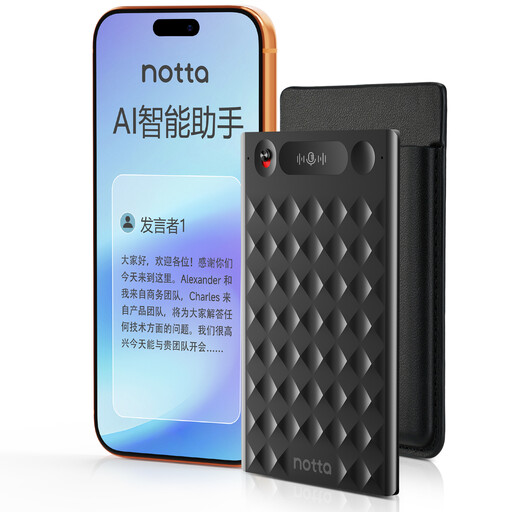
32GB AI voice recorder with case in black

32GB AI Voice Recorder with Case, Black

Consider this option if you want to explore the listing’s transcription and translation functions alongside recording, while checking whether their output suits your exercises.

The named variant has 32GB storage and is listed with a case and 30h battery duration. Confirm its listening and repeat controls, and whether the Notta app workflow suits you.

Joybuy

Frequently asked questions

Do I need 32-bit-float recording for language exercises?

No, not for every practice routine. It is more relevant when your speaking level varies and you want less manual level-setting: ZOOM and Tascam describe that benefit for the H1essential and DR-05XP. You still need suitable microphone placement and a practice space where you can hear your voice clearly.

Can I replay and move recordings without a specialist app?

That depends on which task and model you mean. ZOOM lists a speaker and headphone output for replay on the H1essential, while Sony describes direct USB file transfer for the ICD-UX570; Tascam describes a USB-C audio interface for the DR-05XP. Check playback, file transfer and operating-system compatibility separately on the recorder you choose.

What should I do before recording a tutor or classmate?

Ask the tutor or organiser whether recording and sharing other people’s voices is permitted in that setting. The Information Commissioner’s Office distinguishes purely personal or household activity from organisational processing under UK data-protection rules, so a personal practice recording does not settle a school’s or tutor business’s responsibilities.

How should I dispose of an old recorder or its batteries?

Use an appropriate electrical-waste or battery collection route rather than putting the item in household rubbish. GOV.UK advises separate recycling for electrical products and batteries; check your local collection options and any applicable retailer take-back arrangement when replacing a recorder.