What matters when choosing?
For a rehearsal-room presentation voiceover, settle the recording position first, then choose a connection that fits your computer or interface and check what the microphone package includes.
| Concern |
What to check |
Who this matters to |
| Room and background pickup |
Check the intended speaking distance and pickup direction; assess whether you can position the microphone away from activity and reflective surfaces. |
When other activity is audible, I want intelligible narration without expecting a microphone to erase the room; around 42% of consumers put room and background pickup first. |
| Computer connection and monitoring |
Check for USB connection, a headphone output and any computer requirements for the features you intend to use. |
Recording alone on a laptop, I need to hear my voice as I go without assembling an interface chain; for around 33% of consumers, direct connection and monitoring come first. |
| Controlled-room voice capture |
Check whether the condenser connects by USB or needs a powered XLR interface, and whether a pop filter and shock mount are included. |
With a quieter position available, I can focus on consistent narration but still need to manage reflections; around 25% of consumers prioritise controlled-room capture. |
Joybuy microphone choices
These two FIFINE dynamic microphones offer USB/XLR connection options for close-spoken presentation voiceovers. Choose between the included mounting arrangements, and check how the controls work with the connection you plan to use.
 No image available
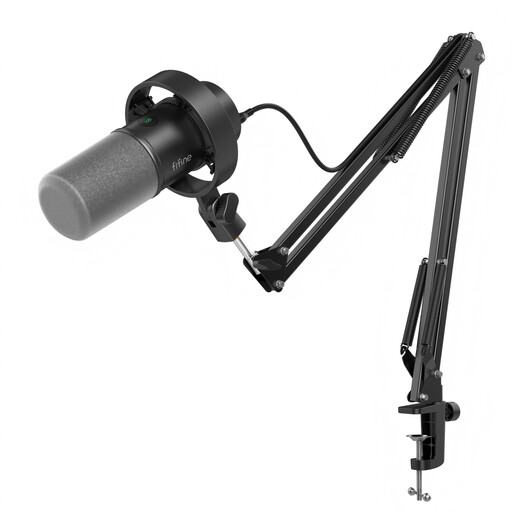
FIFINE K688CT USB/XLR Dynamic Microphone Kit with Boom Arm
Consider this kit if a boom arm would help you position the microphone for close-spoken narration. Its listing specifies a dynamic cardioid microphone, USB/XLR connections, a shock mount and a recommended speaking distance of 2–6 inches.
Headphone monitoring and the listed microphone controls work in USB mode; the controls are inactive over XLR. An XLR cable is not included, and the boom-arm clamp is specified for desks under 2 inches thick. Check the recording position rather than assuming the microphone will remove room noise.
Joybuy
 No image available
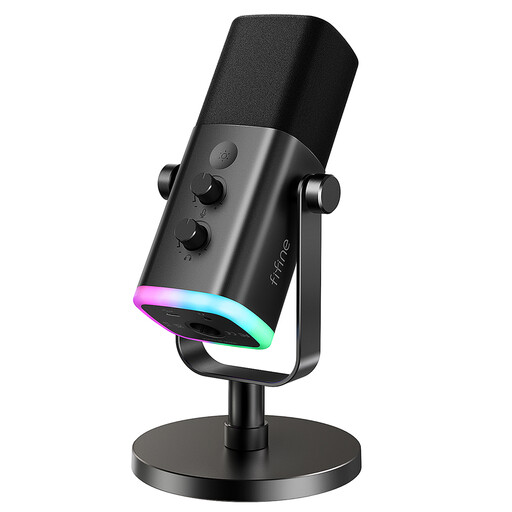
FIFINE AM8 USB/XLR Dynamic Microphone with Desktop Stand
Consider this model if a desktop stand suits your speaking position. Its listing specifies a dynamic unidirectional microphone, USB/XLR connections, a windscreen and a recommended speaking distance of 2–6 inches.
Headphone monitoring and the listed microphone controls work in USB mode; the controls are inactive over XLR. An XLR cable and boom arm are not included. Test the intended position rather than assuming background sound or reflections will disappear.
Joybuy
Frequently asked questions
Should I choose a dynamic or condenser microphone for a rehearsal-room voiceover?
Assess a close-spoken dynamic microphone first if nearby activity and imperfect acoustics are your main concerns; consider a condenser if you can keep the recording position quieter and more consistent. Shure positions the MV7X for spoken word, while RØDE and Audio-Technica offer the condenser models discussed here. Neither microphone type removes room reflections on its own.
Can I record a presentation voiceover directly into a laptop?
Yes, with a compatible USB microphone or USB/XLR model. RØDE specifies direct USB computer connection for the NT1 5th Generation, and Shure specifies USB-C for the MV7+; the XLR-only MV7X and AT2020 need a compatible interface or other suitable analogue recording path.
Which accessories should I check before buying?
Check the exact package and recording setup for a stable mount, pop filter or windscreen, cable, headphones and any required interface. RØDE says the NT1 5th Generation includes a shock mount, pop filter, XLR cable and USB cable; Audio-Technica says the AT2020's XLR cable is sold separately.
What should I do with an electrical microphone at the end of its use?
Check the applicable local authority or retailer route for electrical equipment rather than assuming it belongs in general waste. UK government guidance on waste electrical and electronic equipment describes rules intended to support recovery, reuse and recycling.


