
24/7 Customer Support

Free returns

Same-day & Next-day Delivery

Quality Guaranteed

Unlock Your Welcome Offers: FREE Delivery | Up to 80% OFF | Free 30-day JoyPlus trial
Download the APP
Choosing a stunt scooter for a child or teenager involves more than picking a bright colour. A model that looks suitable online may be too heavy, too narrow or poorly matched to the rider’s age and ability. Before buying a VOKUL pro stunt scooter, check the construction, handlebar setup, wheel size and safety guidance carefully.
An adjustable stunt scooter can be useful for growing riders, but adjustment alone does not make a scooter suitable for barspins or tailwhips. Freestyle scooters need a stable fork, secure clamp and handlebars that remain firmly aligned during repeated movement.
Also check whether the handlebar is genuinely adjustable or simply described as adjustable in a listing. The VOKUL S2 Gold and K1 models specify adjustable handlebar features, while the VOKUL Complete S2 uses a fixed batwing handlebar.
An ABEC-9 scooter may sound automatically faster, but the ABEC rating relates to bearing manufacturing tolerances rather than overall ride quality. Wheel material, surface condition, rider weight, brake design and maintenance also affect how smoothly a scooter rolls.
For UK pavements and skateparks, look at the complete wheel and bearing specification. Solid 100mm or 110mm wheels are common on stunt scooters, while polyurethane hardness can influence rolling feel and landing response.
Age ranges are useful starting points, not a substitute for checking the rider’s height, weight and confidence. A scooter that is technically suitable for a six-year-old may still feel difficult to control if the bars are too high or the deck is too long.
Always compare the listed maximum rider weight, scooter weight and handlebar dimensions. Parents should also follow the supplied warnings, use protective equipment and supervise younger riders, particularly in skateparks or areas with other users.
A wider deck gives a developing rider more room for foot placement. The VOKUL S2 Gold has a 20-inch by 4-inch matte non-slip deck, which provides a practical platform for learning basic tricks. The reinforced, heat-treated aluminium deck design is intended for recreational and stunt use.
A child learning a trick scooter for beginners should prioritise predictable footing and a manageable scooter weight over decorative graphics. The listed weights range from 8 lb for the VOKUL Complete S2 to 9.61 lb for the VOKUL K1, so this difference may be noticeable to younger riders.
The featured models use 100mm or 110mm wheels. A 100mm lightweight stunt scooter can feel easier to manoeuvre for younger beginners, while 110mm wheels may suit older riders who want a little more rolling stability.
The K1 models use 88A high-rebound polyurethane wheels, while the S2 Gold uses 100mm PU+PC wheels. These are objective construction details, not guarantees of landing comfort or speed. Riders should use the scooter only on suitable, smooth and dry surfaces as stated in the product information.
A three-bolt clamp is included on the featured VOKUL models and must be tightened during assembly. The VOKUL K1 includes a one-piece T4T6 fork, while the Complete S2 uses a 4130 chromoly steel batwing handlebar with a triple clamp.
These features can help buyers distinguish a kids’ stunt scooter from a basic transport scooter, but every clamp, bolt and brake still needs checking before use. A rear brake should engage correctly without rubbing continuously against the wheel.
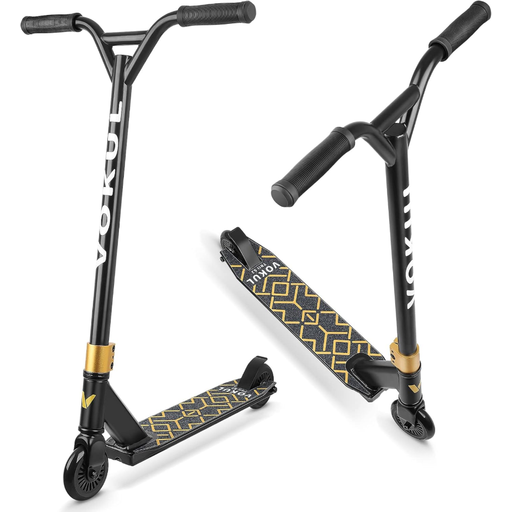
Why This Fits Their Persona: A practical starting point for children aged 6–12 learning basic freestyle movements at home, on smooth paths or in a supervised skatepark.
The listing states a 20-inch by 4-inch non-slip deck, a 220 lb maximum weight and mostly pre-assembled delivery, making the key specifications easier to check before purchase.
8.5 lb listed weight, 100mm PU+PC wheels, ABEC-9 bearings and a two-year warranty.
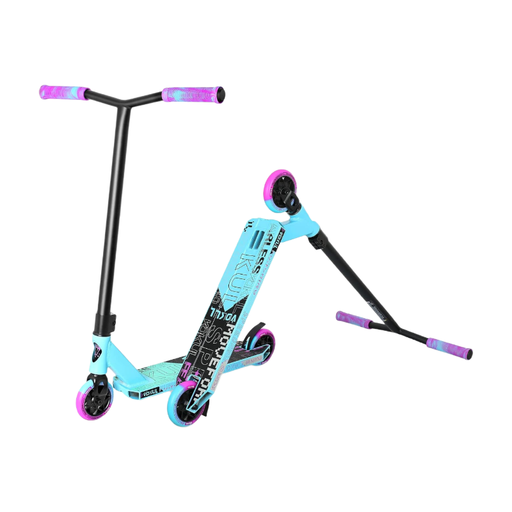
Why This Fits Their Persona: Suits riders aged 8 and over who want a sturdier pro scooter for teens, intermediate practice and regular skatepark sessions.
The listing separates the 9.61 lb scooter weight, 110mm wheels, 32-inch adjustable handlebar height and 220 lb limit instead of relying only on a general “performance” description.
Alloy steel frame, T-6061 aluminium deck, one-piece T4T6 fork and 88A polyurethane wheels.
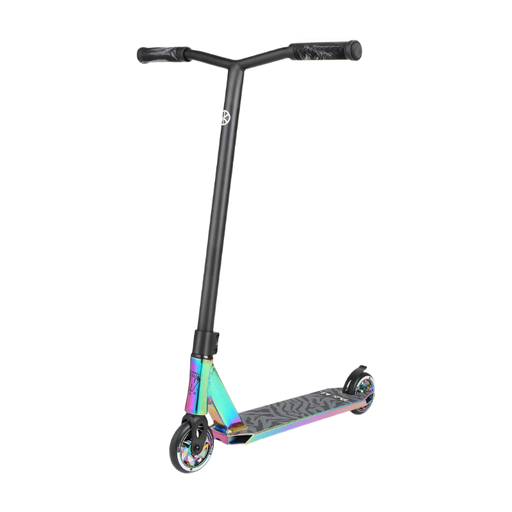
Why This Fits Their Persona: Designed for boys and girls aged 8–12 who are specifically interested in freestyle or stunt riding rather than simple transport.
Its specification identifies a non-slip T-6061 aluminium deck, one-piece fork, rear brake and 110mm solid wheels, helping buyers assess whether it matches trick-riding plans.
9 lb listed weight, ABEC-9 bearings, adjustable handlebar and soft TPR grips.
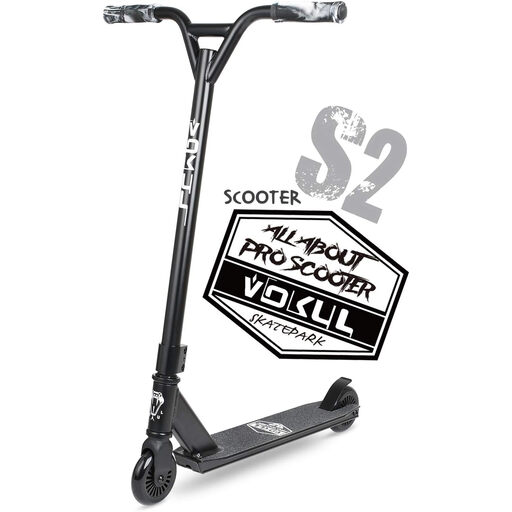
Why This Fits Their Persona: A suitable format for riders aged 7–14 who want a fixed-handlebar freestyle scooter for learning basic flips and skatepark movements.
The fixed batwing handlebar, triple clamp and reinforced deck give parents specific construction details to compare instead of judging only by its appearance.
8 lb listed weight, 6061 aluminium frame, 4130 chromoly steel handlebar and two-year limited warranty.
We have compiled a complete, real-time list of products that fully satisfy these strict selection criteria and UK safety regulations.
Most of these scooters arrive mostly assembled, but the three-bolt clamp must be tightened before riding. Use the correct tool and check that the handlebar is straight and secure. Before every session:
A stunt scooter does not usually require fuel, charging or a subscription, so running costs mainly involve replacement wheels, bearings, grips or brake components when wear occurs. Keeping the scooter dry and checking fasteners regularly can help identify maintenance needs earlier.
Several listed models are aimed at beginners or entry-level riders, including the S2 Gold and Complete S2. Choose according to the child’s height, confidence and ability to control the scooter. A beginner should learn on a clear, smooth surface before attempting ramps, jumps or spins.
The K1 listings specifically describe use for tricks such as barspins and tailwhips, with 110mm wheels, a one-piece fork and non-slip deck. These specifications do not remove the need for instruction, protective gear or suitable skatepark conditions.
Lifespan depends on rider weight, riding surface, trick frequency, weather exposure and maintenance. Regularly tightening bolts, checking the brake and replacing worn components can help keep a scooter serviceable. Stop using it if the deck, fork, clamp or handlebars show cracks, bending or significant damage.