Who is choosing?

Regular oat-waffle breakfast makers

If waffles are a frequent meal, start with the plate shape and portions per cycle rather than extra snack-making functions. Salter specifies two deep-fill waffles per cycle for its EK2249; Breville describes rising space on its VST072. Check which format suits your recipe.

Small-kitchen multi-use buyers

If the same appliance needs to make toasties or paninis, compare the supplied waffle plates and how the machine stores. Breville, Salter and Russell Hobbs offer multi-use models with interchangeable plates, but their waffle formats should be assessed model by model.

Gluten-free oat recipe planners

If the waffles are for someone with coeliac disease, ingredient choice and avoiding contact with gluten-containing food matter as well as appliance cleaning. Coeliac UK cautions that standard oats can be contaminated and that some people with coeliac disease remain sensitive even to gluten-free oats.

What matters when buying?

Dedicated deep-fill maker

Choose it when: Thick waffles are the main purpose, and the stated plate shape and portion count fit your recipe.

Trade-off: A waffle-only model does not also provide toastie and panini plates; check its instructions before assuming its plates can be removed for washing.

Multi-use snack maker

Choose it when: You expect to use the toastie or panini plates as well as the waffle plates.

Trade-off: Interchangeable plates do not establish that its waffles have the same depth or size as those from a dedicated maker.

Rotating waffle maker

Consider it when: You specifically want a turning design; the Cooks Professional model rotates through 180° and has a removable drip tray.

Trade-off: Rotation is a design feature, not proof of a better result with every oat-waffle batter.

ConcernWhat to checkWho this matters to
Waffle portions and shape Check plate depth, waffles per cycle and any stated room for rising against your recipe. If I regularly serve more than one person, I want the waffle shape and batch size to suit breakfast without assuming every recipe needs deep plates. Around 31% of consumers would put portions and shape first.
Cleaning Check separately whether the plates are non-stick, removable and explicitly dishwasher-safe. When cleaning after waffles is my main concern, I want to know how I can reach and wash the plates. For around 31% of consumers, practical cleaning would be the primary need.
Multiple uses Confirm which plate sets are supplied and whether the appliance and spare plates fit your storage space. If cupboard space is limited and I also make toasties or paninis, I want one appliance to cover those snacks. That versatility would come first for around 23% of consumers.
Dietary use For gluten-free use, check the oats and other ingredients, and plan how to avoid contact with residues from gluten-containing batters. If I cook for someone with a dietary restriction, I need to consider ingredients and shared-kitchen use before choosing a machine. Around 15% of consumers would make that planning their first priority.

What should you avoid assuming?

  • Non-stick means the plates go in the dishwasher

    Non-stick describes the cooking surface, not whether the plates detach or tolerate dishwasher cleaning. Those are separate capabilities on models such as the Breville VST098 and Russell Hobbs Creations 3-in-1.

    Check the exact model’s instructions for plate removal and dishwasher suitability before buying.

  • Any 3-in-1 maker will suit a deep-fill recipe

    Extra plate sets provide other cooking options, but do not establish the depth or portion size of the supplied waffle plates.

    Compare the waffle plates and portions per cycle with the format your oat-waffle recipe calls for.

  • Ordinary or organic oats are automatically gluten free

    Coeliac UK warns that standard oats can be contaminated through production alongside wheat, barley and rye. The Food Standards Agency also identifies oats as an allergen in their own right: a gluten-free label does not make oats suitable for someone with an oat allergy.

    For gluten-free use, choose appropriately labelled ingredients and manage contact with other batters and utensils. For an oat allergy, a gluten-free claim does not remove the need to avoid oats.

Brands to consider for oat waffles

Salter

Offers both a dedicated deep-fill waffle maker and a multi-use snack maker.

  • Salter specifies dual deep-fill non-stick plates, two-waffle capacity and automatic temperature control for the EK2249.
  • The Kuro XL 3-in-1 has removable waffle, toastie and panini plates, but its additional functions do not establish the same waffle-plate geometry as the EK2249.

Breville

Offers a dedicated deep-fill model and a separate 3-in-1 snack maker.

  • Breville describes deep-fill plates, a rise clip and a high hinge on the VST072; its VST098 has removable, dishwasher-safe waffle, toastie and panini plates.
  • Choose between those model-specific features rather than assuming either format produces a better oat waffle.

Russell Hobbs

A multi-use option for waffles alongside toasties and paninis.

  • The Creations 3-in-1 is specified with interchangeable non-stick plate sets and removable dishwasher-safe plates.
  • Check its supplied waffle-plate format and capacity against your recipe before choosing it for the extra functions.

Cooks Professional

A dedicated rotating format for buyers who specifically want a turning mechanism.

  • Listed features include 180° rotation, non-stick plates and a removable drip tray.
  • Rotation does not establish better results for every batter. As the listing is from a third-party seller, check the seller’s terms when purchasing.

Lakeland

Its 2-in-1 waffle and pancake maker illustrates a compact, detachable-plate format.

  • Lakeland describes the model as compact and lightweight, with a non-stick detachable plate.
  • Lakeland marks this model unavailable, so check current availability before treating it as a purchase option.

Joybuy product choices

This compact waffle maker is a choice to assess if you want to make oat waffles in a smaller-format appliance. Check its plate shape and portions per cycle against your recipe before deciding.
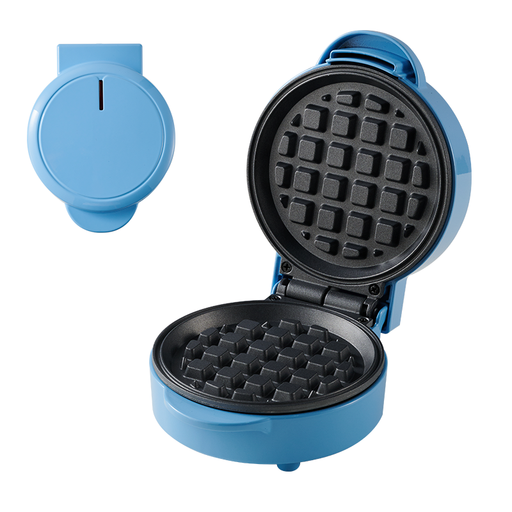
ochama Mini Waffle Maker, 550W

ochama Mini Waffle Maker, 550W

Consider this mini model if you want a dedicated waffle-making appliance and its plate format suits your oat-waffle recipe.

Its stated features include non-stick plates, double-sided heating and a 550W rating. Check the number of waffles per cycle and the cleaning instructions for this model before buying.

View on Joybuy

Questions about oat waffles

Should I choose deep-fill plates for oat waffles?

Choose deep-fill plates if your recipe calls for a thicker waffle format. Salter specifies two deep-fill waffles per cycle for its EK2249, while Breville describes deep-fill plates and rising room on its VST072; match the plate shape and portion size to the recipe rather than assuming depth alone determines the result.

When are removable waffle plates useful?

Removable plates are useful when access for washing matters or you also want interchangeable toastie and panini plates. Breville specifies removable dishwasher-safe plates for the VST098, and the listing states the same cleaning capability for the Russell Hobbs Creations 3-in-1; check the instructions for any other model separately.

Can I use ordinary oats for someone with coeliac disease?

Do not assume ordinary oats are suitable: Coeliac UK warns that many standard oats can be contaminated through production alongside wheat, barley and rye. Where gluten-free oats are required, choose appropriately labelled oats and manage contact with other ingredients and utensils; some people with coeliac disease remain sensitive even to gluten-free oats.

Does a gluten-free label make oats suitable for an oat allergy?

No. The Food Standards Agency identifies oats as an allergen in their own right, so a gluten-free claim does not remove the need to avoid oats for someone with an oat allergy.

How should I clean a waffle maker after making oat waffles?

Follow the instructions for the exact model, including its electrical-safety and plate-cleaning directions. Only put removable plates in a dishwasher when that model’s documentation explicitly says they are dishwasher-safe; a non-stick surface alone is not enough to establish this.