
24/7 Customer Support

Free returns

Same-day & Next-day Delivery

Quality Guaranteed

Unlock Your Welcome Offers: FREE Delivery | Up to 80% OFF | Free 30-day JoyPlus trial
Download the APP
A walking pad treadmill with incline can make home exercise more varied without requiring a dedicated gym room. For UK users living in flats, working from home or trying to fit movement around a busy schedule, a compact treadmill may seem like an uncomplicated purchase. However, several important differences are easy to miss when comparing product listings.
A low advertised price may hide a treadmill with no incline adjustment, limited user capacity or a running deck that is uncomfortable for longer sessions. Before choosing, check the following common pitfalls.
Some compact treadmills have a fixed raised section rather than an adjustable incline. This does not provide the same flexibility as an automatic incline treadmill or manual incline treadmill.
Check whether the listing states:
A manual two-position incline can be perfectly suitable for straightforward home workouts, but it is different from a motorised incline system with several settings.
Horsepower and wattage are useful specifications, but they do not independently determine how quiet a treadmill will feel in a flat or home office. Belt construction, frame movement, floor type and user speed also influence sound.
A quoted noise figure, such as below 45 dB, provides a useful reference, but the result may vary depending on the room and flooring. Placing the treadmill on a stable surface or suitable protective mat can help reduce vibration. If you plan to exercise while working, check both the treadmill’s noise information and its speed range.
A compact treadmill may fit under a sofa or desk but still have a relatively short belt. A 40 x 100 cm running surface can suit walking, yet taller users or people intending to jog may prefer a larger deck.
Measure:
Leave enough room behind and beside the treadmill for safe mounting, dismounting and ventilation. Always follow the supplied instructions and use the safety key where provided.
For desk-based movement, a walking pad with remote control and a speed range around 1–6 km/h may be practical. If you want jogging or running, look for a higher top speed, such as 10–12 km/h, together with a handlebar or suitable support.
An automatic incline is convenient when you want to change intensity from the remote or console. A manual incline may be simpler, lighter and less expensive, but you will normally need to stop before changing its position.
Do not select a treadmill solely because your current weight is below its stated limit. Allowing a reasonable margin can be sensible, particularly if the machine will be used for brisk walking, jogging or by more than one household member.
For people seeking a treadmill for heavy users, the listed maximum load is a key specification. The frame, deck width and motor should also match the intended activity. A higher stated capacity does not automatically mean every user will find the running surface spacious, so check both capacity and dimensions.
A multi-layer belt, cushioning system and stable frame may make regular use more comfortable, although product descriptions should not be interpreted as medical or therapeutic guarantees. Look for clear information about belt lubrication, alignment checks and cleaning.
A quiet treadmill is particularly relevant in flats and shared homes. Even when a product lists operation below 45 dB, footsteps can create more noise than the motor, especially at higher speeds. Use the machine on an even floor, keep the belt correctly tensioned and follow the maintenance schedule.
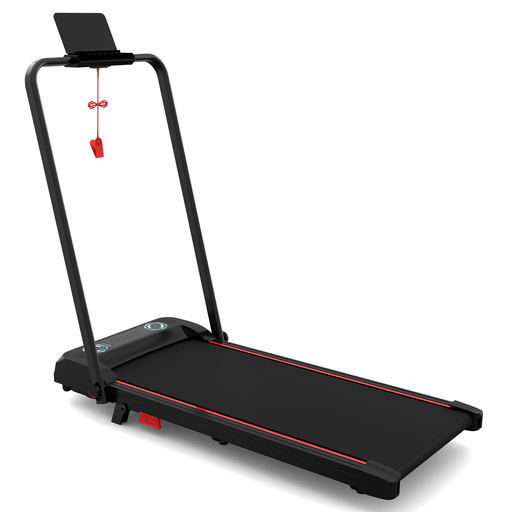
Why This Fits Their Persona: A practical option for beginners who want walking, jogging and incline training in a home office or smaller UK room.
The listing states a 0–6% manual incline, 1–10 km/h speed range and no assembly requirement, making the adjustment method clear.
3-in-1 use, remote control, phone holder, transport wheels and stated operation below 45 dB.
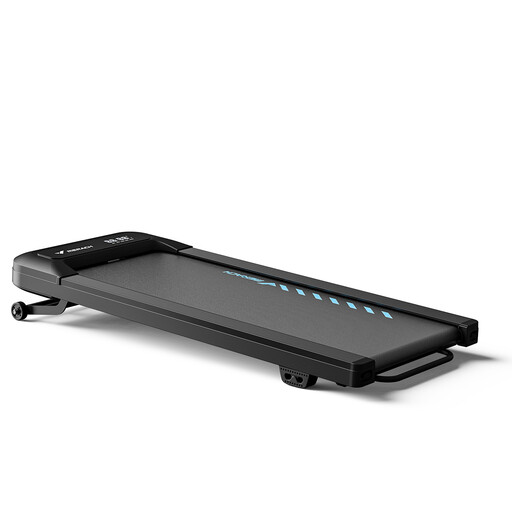
Why This Fits Their Persona: Its under-desk format and 1–6 km/h range suit walking during home-working breaks or low-impact office sessions.
It specifies a 9% automatic incline, remote adjustment and three modes rather than leaving the incline mechanism unclear.
9% auto incline, stated noise below 45 dB, transport wheels, no assembly and app compatibility.
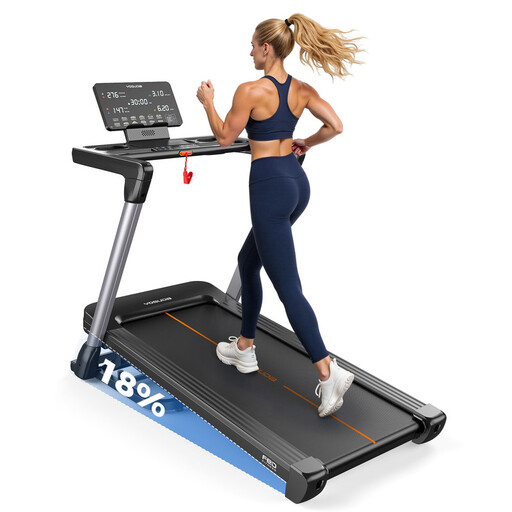
Why This Fits Their Persona: A foldable home treadmill for users prioritising a higher incline range, larger capacity and app-connected training features.
The specification identifies an automatic incline up to 18%, a one-piece steel frame and a stated 172 kg maximum load.
3.0 HP brushless motor, four-way cushioning, Bluetooth app compatibility and 12 preset programmes.
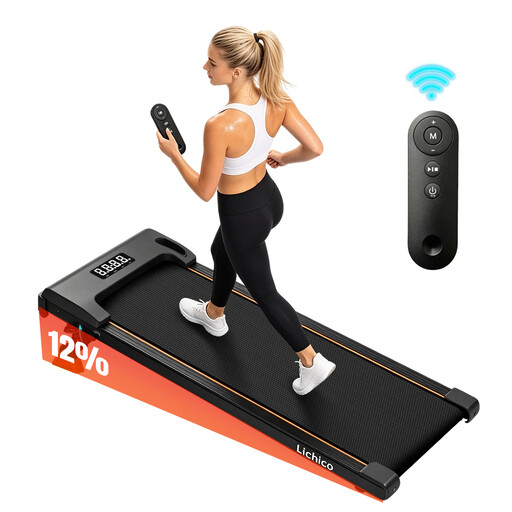
Why This Fits Their Persona: A compact under-desk model for users who need a stated 130 kg capacity and incline capability without a full-sized running machine.
Its product information clearly lists a 9% incline and 130 kg maximum load, helping buyers compare capacity rather than relying on motor marketing alone.
Remote control, app-related smart features, 9% incline and a format designed for home exercise or desk use.
We have compiled a complete, real-time list of products that fully satisfy these strict selection criteria and UK safety regulations.
Place the treadmill on a flat, stable surface with sufficient clearance. Check whether the floor needs additional protection, particularly in an upstairs flat. Keep the power cable away from walking areas and unplug the unit when it will not be used for an extended period.
Electricity cost depends on the machine’s power rating, session length and your household tariff. A 1,400W motor does not necessarily draw its full rated power continuously, so the product wattage alone cannot provide an exact running cost. To estimate usage, multiply the machine’s actual electricity consumption in kWh by your tariff.
Maintenance also affects long-term value. Wipe the belt and frame, inspect for wear, check alignment and lubricate the belt according to the manual. Avoid exceeding the listed user capacity and keep children and pets away while the treadmill is operating.
Some walking pads are designed specifically for under-desk use, particularly models with a low profile, remote control and speeds up to around 6 km/h. An incline can increase workout intensity, but it may reduce desk stability or make typing less comfortable. Check the desk height and use the incline only when your setup remains secure.
An automatic incline treadmill is useful if you want to change gradient regularly without leaving the belt. It usually offers more convenient adjustment than a manual incline treadmill. However, manual systems may suit buyers who prefer a simpler compact treadmill and do not need to alter the incline during a session.
Lifespan depends on build quality, frequency of use, user weight, belt care and storage conditions. There is no universal service period for every model. Following the manufacturer’s maintenance instructions, keeping the belt aligned and choosing a machine with suitable capacity can help avoid premature wear. Always check the supplied warranty and product support information before purchase.