
24/7 Customer Support

Free returns

Same-day & Next-day Delivery

Quality Guaranteed

Unlock Your Welcome Offers: FREE Delivery | Up to 80% OFF | Free 30-day JoyPlus trial
Download the APP
A walking pad treadmill with incline can make indoor exercise more challenging without taking over a room. It may suit a home office, flat, spare bedroom or compact living space, but the wrong model can quickly become an expensive storage problem.
Many listings focus on motor horsepower, app features or “quiet” operation while leaving out the details that affect everyday usability. Before buying, look closely at the incline mechanism, running surface, storage dimensions, user-weight rating and control method.
Some walking pads offer only fixed manual positions, such as 0% and 8%. Others provide an auto incline walking pad system that can be adjusted electronically, often using a remote control.
Neither option is automatically suitable for everyone. Manual incline can be simpler and may reduce electronic complexity, while automatic adjustment is more convenient when changing intensity during a session. Check whether the percentage refers to a genuine incline setting, the number of positions or a marketing description of the frame angle.
A narrow walking belt may work well for gentle walking but feel restrictive at higher speeds. For example, a 40 x 100 cm running surface can be practical in a small footprint, yet users with a longer stride may prefer a larger deck for jogging.
Also check the stated speed range. A 1–6 km/h under-desk treadmill is designed primarily for walking, whereas a model reaching 12 km/h may accommodate faster walking and jogging. Do not pay extra for running capability if your available floor space and intended routine only require steady walking.
Noise depends on the motor, belt, floor surface, user weight, speed and maintenance. A stated level below 45 dB provides a useful reference, but it does not guarantee that footsteps, vibration or belt movement will be inaudible in a flat.
Place the machine on a stable, level floor and consider a suitable exercise mat. Check belt alignment and lubrication according to the manual. These basic steps can help reduce avoidable noise and wear.
Incline walking raises the effort required at a given speed, but the usable setting depends on your fitness level and routine. A 0–9% incline range offers more adjustment than a simple two-position system, while a manual 0% or 8% design may be sufficient for occasional hill-style walking.
For desk use, look for controls that can be reached without interrupting work. A remote-controlled treadmill is useful for adjusting speed, but confirm whether it also changes incline or only controls the belt.
Measure the space available when the treadmill is in use, not just when folded or stored. Allow clearance around the machine for safe mounting and dismounting, following the manufacturer’s instructions.
A folding treadmill can be easier to store upright, while a portable treadmill with transport wheels may slide beneath a sofa or bed. Compare the total product dimensions, weight and folded height. A compact treadmill that is too heavy to move may not be genuinely convenient for a small flat.
The maximum user weight should be treated as a specification to check rather than a target. Leave a sensible margin between your weight and the stated limit, particularly if you plan to jog.
A treadmill with app connectivity may record speed, distance and workout history, but app compatibility can vary. Check whether your preferred phone, tablet or fitness platform is supported. A clear LED display and physical remote remain useful if you do not want to rely on a smartphone.
For UK use, verify the supplied power arrangement, seller information, warranty terms and user documentation. Follow the safety key, cord-positioning and maintenance instructions, and use the machine only on a stable surface.
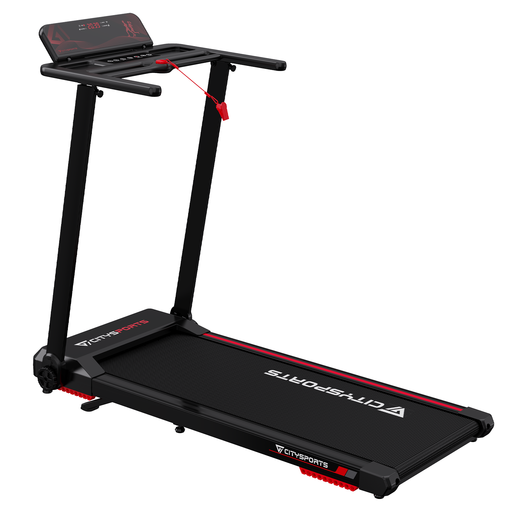
Why This Fits Their Persona: Its folding format and 26.5 kg net weight suit beginners who need a straightforward home treadmill for a flat, spare room or home office.
The listing specifies two manual incline settings, a 1–12 km/h speed range and operation below 45 dB, rather than leaving the core specifications unclear.
0% or 8% manual incline; 120 kg stated maximum user weight; LED workout display and optional app control.
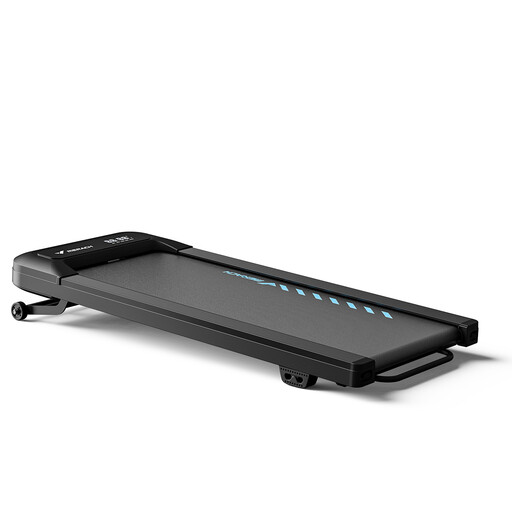
Why This Fits Their Persona: Users who value automatic adjustment, app connectivity and neat storage may prefer this under-desk treadmill for regular walking at home or during office breaks.
The 9% incline is automatic and the stated speed range is 1–6 km/h, making its intended walking and desk-use role clear.
Remote control; transport wheels; 124 x 53 x 16.5 cm dimensions; stated noise level below 45 dB.
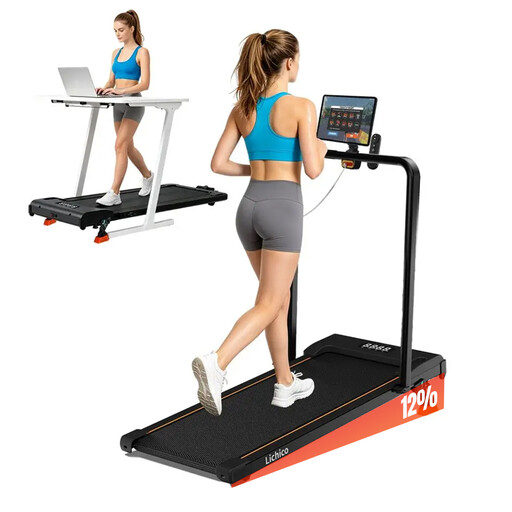
Why This Fits Their Persona: The stated 130 kg maximum load capacity and 0–9% incline range may suit adults prioritising capacity and adjustable hill walking in a home setting.
It states both the incline range and maximum load capacity, allowing buyers to compare those figures directly instead of relying on vague “intensive workout” wording.
0–9% incline; 130 kg stated maximum load; 40 x 100 cm running surface; app and remote-control features listed.
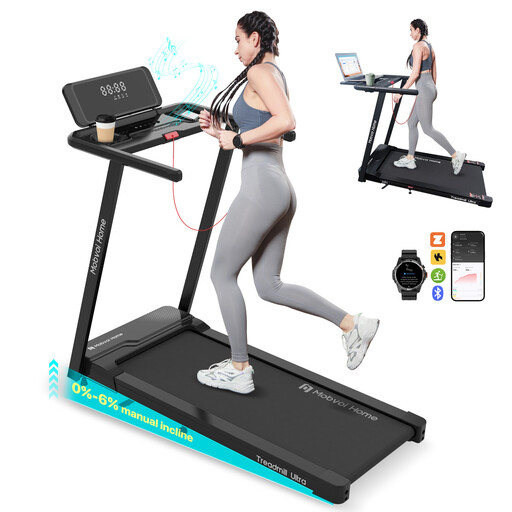
Why This Fits Their Persona: People wanting a multi-purpose home treadmill with device storage and connected workout options may find its 3-in-1 format more suitable than a walking-only pad.
Its listing clearly identifies a 6% gradient, a 1–12 km/h speed figure and a 120 kg maximum load, helping clarify its wider use case.
3-in-1 design; 6% gradient; compatibility listed for TicSports, Zwift and Kinomap; holder for a cup, phone or laptop.
We have compiled a complete, real-time list of products that fully satisfy these strict selection criteria and UK safety regulations.
Before using a compact treadmill, place it on a firm, level surface with sufficient space around the belt. Keep the power cable away from the walking path and attach the safety key as instructed. If the machine is intended for an upstairs flat, a mat may help reduce vibration transmitted through the floor.
Electricity cost depends on the motor’s actual power draw, workout duration and your tariff. A higher stated horsepower figure does not by itself show the cost of each session. To estimate usage, check the rated wattage and multiply kilowatts by operating hours, then apply your electricity rate. Incline, user weight and speed can all affect real consumption.
Some are, but not all. Check the maximum speed, running-belt dimensions, frame design and user-weight limit. Models capped at 6 km/h are generally aimed at walking, while products reaching 12 km/h may be more appropriate for faster walking or light jogging.
Maintenance varies by model. Common tasks include wiping the deck, checking belt alignment, inspecting the power cable and applying lubricant when specified by the manual. Avoid using lubricant or cleaning products that the manufacturer does not recommend.
A low-speed under-desk treadmill can be suitable if the desk is stable and provides enough clearance. However, an incline may change posture and stride, so begin at a low setting. Keep the screen, keyboard and cables safely away from the moving belt, and stop immediately if the workstation becomes unstable.