
24/7 Customer Support

Free returns

Same-day & Next-day Delivery

Quality Guaranteed

Unlock Your Welcome Offers: FREE Delivery | Up to 80% OFF | Free 30-day JoyPlus trial
Download the APP
A walking pad treadmill can make daily movement easier when the weather is poor, space is limited or your working day involves long periods at a desk. However, compact treadmills vary considerably in running area, user capacity, noise, incline and storage design.
Before buying, look beyond phrases such as “gym-quality”, “ultra-quiet” or “joint-friendly”. The useful question is whether the stated specifications suit your room, stride, routine and floor surface.
A compact machine may fit neatly beneath a desk but provide little room for natural walking. A belt measuring around 100 cm may suit slower, shorter walking sessions, while taller users or anyone intending to jog lightly may prefer a longer surface. Check the usable running area, not only the treadmill’s external dimensions.
Horsepower figures can be presented in different ways, so they should not be compared in isolation. Also check the maximum speed, intended operating mode and user weight limit. An under desk treadmill designed for 1–6 km/h is a different product from a folding walking pad that reaches 12 km/h.
For frequent use, allow a margin below the stated maximum capacity rather than selecting a machine purely because your weight is just within the limit.
Noise depends on the motor, belt, footwear, floor construction and your walking speed. A treadmill placed directly on a hard timber floor may transmit more vibration than one positioned on a suitable exercise mat. If you live in a flat, check the product’s stated noise figure where available, and consider the time of day you plan to exercise.
A portable treadmill may have transport wheels but still be heavy to lift. Confirm its weight, folded dimensions and whether the remote control is required for speed adjustment. If you plan to work while walking, check that the treadmill can sit safely beneath your desk and that the desk height allows a comfortable posture.
Measure the available floor space and leave a clear safety area behind the machine, following the user manual. The treadmill should sit on a flat, stable surface with no loose rugs beneath it. A compact treadmill for home use is convenient only when it can be used without obstructing doors, walkways or furniture.
For reference, one listed Lichico model measures 120 cm x 50 cm x 10.5 cm, while the handle-equipped walking pad in this guide measures 47.2 x 22.4 x 5.5 inches. Dimensions should always be checked on the individual product page because similar names can describe different versions.
A walking pad for desk use commonly prioritises controlled walking speeds. A treadmill with incline adds effort without requiring a higher speed, but incline types differ:
Beginners, rehabilitation walkers and home-office users may prefer a stable, low-speed electric walking treadmill. Those seeking light jogging should look for a suitable top speed, handrail and sufficiently long belt.
Check the maximum user capacity and compare it with your intended use. The listed Lichico under-desk model supports up to 130 kg, while the CITYSPORTS PRO supports up to 120 kg.
A treadmill with shock absorption may use layered belts, rubber pads or silicone components. These features can influence walking feel, but they do not remove all impact or replace appropriate footwear. Keep the belt clean, inspect its alignment and tension, and lubricate it according to the manufacturer’s instructions.
Also check the supplied plug, warranty terms, seller support and product safety information for UK use. Do not assume that a listing’s reference to safety standards replaces the need to read the manual and confirm the relevant documentation.
The following selections are matched to different usage profiles rather than ranked universally.
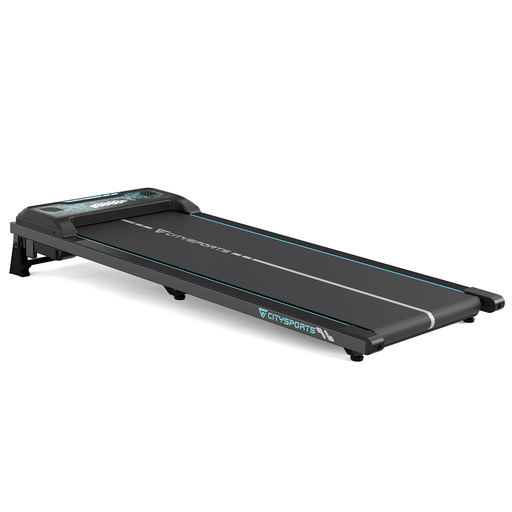
Why This Fits Their Persona: Its 1–6 km/h speed range is suited to straightforward home or office walking, including users starting with short daily sessions.
The listing provides a clear speed range, 120 kg maximum capacity, safety key and remote control instead of relying only on vague performance wording.
Slim design, transport wheels, LED workout display and no assembly requirement are specified.
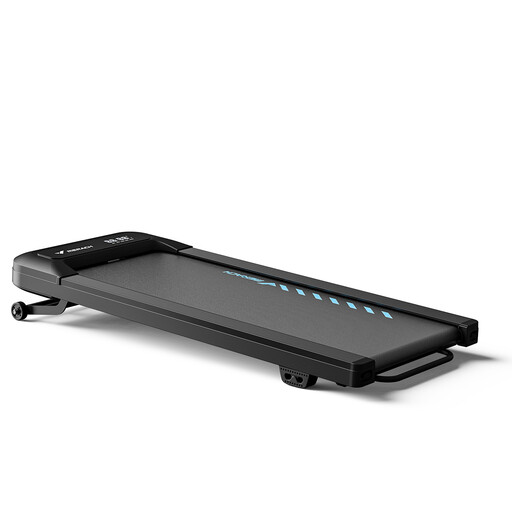
Why This Fits Their Persona: App compatibility, automatic incline and three stated modes suit users who want more structured tracking from a home office treadmill.
The listing identifies a 1–6 km/h range, 9% automatic incline, 124 x 53 x 16.5 cm dimensions and a 31 kg product weight.
Remote control, LED display, transport wheels and a stated dual cushioning system support varied indoor walking routines.
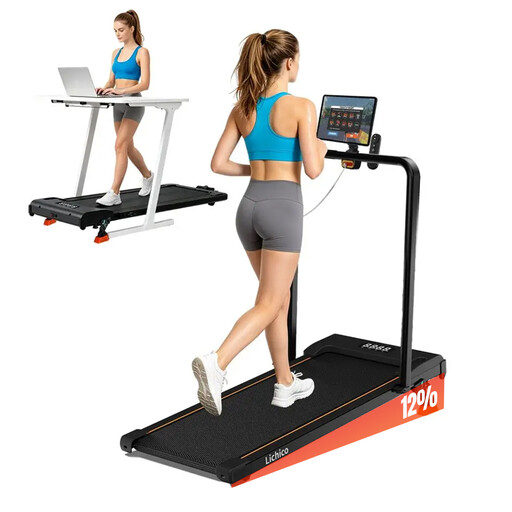
Why This Fits Their Persona: This option is aimed at UK users who want an under-desk treadmill with adjustable incline rather than a flat walking surface only.
The stated 0–9% range makes the incline specification visible, helping buyers distinguish this model from flat-only walking pads.
The listing specifies a 40 x 100 cm running surface and maximum load capacity of 130 kg.
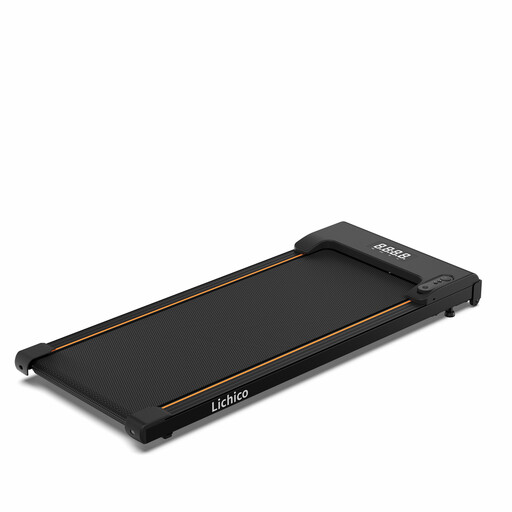
Why This Fits Their Persona: Its compact under-desk format and stated 130 kg capacity may suit users prioritising daily walking, active workstations or low-impact routines.
The listing provides exact dimensions and capacity, so buyers can assess both storage fit and load suitability before ordering.
Steel frame, rubber running belt and under-desk dimensions are specified for home fitness use.
We have compiled a complete, real-time list of products that fully satisfy these strict selection criteria and UK safety regulations.
Place the treadmill on a level surface with the recommended clearance. Keep children and pets away, use the safety key where supplied and avoid loose clothing near moving parts. A remote-controlled treadmill should be stored with its remote so it is available for safe stopping and adjustment.
Electricity cost depends on actual power draw and usage rather than the advertised peak motor figure. Use this calculation:
Power in kW × hours used × your electricity tariff = approximate running cost.
For example, a 0.5 kW average draw used for 30 minutes costs 0.25 multiplied by your tariff. Actual consumption varies with speed, incline, user weight and motor load.
Yes, provided the speed range, deck height and noise level suit your workspace. An under desk treadmill is generally intended for walking, not fast running. Use a stable desk, maintain an upright posture and stop if the setup becomes distracting or unsafe.
Lifespan depends on build quality, frequency of use, user load, belt care and storage conditions. Regularly clean the belt, check alignment and follow the lubrication schedule in the manual. A machine used within its stated capacity and maintained correctly is less likely to develop avoidable belt or motor problems.
An incline can add variety and increase walking difficulty at a controlled speed. It is worth considering if you want hill-style sessions, but confirm whether the incline is manual or automatic and whether it reduces the available clearance beneath your desk. For simple step goals, a flat portable treadmill may be easier to store and operate.