
24/7 Customer Support

Free returns

Same-day & Next-day Delivery

Quality Guaranteed

Unlock Your Welcome Offers: FREE Delivery | Up to 80% OFF | Free 30-day JoyPlus trial
Download the APP
Integrating more movement into a busy work-from-home schedule or a compact living space can feel like a challenge. A walking pad with incline offers a practical solution, allowing you to stay active without dedicating a room to bulky gym equipment. However, the market is filled with options, and it's easy to choose a model that ends up gathering dust.
As a Joybuy Product Recommendation Officer, my role is to help you navigate the choices and identify the features that truly matter. Before you buy, be aware of these common pitfalls that can lead to disappointment and a wasted investment.
folding walking pad with a thin, rigid belt and no shock absorption can be harsh on your knees and ankles, negating the health benefits you were seeking.To ensure your new portable treadmill meets your needs for home office exercise, focus on these key technical specifications.
Understanding the difference is crucial for your user experience.
treadmill with remote control during your workout. It enables you to simulate rolling hills or switch between flat walking and intense climbs, making your walking while working sessions more engaging and effective.For anyone living in a flat or sharing a workspace, this is a non-negotiable factor. A truly quiet treadmill for home should have a clear dB rating.
A compact treadmill shouldn't compromise on comfort and safety. The construction of the running deck and belt directly impacts joint health. Look for models that specify a multi-layer running belt (often 5 or 7 layers) and a shock absorption system. These features work together to cushion each step, reducing the impact transferred to your knees, hips and back.
Based on these practical criteria, here are a few walking pads matched to different user needs and lifestyles in the UK.
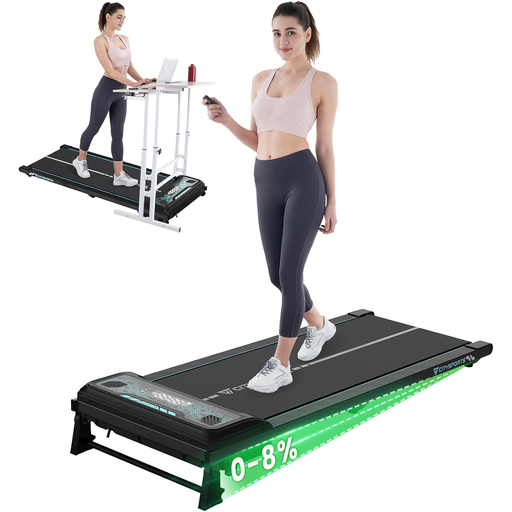
Why This Fits Their Persona: This model is an excellent entry point for those wanting to try incline walking without a large financial commitment. It's compact, ready to use straight out of the box and provides a fixed incline to boost workout intensity from day one.
It clearly states its manual incline, so there are no surprises. Its specified noise level of below 45 dB confirms it is genuinely quiet, avoiding the vague "quiet motor" claim.
Features a multi-layer, shock-absorbing belt for joint comfort and requires no assembly, making it perfect for beginners who value convenience.
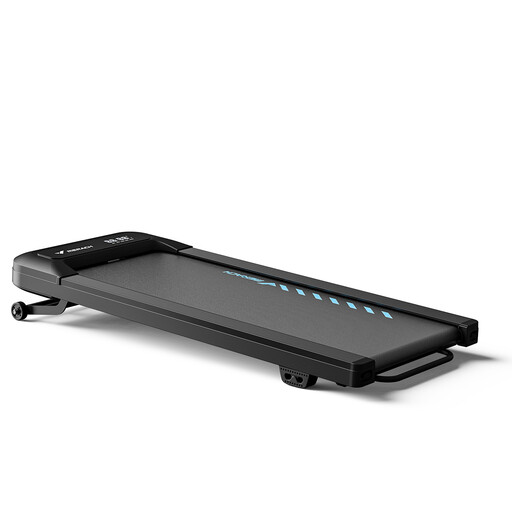
Why This Fits Their Persona: Designed for the dedicated remote worker, this pad's key feature is its 9% auto incline, adjustable via remote. This allows for varied intensity without interrupting workflow, making it a true under-desk workhorse.
It delivers on the promise of a convenient incline, offering true remote-controlled automatic adjustment. It also specifies a dual shock absorption system and a 5-layer belt, addressing the need for proper joint protection during long sessions.
The combination of auto incline, a quiet motor (under 45dB) and app connectivity for tracking progress makes it a comprehensive tool for integrating serious fitness into the workday.
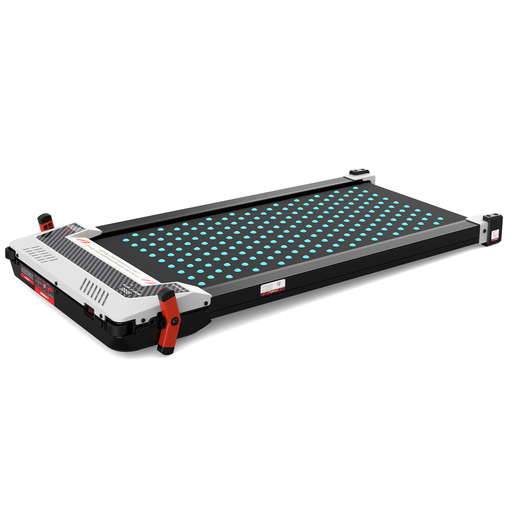
Why This Fits Their Persona: This unique device caters to those who see fitness as part of a broader wellness routine. It combines a walking pad with a 6% manual incline on one side and a five-level foot massager on the other for post-workout recovery.
Its 2-in-1 nature is its core selling point, not a gimmick. It provides two distinct, functional features in one space-saving unit. The sub-45 dB noise level ensures the walking function is discreet and suitable for home use.
The integrated foot massager offers a tangible recovery benefit, setting it apart from standard walking pads and providing more value from a single piece of equipment.
We have compiled a complete, real-time list of products that fully satisfy these strict selection criteria and UK safety regulations.
The running cost is surprisingly low. A typical walking pad motor is around 500 Watts (0.5 kW). Based on an average UK electricity price of 25p per kilowatt-hour (kWh), using the walking pad for one hour would cost approximately 12.5p. Even with daily use, the impact on your electricity bill is minimal.
Yes, provided you choose the right model. Prioritise a walking pad with a specified noise level of under 50 dB. Additionally, look for models with robust, multi-layer shock-absorbing belts. For extra peace of mind, placing a high-density rubber treadmill mat underneath the unit can further dampen vibrations and noise.
The terms are often used for the same type of product. Generally, both refer to compact, low-profile treadmills without the large console and handrails of traditional machines. The term under desk treadmill specifically highlights its suitability for use in a seated-to-standing desk setup, allowing you to walk slowly while you work. Most walking pads are designed with this dual use in mind.