
24/7 Customer Support

Free returns

Same-day & Next-day Delivery

Quality Guaranteed

Unlock Your Welcome Offers: FREE Delivery | Up to 80% OFF | Free 30-day JoyPlus trial
Download the APP
Hanging a new shelf, mirror or television should be a satisfying task. Yet, we've all heard stories—or experienced it ourselves—of a fixture coming loose or, worse, crashing down. The culprit is almost always the same: the wrong wall fixings. With so many types available, from simple plastic plugs to complex anchors, choosing the correct one can feel overwhelming.
This guide cuts through the confusion. As a Joybuy Product Recommendation Officer, my role is to provide clear, practical advice to help you select the right fixing for your specific wall type and project. We will explore the key factors to consider and highlight a few reliable options for common household tasks, ensuring your next DIY project is a secure and lasting success.
Before you buy, a few moments of preparation can save you a lot of trouble later. The success of any mounting job depends on matching the fixing to the wall and the weight it needs to support.
The single most important factor is the material of your wall. In the UK, homes typically feature two main types:
A simple tap on the wall can often tell you what you're dealing with. A solid wall will produce a dull thud, while a cavity wall will sound hollow between the studs.
Next, consider what you are hanging. Wall fixings are rated for different load capacities.
Based on versatility, reliability and user feedback, here are our recommendations for three common scenarios.
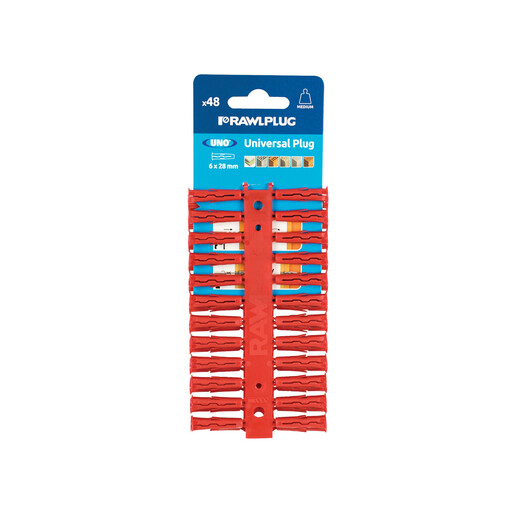
Why It Stands Out: The RAWLPLUG UNO is a true all-rounder. Its universal design allows it to function effectively in both solid materials like brick and concrete, and hollow substrates like plasterboard. The unique expanding barrel and anti-rotate ribs ensure it locks firmly in place without spinning in the hole.
Pros:
Who is it for? This is an essential for any DIY enthusiast or tradesperson. It's the go-to choice for a huge range of everyday tasks, from putting up shelves and light fittings to securing trunking.
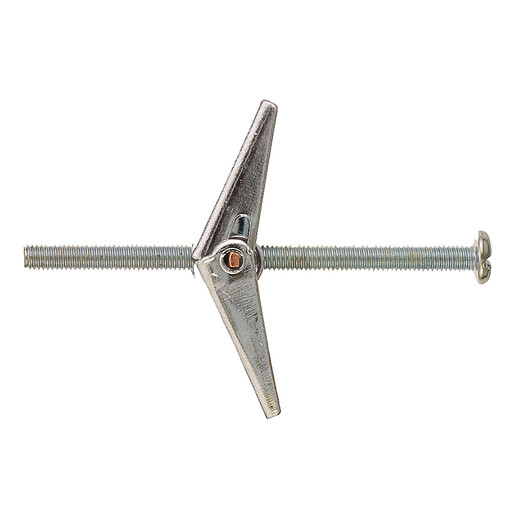
Why It Stands Out: When you need to hang something heavy on a cavity wall, a spring toggle is a classic and dependable solution. This fixing works by passing a folded, spring-loaded 'wing' through a drilled hole. Once inside the cavity, the wing opens up, creating a large contact area that spreads the load across the back of the plasterboard.
Pros:
Who is it for? Anyone needing to mount medium-to-heavy items on a cavity wall. It's perfect for securing large mirrors, radiators or wall-mounted cabinets where you cannot fix directly to a stud.
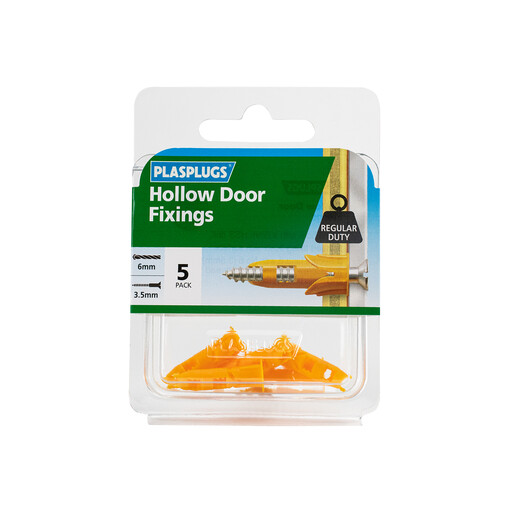
Why It Stands Out: Standard wall fixings are too long and bulky for the thin skins of modern hollow interior doors. These specialised hollow door fixings from Plasplugs solve that problem. They use a clever rivet-like action, where tightening the screw causes the body of the fixing to expand and grip the inside of the door panel securely.
Pros:
Who is it for? Homeowners and renters who need to attach light items to hollow interior doors without causing damage. It’s a simple solution to a very common problem.
The products highlighted here cover some of the most common DIY scenarios, but every project is unique. If you're tackling a different kind of job or need a fixing with a specific load rating, there are many other solutions available.
For a wider selection of anchoring solutions, browse our full range of wall plugs.
A standard wall plug is designed for solid walls. It works by expanding to create friction against the sides of the hole you've drilled. A cavity fixing, such as a spring toggle or drywall anchor, is for hollow walls like plasterboard. It passes through the board and then expands or opens up in the void behind it, clamping onto the back of the board to spread the load.
The packaging for your wall fixings will almost always specify the correct screw size (both gauge/diameter and length). As a general rule, the screw should be long enough to pass through the item you are mounting and then penetrate the full length of the plug to ensure it expands properly.
It is generally not recommended to reuse plastic screw fixings like wall plugs. Once they have been expanded and then removed, they lose much of their structural integrity and gripping power. For safety and a secure hold, it is always better to use a new fixing for each application.