
24/7 Customer Support

Free returns

Same-day & Next-day Delivery

Quality Guaranteed

Unlock Your Welcome Offers: FREE Delivery | Up to 80% OFF | Free 30-day JoyPlus trial
Download the APP
Choosing the right wall fixings and screws is less about buying the largest pack and more about matching the fastener to the wall, load and fixture. A fixing that works for a small picture may be unsuitable for a radiator, cabinet or door frame. The wrong choice can lead to loose fittings, damaged plasterboard and unnecessary repeat purchases.
This guide from the Joybuy Product Recommendation Officer explains the practical specifications to check, common buying traps and suitable options for DIY enthusiasts, homeowners and trade users across the UK.
A masonry plug is designed to expand inside solid materials such as brick, concrete or blockwork. It does not provide the same grip in hollow plasterboard. For partition walls, look instead at plasterboard fixings, cavity anchors, self-drilling fixings or spring toggles, depending on the fixture and expected load.
Before drilling, identify the substrate. Check whether the wall is:
Use a cable and pipe detector where appropriate, and avoid drilling near sockets, switches and visible plumbing routes.
A pack of hundreds may appear economical, but assorted screws are only useful if they include the sizes and drive type required for your projects. A 570-piece self-tapper set, for example, may be practical for a workshop, while a six-pack of cavity fixings is more suitable for one shelf or bathroom accessory installation.
Compare the usable size range, head design, material and storage method rather than the piece count alone.
The stated screw length is not always the same as the usable fixing depth. A frame fixing must pass through the frame and penetrate sufficiently into the masonry. A cavity fixing must suit the thickness of the board and any tiles, brackets or battens.
Do not select a fixing solely because it is described as “heavy-duty”. Check the manufacturer’s stated substrate, drill diameter, fixture thickness and load guidance. Loads may also be affected by spacing, wall condition and how the item is used.
For plasterboard, self-drilling plasterboard fixings can be convenient for lighter fixtures because they cut into the board without a separate pilot hole. They are not automatically suitable for heavy or frequently used items.
For greater load distribution, consider heavy-duty plasterboard fixings, cavity wall fixings or spring toggle fixings. Spring toggles spread their load behind the board and can suit larger fixtures on low-strength cavity walls and ceilings, including some lath-and-plaster applications.
For brick, concrete and blockwork, frame fixings and screws are designed to pass through timber or metal frames and anchor into the substrate. Select the drill size and maximum fixture thickness carefully.
For timber, choose a screw long enough to achieve adequate penetration without emerging from the material. The Fixman Goldstar range includes 5 x 50mm and 5 x 80mm options, both with flat heads, self-countersinking nibs and star-drive recesses.
Countersunk screws are useful where a flush finish is required. A compatible drive bit matters: a star drive, PZ or slotted recess should not be mixed with an unsuitable bit, as this increases the chance of cam-out and head damage.
Zinc-plated steel is commonly used for indoor woodworking and general construction. A2 stainless steel offers greater corrosion resistance and may be more suitable for humid areas or selected outdoor applications, subject to the product instructions and environmental conditions.
For exterior work, confirm that the fixing, screw and any washer or bracket are compatible with the environment. A corrosion-resistant screw does not make an unsuitable wall fixing suitable for outdoor loads.
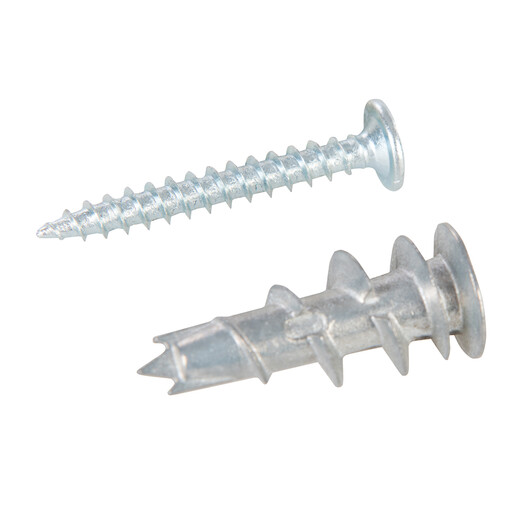
Why This Fits Their Persona: A practical stock option for homeowners handling several light-duty plasterboard jobs, such as small fittings, hooks and accessories.
Its self-drilling design avoids buying a separate setting tool or relying on an unsuitable masonry plug for plasterboard.
100-piece pack; anti-corrosion finish; installation with a screwdriver and no pre-drilling.
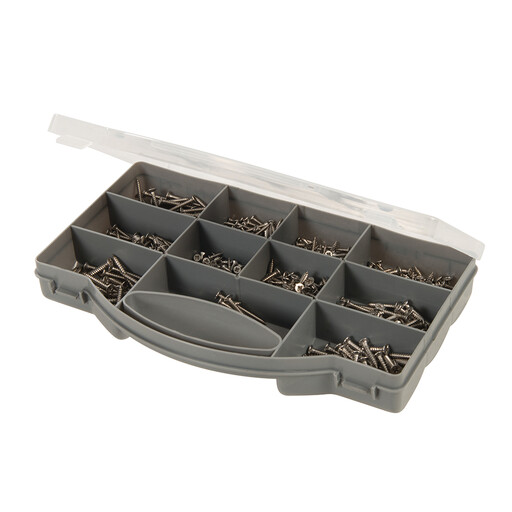
Why This Fits Their Persona: Suitable for users who want a broad workshop assortment with a corrosion-resistant material for varied indoor and selected outdoor tasks.
The labelled size assortment makes it easier to match screw length and diameter instead of forcing one size into every application.
A2 stainless steel; 570 assorted self-tapping countersunk screws; compartmental storage case.
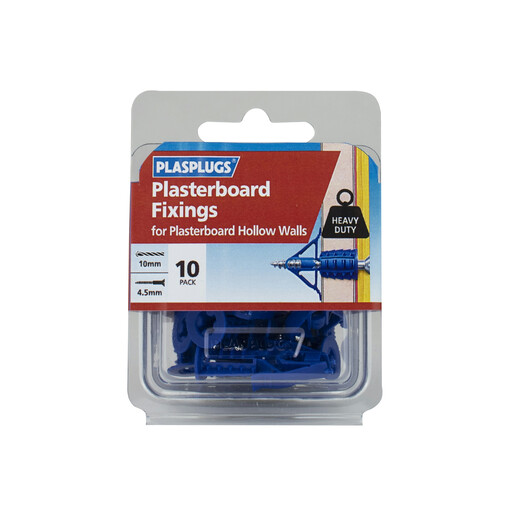
Why This Fits Their Persona: Intended for medium-to-heavy fixtures on hollow walls, including shelving units, battens, wall lights and small mirrors.
The product specifies a 10mm drilled hole and No. 8 screw, giving the installer clear preparation details rather than vague load language.
Multi-thread expanding barrel; anti-rotate ribs; pack of 10; no special setting tool required.
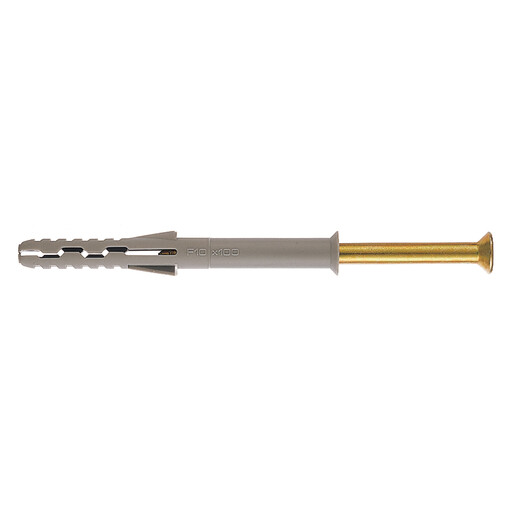
Why This Fits Their Persona: Designed for timber or metal window and door frames fixed to concrete, stone, brick or blockwork.
The stated 8 x 120mm size and maximum fixture thickness of 80mm help installers check penetration before drilling.
Pre-supplied screws; anti-rotation lugs; nylon sleeve; pack of 16.
For more options, including expansion screws, cavity anchors and general DIY fixings, browse the wider range below.
We have compiled a complete, real-time list of products that fully satisfy these strict selection criteria and UK safety regulations.
For light items, self-drilling plasterboard fixings may be suitable. For heavier fixtures, consider heavy-duty plasterboard fixings, Interset-style cavity fixings or spring toggles, provided the board thickness and load requirements match the product guidance. Do not use a standard masonry plug in hollow plasterboard.
A fixing can remain serviceable for many years when installed in a suitable substrate, protected from incompatible moisture or chemicals and not overloaded. Lifespan is affected by wall condition, movement, corrosion and repeated use. Recheck fittings such as shelves, grab rails and cabinets periodically.
They can be cost-effective for regular DIY, joinery or maintenance work, particularly when the case clearly labels sizes and drive types. For one installation, a smaller pack matched to the required substrate and fixture may reduce unused stock and avoid selecting an unsuitable screw.