
24/7 全天候客户支持

免费退货

当日/次日达

品质保障

开启新人专享福利: 全场免邮 | 低至 2 折 | 免费试用 30 天 JoyPlus 会员
下载 Joybuy
By Joybuy Product Recommendation Officer
A loose shelf, tilted mirror or falling picture is rarely caused by the screw alone. In many cases, the fixing was unsuitable for the wall, the load was underestimated or the installation instructions were overlooked. Choosing wall fixings and screws by appearance or pack size can lead to unnecessary repairs and wasted money.
Before buying, watch out for three common traps:
Start by determining whether you are drilling into plasterboard, a cavity wall, brick, concrete, blockwork, timber or masonry. Use a stud detector where appropriate and check for pipes and cables before drilling.
For solid brick and concrete, look for solid wall plugs, masonry wall plugs or heavy-duty wall plugs. The Plasplugs Solid Wall Super Grips range, for example, is specified for concrete and brick, with colour-coded sizes for different screw diameters.
For hollow walls, suitable options include plasterboard fixings, cavity wall fixings, self-drilling plasterboard fixings and spring toggle fixings. These spread or expand behind the board rather than relying only on surface friction.
Consider both the weight of the item and how it will be used. A picture normally places less strain on a wall than a shelf loaded with books. A cabinet, radiator or wall-mounted bracket may also create a pulling force as well as downward weight.
Check the manufacturer’s guidance for:
For larger fixtures on weaker cavity walls, a toggle can distribute the load over a wider area. This can be useful for double-thickness plasterboard, lath and plaster, plywood or hardwood, provided the fixing is installed as directed.
The screw must fit the fixing and the material being fastened. Wood screws are designed for timber, while stainless steel self-tapping screws are useful for multipurpose fastening where corrosion resistance is important.
A2 stainless steel is generally selected for improved resistance to corrosion in suitable indoor and outdoor applications, but it is still important to confirm that the screw is compatible with the substrate and environment. For timber projects, countersunk heads can create a flush finish, while a star drive may help reduce bit slippage during installation.
Do not mix an unspecified screw with a specialist wall fixing. Some metal self-drilling plasterboard fixings are intended for use only with supplied screws and some cavity fixings require a particular M5 screw size.
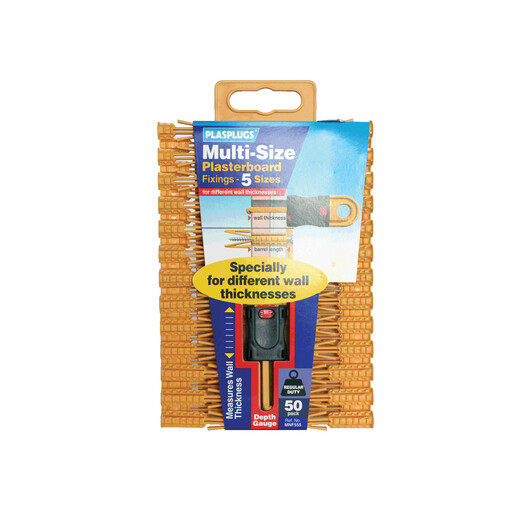
Why This Fits Their Persona: A practical option for household projects where wall thickness may vary, including picture frames, small shelves and general DIY installations.
The pack includes fixings for 7mm, 12mm, 15mm, 17mm and 22mm wall thicknesses, plus a depth gauge to help select the correct size.
50-piece assortment; helps accommodate several plasterboard thicknesses without buying separate packs.
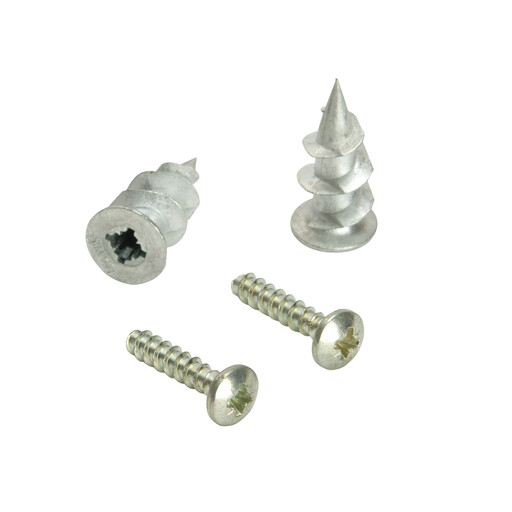
Why This Fits Their Persona: A trade-sized choice for installers, maintenance teams and homeowners handling repeated plasterboard work.
The required 8mm pilot hole and supplied-screw requirement are clearly specified, reducing the risk of treating it like a generic plug.
Metal construction; fits flush to the board; suitable for double-thickness plasterboard and lightweight or aerated concrete blocks as specified.
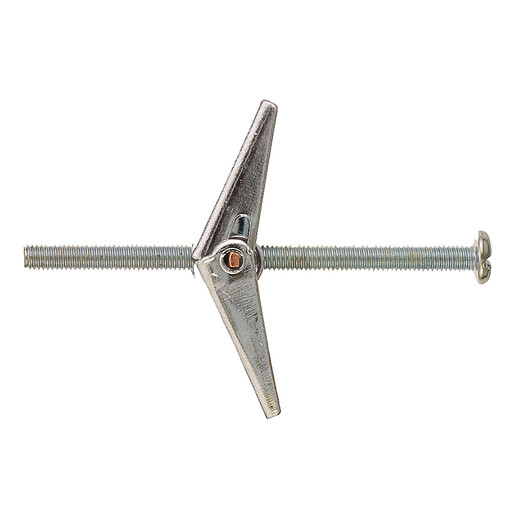
Why This Fits Their Persona: Suited to larger fixtures on cavity walls or ceilings with limited structural strength, such as substantial brackets and fittings.
Its spring toggle spreads the load behind the wall, rather than depending on a simple surface plug in a hollow substrate.
M5 x 50mm size; suitable for plasterboard, lath and plaster, plywood and hardwood; no special tool is specified.
We have compiled a complete, real-time list of products that fully satisfy these strict selection criteria and UK safety regulations.
For light items, regular plasterboard fixings may be sufficient. Medium or heavier fixtures may require cavity wall fixings, metal self-drilling fixings or spring toggle fixings. Check the board thickness, fixture thickness and manufacturer’s load guidance rather than relying on a generic “heavy-duty” label.
Many solid wall plugs are designed for brick and concrete, but the correct drill diameter and screw range still matter. For example, the Plasplugs brown heavy-duty options specify a 7mm drill and No. 8–14 screws. Always check whether the wall is solid brick, hollow block, aerated concrete or stone before installation.
A2 stainless steel self-tapping screws offer corrosion resistance for suitable applications, but service life depends on moisture, pollutants, contact with other metals and the surrounding material. Select the screw length and head type for the job and follow the product’s usage guidance rather than assuming every stainless steel screw is suitable for exposed conditions.