
24/7 Customer Support

Free returns

Same-day & Next-day Delivery

Quality Guaranteed

Unlock Your Welcome Offers: FREE Delivery | Up to 80% OFF | Free 30-day JoyPlus trial
Download the APP
Wall lights can improve a room’s atmosphere, provide task illumination or make an outdoor entrance easier to navigate after dark. However, choosing the right fitting involves more than selecting a colour or shape. The wrong product may be difficult to install, unsuitable for damp conditions or too bright for the intended space.
This guide explains the practical details to check before buying wall lights, from RGB controls and IP ratings to bulb compatibility and dimming requirements.
RGB LED wall lights and music sync LED panels are designed mainly to create ambience. They may add colour and visual interest to a gaming room, bedroom or living room, but they are not necessarily suitable as the only light source for reading, cooking or detailed work.
For functional lighting, check the bulb type, maximum wattage, shade direction and whether the fitting produces focused or diffused light.
A product intended for indoor use should not be installed outside, even if it appears robust. Outdoor wall lights need protection against rain, dust and changing temperatures. Look for an IP rating, such as IP65, and confirm whether the entire fitting—not just one component—has been described for exterior use.
Also check the installation requirements. Mains-powered exterior lights may require a qualified electrician and suitable protection under the relevant UK electrical installation requirements.
Smart wall lights can use an app, remote control, timer, music synchronisation or voice assistant integration. These functions are not interchangeable. Before purchasing, check whether the product requires a separate hub, which mobile operating systems are supported and whether music sync works through the app or a built-in microphone.
For renters, consider how the light attaches to the wall and whether the mounting method can be removed without leaving significant marks.
The IP code indicates resistance to solids and moisture. The first digit relates to protection from solid particles, while the second refers to water resistance. An IP65 waterproof exterior wall lamp is generally marketed as dust-protected and resistant to water jets, making this rating relevant when comparing outdoor wall lights with motion sensors.
An IP rating does not automatically confirm that a fitting is suitable for every exposed location. Check the manufacturer’s instructions, cable entry points and installation position before fitting it near a driveway, garden gate or porch.
For interior fittings such as industrial wall sconces or retro swing arm wall lights, verify:
A wall light described as dimmable may still need a separate dimmer switch. For example, a fitting with an E27 socket can offer flexibility, but the bulb and control system must still be compatible.
Measure the available wall area, including clearance around doors, shelves and headboards. Adjustable arms are useful for reading corners and home offices, while downward-facing shades can provide more concentrated illumination.
Also distinguish between plug-in and hardwired designs. Hardwired fittings need the power to be isolated before installation and may require a qualified electrician. Decorative panels may use mounting accessories and a power adapter instead, but the number of connected panels should not exceed the stated limit.
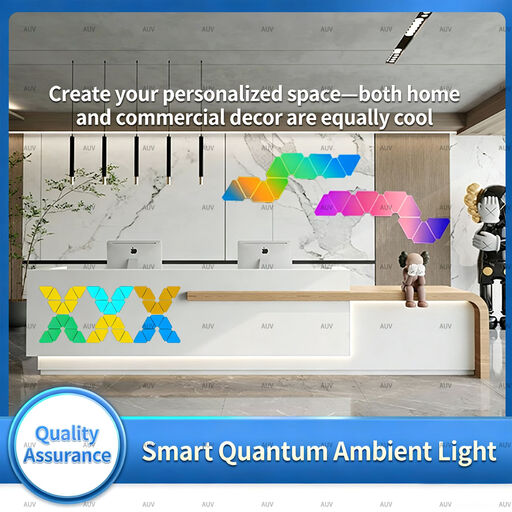
Why This Fits Their Persona: A flexible choice for renters, gamers and shoppers creating decorative lighting without committing to hardwired installation. The six triangular panels can be arranged into different patterns in bedrooms, gaming rooms or living spaces.
The listing identifies app and remote control functions, along with a timer and music-sync mode, so buyers can check the controls before ordering rather than assuming smart features are included.
Six triangular panels, 16 million colour options, 210+ scene modes, app control and a remote control are specified. Keep the panels away from water and moisture.
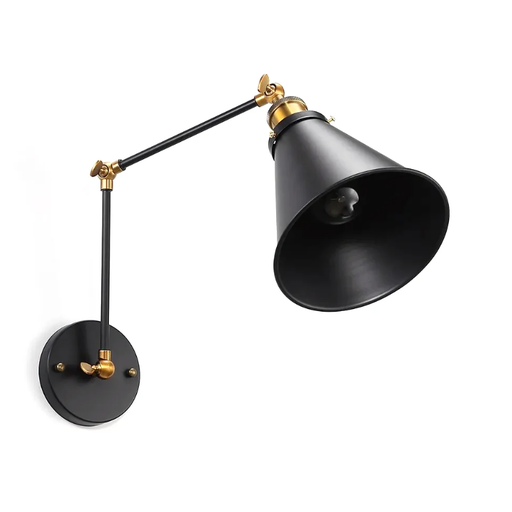
Why This Fits Their Persona: Suited to homeowners and interior design enthusiasts who want a defined vintage-industrial feature for a bedroom, living room, reading nook or home office.
The specification clearly states the 220–240V supply, E27 bulb base, 40W maximum and external dimmer requirement. This helps prevent surprises about bulb fit or missing controls.
Metal construction, black and brass finish, two adjustable swing arms and compatibility with an external dimmer are specified. The bulb and dimmer are not included.
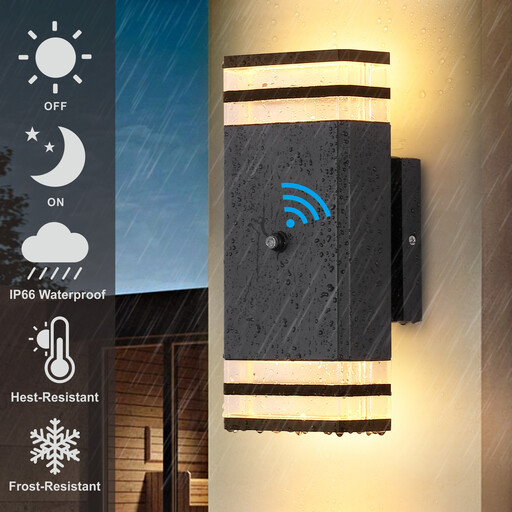
Why This Fits Their Persona: A practical match for homeowners who need exterior lighting around a house, garden, entrance or pathway and want movement-triggered illumination.
The product title specifies a motion sensor and IP65 rating, giving buyers two practical details to compare instead of relying only on appearance or general “outdoor” wording.
Two black exterior wall lamps are supplied, with motion-sensor operation and an IP65 rating stated in the listing. Confirm wiring and installation requirements before fitting.
For bedroom and living room wall lights, consider warm-colour bulbs, adjustable direction and glare control. Bedside fittings should not protrude into walking areas, while living room fixtures can work as accent lighting alongside ceiling lights.
For gaming rooms, triangular gaming wall lights and music sync LED panels create changing colour effects. Position them away from direct moisture and plan the layout before attaching panels permanently.
In hallways and home offices, directional industrial wall sconces or adjustable swing arm fittings can provide more useful task illumination. Outdoors, prioritise the IP rating, motion-sensor settings and access to a suitable power supply.
We have compiled a complete, real-time list of products that fully satisfy these strict selection criteria and UK safety regulations.
It depends on the design. Plug-in or adapter-powered decorative lights may be straightforward if the supplied instructions allow it. Hardwired wall lights normally require the power to be isolated and should be installed by a qualified electrician in accordance with applicable UK requirements.
Running cost depends on wattage, daily usage and the unit price of electricity. LED products generally state their wattage on the packaging or specification sheet. To estimate usage, multiply the wattage by operating hours, then compare the result with your electricity tariff.