
24/7 Customer Support

Free returns

Same-day & Next-day Delivery

Quality Guaranteed

Unlock Your Welcome Offers: FREE Delivery | Up to 80% OFF | Free 30-day JoyPlus trial
Download the APP
Wall lights can improve visibility, add warmth to a room and make an exterior entrance easier to navigate. However, choosing a suitable fitting involves more than selecting a colour or shape. The wrong IP rating, unsuitable bulb specification or poor placement can leave you with glare, weak illumination or an expensive installation that does not meet your needs.
This guide explains the key details to check before buying wall lights, followed by product recommendations matched to different UK homes and use cases.
Modern wall sconces, black wall lights and gold wall sconces can complement a carefully planned interior, but decorative appeal should not come before suitability. A fitting designed for indoor use should not be installed on a porch or garden wall simply because it looks appropriate.
Check the product’s IP rating before purchasing. Indoor fittings may have an IP20 rating, which is intended for dry interior spaces. Outdoor fittings need protection against moisture and dust, with IP65 offering a higher level of resistance than an un-rated or indoor-only product.
The colour temperature affects the atmosphere and perceived brightness of a room. Warm white wall lighting between 2700K and 3000K generally creates a softer appearance for bedrooms, hallways and living rooms. Cooler light may feel more functional in a study, utility area or garage.
A fitting described simply as “LED” does not automatically tell you whether its light will feel warm, neutral or cool. Check the Kelvin rating, particularly when matching new bedroom wall lights with existing lamps and ceiling lights.
Some LED wall lights have an integrated LED module rather than a replaceable bulb. This can reduce the need to buy separate bulbs, but the fitting may require replacement if the LED unit eventually fails. Other products use standard bases such as E14 or E27, allowing you to choose a compatible bulb.
Also check whether bulbs are included, whether the light is dimmable and whether a qualified electrician is required. Hardwired wall lights should be installed in accordance with UK electrical requirements, with the power isolated at the consumer unit before installation or maintenance.
For outdoor wall lights, look for a clearly stated IP rating. IP65 waterproof exterior wall lights are designed to offer protection from dust and water jets, making them suitable for many sheltered or exposed exterior locations. Even with an appropriate rating, installation should follow the manufacturer’s instructions, including suitable wall support and cable protection.
Motion sensor wall lights can be useful beside entrances, garages and paths. Check the sensor’s detection area and whether the light remains on for an adjustable period. Avoid positioning the sensor where passing traffic, foliage or neighbouring properties could trigger it unnecessarily.
Wattage indicates energy consumption, not brightness alone. Lumens provide a more useful indication of the visible light output. For example, one of the indoor products below is listed at 1200 lumens from 18W, which provides a clearer basis for comparison than wattage by itself.
For general hallway wall sconces, lower output may be sufficient. A study, staircase or large living room may need several fittings or a higher-lumen design. Consider spacing as well as individual light output to avoid bright patches and dark areas.
Check whether a product uses an integrated LED or a replaceable bulb. An E14 fitting requires an E14 bulb, while an E27 fitting needs an E27 bulb. Never exceed the stated maximum wattage.
Some fittings support an external dimmer, but compatibility depends on both the lamp and the selected bulb or LED driver. Adjustable swing arm wall lights offer directional control, although their movement range and mounting position should be checked before installation.
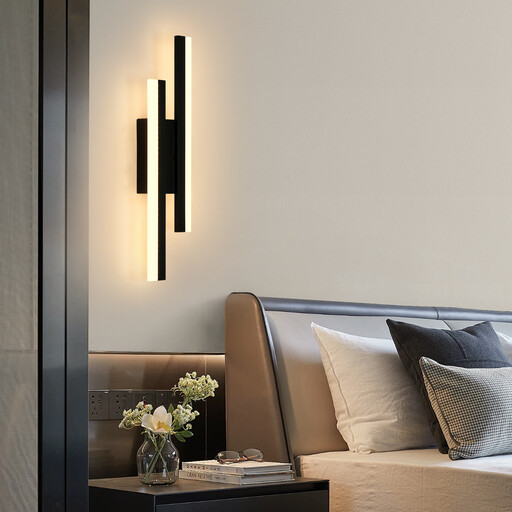
Why This Fits Their Persona: A straightforward integrated LED option for buyers furnishing a bedroom, staircase or hallway without adding separate bulb costs.
Its stated 3000K colour temperature makes the intended warm-white appearance clear, while the indoor positioning avoids accidental outdoor use.
16W integrated LED design; black finish and acrylic construction suit contemporary interiors.
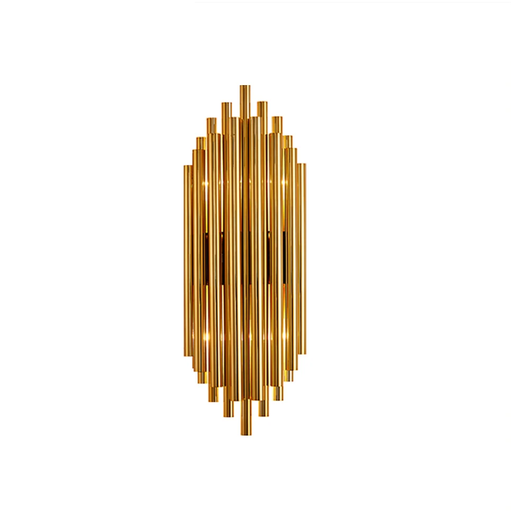
Why This Fits Their Persona: Suitable for homeowners, interior designers and developers seeking a decorative focal point for a hallway, living room or hospitality-style interior.
The specification identifies two E14 sockets, a 5W maximum per bulb and external-dimmer compatibility, helping buyers plan the electrical setup accurately.
Fluted stainless steel shade; flush-mount profile with up-and-down light distribution.
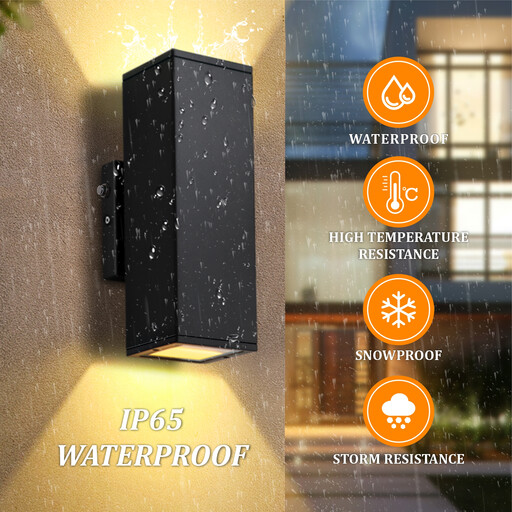
Why This Fits Their Persona: A practical match for entrances, porches, patios and garages where automatic activation and warm exterior illumination are useful.
The listing identifies outdoor use, a motion sensor, waterproof construction and 2700K warm light, rather than leaving these key details implied.
27cm square matte-black design; up-and-down LED illumination and stated ETL certification.
We have compiled a complete, real-time list of products that fully satisfy these strict selection criteria and UK safety regulations.
LED wall lights generally use less electricity than many traditional lighting technologies for a comparable light output, but running cost depends on wattage, daily use and the unit price of electricity. Compare wattage and lumens together rather than relying on the LED label alone.
A 2700K to 3000K warm white light is commonly suitable for bedrooms because it produces a softer, more relaxed appearance. The right choice still depends on your existing décor and other lighting in the room.
Outdoor wall lights should have a suitable IP rating for their installation location. An IP65-rated fitting offers protection against dust and water jets, but correct installation remains important. Check the manufacturer’s instructions and use a qualified electrician for hardwired connections.