
24/7 Customer Support

Free returns

Same-day & Next-day Delivery

Quality Guaranteed

Unlock Your Welcome Offers: FREE Delivery | Up to 80% OFF | Free 30-day JoyPlus trial
Download the APP
Wall mirrors can make a narrow hallway feel more open, brighten a darker bedroom and add a practical finishing touch above a bathroom basin or dressing table. However, attractive product photography does not always reveal the details that matter after installation.
Before choosing from the many wall mirrors available in the UK, look beyond colour and shape. The right purchase depends on the mirror’s dimensions, mounting method, frame material and intended room.
A mirror can look generously sized in an online photograph but feel underwhelming once placed above a console, mantel or basin. Check the listed height and width rather than relying on descriptive terms such as “large” or “statement”.
For a hallway, measure the available wall width and leave enough clearance around doors, hooks and furniture. A full-length mirror should also be tall enough to show your whole outfit from a practical standing distance.
A decorative mirror designed for a living room may not be suitable for a poorly ventilated bathroom. Moisture can affect some backing materials, finishes and fixings over time. For bathroom mirror shopping, look for rust-resistant metal or carefully sealed materials, and avoid placing non-bathroom products where they are exposed to continuous condensation.
Even a rust-resistant frame still needs sensible care. Ventilation, drying splashes and following the manufacturer’s cleaning instructions can help preserve the finish.
The mirror’s weight is only part of the installation decision. You also need to consider whether the wall is plasterboard, brick, blockwork or another surface, then choose suitable fixings. A large framed wall mirror may place considerable load on its brackets, particularly when its frame is made from iron or metal.
“Ready to hang” generally means the product includes hanging hardware or arrives assembled; it does not mean every wall can support it without the correct plugs and screws. Always check the instructions and secure the mirror to a suitable wall surface.
Write down the maximum available wall space before browsing. Consider:
An arched wall mirror softens angular furniture, while a rectangular design can make better use of a narrow vertical wall. A bevelled mirror adds a shaped edge that catches light, but the bevelled area is not part of the central reflection.
The frame affects appearance, weight and maintenance. Natural wood or MDF can work well in dry living areas, while aluminium and powder-coated metal are often practical choices where occasional moisture is expected.
Colour should support the existing room scheme rather than be selected in isolation:
Check the product’s stated materials instead of assuming that a “wood effect” frame is solid timber. For example, the Henley mirror uses 40% MDF and 60% mirrored glass, with a natural wood frame finish described as weathered antique grey.
Check whether the mirror is wall-mounted, leaner-style or freestanding. A freestanding mirror avoids drilling but needs a stable, level floor and sufficient clearance from busy walkways. For wall-mounted products, confirm the supplied hardware, hanging direction and weight.
For everyday care, use a soft microfibre cloth and follow the manufacturer’s instructions. Avoid abrasive cleaners and do not spray liquid directly into frame joints or mounting points. Products with safety film may reduce the risk associated with broken glass, but this does not make the glass unbreakable.
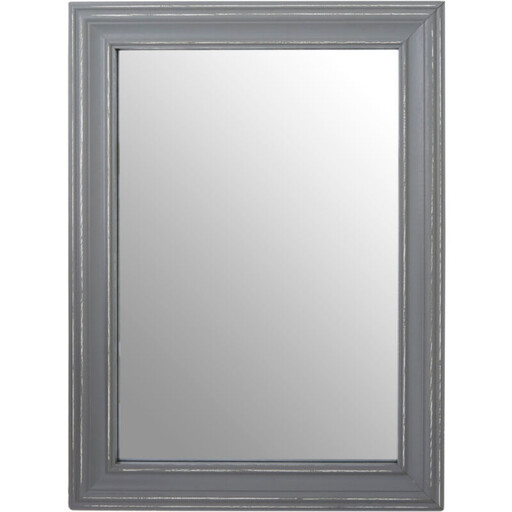
Why This Fits Their Persona: Its 48 × 65 cm size suits renters, first homes and smaller hallways where a compact framed mirror is needed. It can be hung portrait or landscape.
The stated dimensions, 2.75 kg weight and mounting guidance make it easier to plan the wall position before purchase.
Grey weathered-effect frame, bevelled corners and two hanging orientations.

Why This Fits Their Persona: This substantial square design suits homeowners styling a living room, dining area or spacious hallway around a strong geometric feature.
Its 95 × 95 × 3 cm dimensions and 13.5 kg weight clearly signal that a suitable, secure wall fixing is essential.
Six mirrored square sections, iron construction and a silver panelled frame.

Why This Fits Their Persona: The 161 cm height provides a practical full-length view for bedrooms, dressing areas and hallways where outfit checking is the main purpose.
The listing states the safety film is not a guarantee that the glass is unbreakable, keeping installation and handling expectations realistic.
Black aluminium alloy frame, rounded corners and vertical or horizontal mounting options.
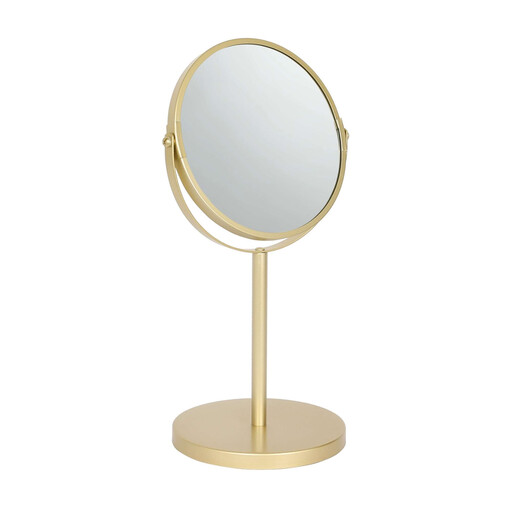
Why This Fits Their Persona: A tabletop format works for renters, small bathrooms and dressing tables where wall space is limited but detailed grooming visibility is useful.
The product is freestanding rather than dependent on uncertain wall fixings, and its compact footprint is stated clearly.
Dual-sided 1x and 2x magnification, 360-degree rotation and a weighted base.
We have compiled a complete, real-time list of products that fully satisfy these strict selection criteria and UK safety regulations.
The correct height depends on its purpose and the people using it. Position a hallway mirror so the main viewing area is comfortable for household members, while a bathroom mirror should align with the basin and available lighting. For a full-length mirror, prioritise an unobstructed view from head to toe and check that nearby furniture or doors will not interfere.
Some are suitable, but the product materials and care instructions should be checked first. Rust-resistant aluminium can be a practical frame material, although continuous steam and poor ventilation may still affect the mirror backing or fixings. Keep the room ventilated and wipe away condensation where appropriate.
There is no single lifespan for every mirror. Durability depends on glass quality, frame construction, wall stability, cleaning products and exposure to moisture. Secure installation, gentle cleaning and avoiding abrasive chemicals can help maintain the reflective surface and frame finish over time.