
24/7 Customer Support

Free returns

Same-day & Next-day Delivery

Quality Guaranteed

Unlock Your Welcome Offers: FREE Delivery | Up to 80% OFF | Free 30-day JoyPlus trial
Download the APP
Wall mirrors can make a narrow hallway feel brighter, add structure above a console table or provide a practical finishing touch in a bedroom or bathroom. However, attractive photographs and broad claims about “luxury” design do not always reveal whether a mirror will suit your wall, installation needs or everyday routine.
Before choosing decorative wall mirrors, look beyond appearance. The frame material, dimensions, hanging direction and mounting method can affect how useful the product remains after installation.
A mirror that looks moderately sized online may dominate a small UK hallway once mounted. Always compare the listed width and height with the available wall area, nearby doors, furniture and light switches. Remember to allow clearance around the mirror rather than measuring only the exact space it will occupy.
Some designs are intended mainly as decorative features, while others are more practical for daily use. Bathroom mirrors need careful consideration of moisture, ventilation and the wall surface. A frame with a textured, carved or painted finish may also require gentler cleaning than plain glass.
A heavy mirror needs suitable fixings for the wall type, whether that is plasterboard, masonry or another surface. Included fittings can simplify installation, but they may not be suitable for every UK wall. Check the product weight, hanging orientation and fixing instructions before drilling.
For bedroom mirrors, a taller portrait design can help with outfit checks, provided there is enough wall height. In a living room or hallway, a landscape mirror may work better above a sideboard or console.
Check whether the mirror can hang in either direction. Some framed wall mirrors are portrait-only, which limits placement but can also make the intended design clearer. The Croydex Arched Black mirror measures 50 × 73cm and is designed to hang portrait only, so it suits vertical wall areas rather than wide furniture arrangements.
The frame influences weight, maintenance and visual character. Aluminium can provide a relatively clean, contemporary outline, while MDF or natural wood-look finishes may suit traditional and transitional interiors. Textured metal can add visual interest but may collect dust in recessed areas.
A black arch mirror can create a defined focal point against a pale wall. A silver wall mirror or bevelled design may reflect more light visually and pair with chrome, glass or metallic fittings. Colour should coordinate with the room rather than being selected in isolation.
Look for clear information about the glass construction, edges and care instructions. A bevelled wall mirror has angled glass edges that can add depth and catch the light, but its layered appearance may make the product heavier than a simple flat mirror.
For larger or heavier designs, secure mounting is particularly important. Follow the supplied instructions, use fixings appropriate for the wall material and ask a qualified installer for help if you are uncertain about drilling or load-bearing capacity.
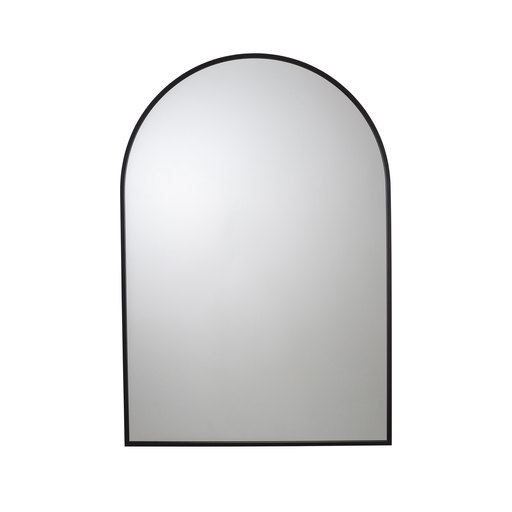
Why This Fits Their Persona: Its compact portrait proportions suit renters, first-time buyers and shoppers refreshing a bedroom, hallway or bathroom without taking up a broad section of wall.
The dimensions and portrait-only installation are clearly specified, reducing the risk of ordering a shape that cannot work in the intended position.
Black aluminium frame, safety-backed glass and included fixings. The 5.19kg weight should still be considered when selecting wall fixings.

Why This Fits Their Persona: This suits homeowners styling a living room, entrance or bedroom around a distinctive focal feature rather than a plain functional mirror.
The octagonal shape, three reflective layers and bevelled edges are specified as physical design details, rather than relying only on vague luxury wording.
The 60 × 60 × 3cm format creates a balanced feature wall, while the fully assembled MDF and mirrored-glass construction arrives ready to hang.
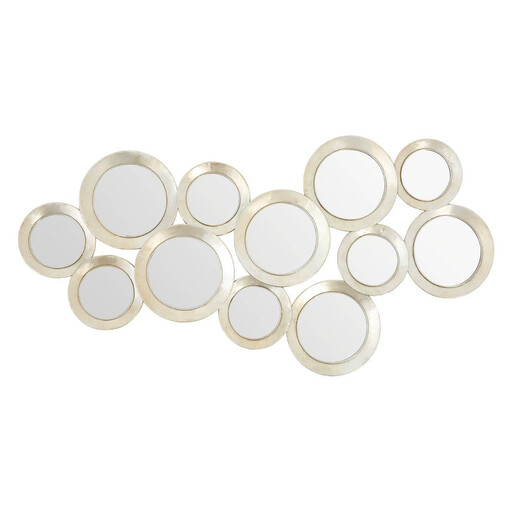
Why This Fits Their Persona: Its tall, narrow profile works well in UK hallways, entrance areas and smaller flats where a broad mirror may obstruct furniture or circulation.
The 54 × 107cm measurements show exactly how much vertical wall space is needed, while the included fittings remove uncertainty about basic mounting preparation.
Multiple circular glass panels and a hammered iron silver finish provide a layered decorative effect. Dust the textured frame with a soft, dry cloth.
We have compiled a complete, real-time list of products that fully satisfy these strict selection criteria and UK safety regulations.
There is no single correct height. For a full or tall mirror, position the reflective area so household users can see comfortably without stretching. Above furniture, leave a visually balanced gap and centre the mirror with the unit rather than automatically centring it on the entire wall.
Lifespan depends on glass quality, frame construction, humidity, cleaning and secure installation. Keep the mirror dry where possible, avoid abrasive products and inspect fixings periodically. A frame that remains stable and a reflective surface that is cared for properly can continue to serve well for many years.
A standard wall mirror has no electricity requirement, so it does not add a direct running cost. It may help distribute daylight or existing artificial light, but this should be treated as a visual benefit rather than a guaranteed reduction in energy use.