
24/7 Customer Support

Free returns

Same-day & Next-day Delivery

Quality Guaranteed

Unlock Your Welcome Offers: FREE Delivery | Up to 80% OFF | Free 30-day JoyPlus trial
Download the APP
Wall mounted coat hooks can make a narrow hallway, busy bedroom or compact bathroom much easier to organise. However, a low price or attractive finish does not always indicate a suitable product. The wrong hook may loosen from the wall, allow coats to slide off or take up more space than expected.
Before choosing a wall mounted coat rack, look beyond promotional wording and check how the product will work in your home.
A listing may state that each hook supports a certain weight, but this usually depends on correct installation. Plasterboard, brick, tile and stud walls require different fixings. A hook attached to a weak anchor may not support a heavy winter coat, even if the metal itself is strong.
Treat the listed load as a product reference, not a guarantee for every wall. Use suitable wall anchors, avoid overloading and check the screws periodically.
Decorative coat hooks can look neat in product photographs but may have limited clearance for padded jackets, backpacks or bulky scarves. A single hook may also become overcrowded in a family hallway.
Double coat hooks offer two hanging points within a compact footprint. Groove details, rounded edges and an appropriate projection from the wall can help prevent garments and accessories from slipping or catching.
Water-resistant aluminium or coated metal can be useful in bathrooms and utility areas, but installation still matters. Persistent condensation, poor ventilation and unsuitable screws can affect the wall and fixings. For bathroom towel hooks, leave enough space for towels to dry and avoid placing the rack where it receives direct splashes.
Aluminium coat hooks are lightweight and naturally resistant to rust, making them practical for hallways, bathrooms and kitchens. Stainless steel is another option for humid areas. Wooden coat racks can provide a warmer appearance, but check whether the wood has a protective varnish or other finish.
The KAPANOU wooden designs combine FSC-certified rubberwood with aluminium alloy hooks and a varnish layer. This gives the rack a mixed wood-and-metal appearance while providing a wipe-clean surface. Avoid abrasive cleaners, particularly on painted, varnished or coated finishes.
Think about what you will hang most often:
Also measure the available wall width and check the product dimensions before ordering. Leave clearance around doors, light switches and furniture.
Many wall-mounted products include screws and expansion plugs, but the supplied hardware may not suit every UK wall. Brick and masonry generally require masonry fixings; plasterboard may need cavity anchors or fixing into a stud. Tiled walls require care during drilling to reduce the risk of cracking.
Mark the holes accurately, use a suitable drill bit and ensure the rack is level. Do not use a coat hook as a grab rail, climbing aid or support bar. If you rent, check your tenancy agreement before drilling.
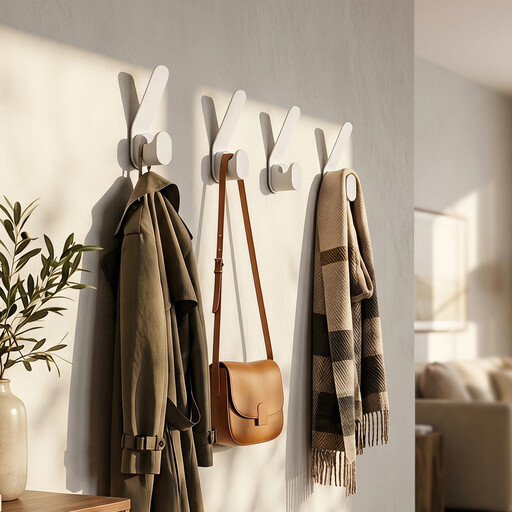
Why This Fits Their Persona: Eight separate dual hooks allow renters, first-time homeowners and small families to arrange storage around a hallway, behind a door or in a bedroom.
The dual-hook and groove design helps keep several items separated rather than forcing everything onto one crowded peg. Installation uses wall anchors and screws, so the wall type should be checked first.
Aluminium construction is described as waterproof and rust-resistant; each dual hook is listed with a capacity of up to 11 lb, subject to secure fitting.
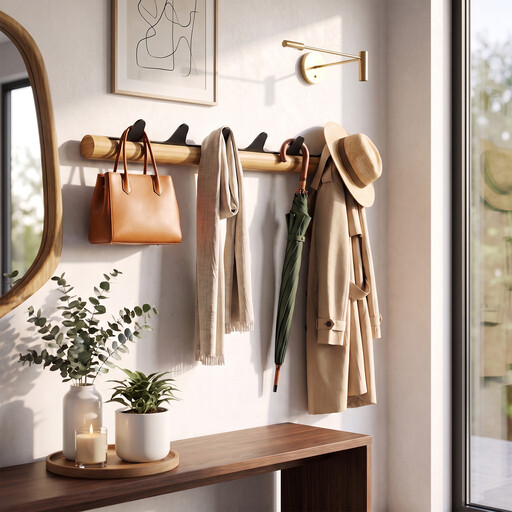
Why This Fits Their Persona: The solid FSC-certified rubberwood rail and aluminium alloy hooks suit homeowners seeking a functional rack with a warmer, furniture-like finish.
The product specification identifies the wood, protective varnish and hook material instead of relying only on a decorative description. Rounded edges are intended to reduce snagging on clothing.
Six hooks are listed with a total capacity of up to 66 lb (30 kg), provided the rack is correctly anchored and the load is distributed.
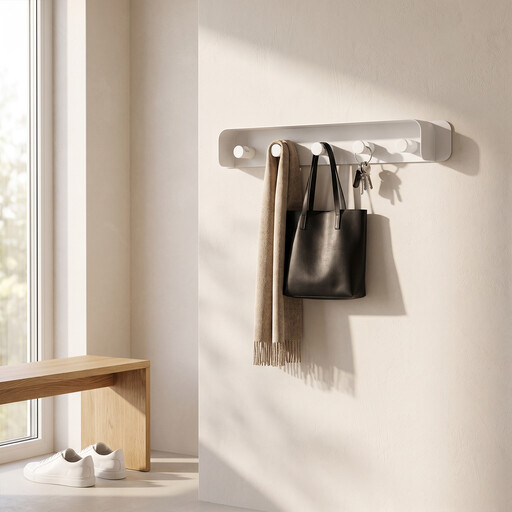
Why This Fits Their Persona: The five-hook rail and floating shelf suit family entryways, shared homes and utility areas where coats, bags, keys and small items need dedicated places.
The shelf adds storage without requiring another wall fitting, while the groove detail is designed to help prevent hanging items from slipping off.
The aluminium rack is listed as supporting up to 55 lb (about 25 kg), with included mounting accessories and instructions. Use suitable anchors for the wall.
We have compiled a complete, real-time list of products that fully satisfy these strict selection criteria and UK safety regulations.
They can be, but the fixing must match the plasterboard construction and expected load. Use an appropriate cavity anchor or fix into a stud where possible. For heavy coats and bags, do not rely on a basic plug intended for lightweight items.
Allow one or two hanging points per regular user, then consider additional space for visitors, umbrellas, hats and bags. A set of separate hooks gives more flexibility than a short rail, while a hallway coat rack can create a more uniform appearance.
They have no running cost, but they do require occasional checks. Inspect screw tightness, look for movement and avoid exceeding the stated capacity. In bathrooms, keep the area ventilated and clean moisture from the surface when necessary.