Hanging a new shelf, a heavy mirror or even a simple coat hook should be a straightforward task. Yet, it often ends in frustration when the fixing doesn't hold, leaving you with a wobbly fixture and a damaged wall. The secret to a secure and lasting installation isn't just about drilling a hole; it's about choosing the correct wall plugs and fixings for your specific wall type and the weight of the object you're mounting.
With so many options available, it’s easy to feel overwhelmed. This guide cuts through the confusion, helping you understand the key differences between fixings and identify the right solution for your project, whether you're a seasoned tradesperson or a weekend DIY enthusiast.
How to Choose the Right Wall Plugs and Fixings
Before you buy, a few key considerations will ensure you get a secure fit first time. Taking a moment to assess your needs will save you time and prevent potential mishaps down the line.
1. Identify Your Wall Type
The single most important factor is the material you are drilling into. UK homes typically feature two main types of walls:
- Solid Walls: These are common in older properties and include materials like brick, concrete, stone and blockwork. They are dense and provide a solid base for standard expanding brick wall plugs. The plug expands as you drive a screw into it, creating a tight, friction-based grip.
- Hollow or Cavity Walls: Found in most modern homes, these consist of a void behind a surface board. The most common type is plasterboard (also known as drywall). For these, you need specialised plasterboard fixings or hollow wall fixings. These are designed to open up or anchor themselves against the back of the board, distributing the load over a wider area. This category also includes hollow doors and thin partitions.
A simple tap on the wall can often tell you what you're dealing with. A solid wall will produce a dull thud, while a hollow wall will sound empty.
2. Consider the Load Weight
Not all fixings are created equal when it comes to strength. Always match the fixing's load capacity to the item you intend to hang.
- Light-Duty: For items like small picture frames or smoke alarms, a standard universal plug is often sufficient.
- Medium-Duty: For shelves, large mirrors or curtain rails, you'll need a more robust fixing designed for the specific wall type.
- Heavy-Duty: For radiators, kitchen cabinets or wall-mounted televisions, always use heavy duty wall plugs or cavity wall anchors specifically rated for significant loads. The product packaging will usually provide guidance on maximum load capacity.
3. Match the Plug, Screw and Drill Bit
For a fixing to work correctly, the components must be compatible. Using a drill bit that is too large will result in a loose plug that spins in the hole. A screw that is too small won't expand the plug properly, leading to a weak hold. Most manufacturers print the required drill bit and screw sizes directly on the packaging or even on the plug itself. An assorted wall plugs pack is a great addition to any toolkit, providing a range of sizes for various jobs around the home.
Top Wall Fixing Recommendations
Based on common applications and user requirements, here are some reliable fixing solutions for different projects.
For Hollow Doors and Thin Panels: PLASPLUGS Hollow Door Fixings
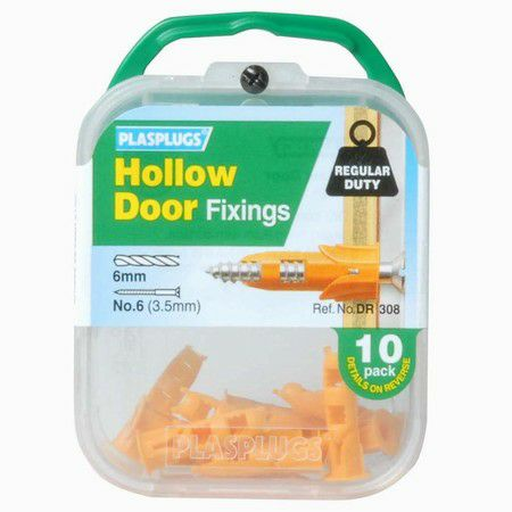
- Why It Stands Out: Standard fixings are often too long or fail to grip in the thin skin of a modern hollow-core door. These specialised fixings from Plasplugs solve that problem with a compact design that creates a secure anchor. When the screw is tightened, expanding wings grip the inside of the panel with a rivet-like action, providing a surprisingly strong hold in materials like plywood, fibreglass and thin partitions.
- Pros:
- Specifically designed for hollow doors and panels.
- Rivet-style action provides a secure internal grip.
- Suitable for use in homes, caravans and boats.
- Who is it for: Anyone needing to attach fixtures like nameplates, small hooks or accessories to internal hollow doors or other thin-skinned panels where a traditional plug would fail.
For General Use in Solid Walls: PLASPLUGS Solid Wall Super Grips Assorted Pack
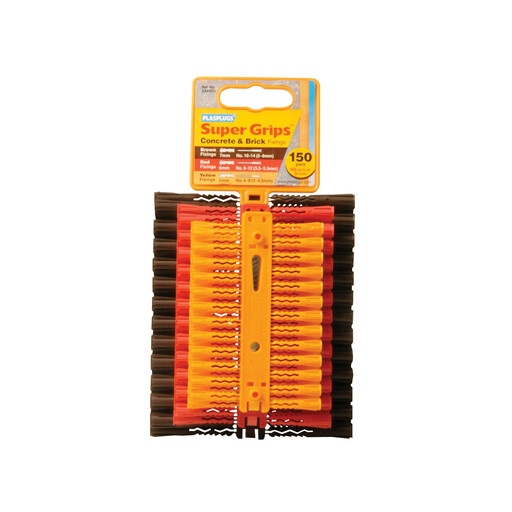
- Why It Stands Out: This assorted pack is an excellent toolkit staple for anyone working with brick or concrete walls. It contains 150 plugs across three common sizes, colour-coded for easy identification: yellow for regular duty (screws No. 4-8), red for regular duty (screws No. 6-12) and brown for heavy-duty applications (screws No. 8-14). This removes the guesswork and ensures you have a reliable plug on hand for most solid-wall tasks.
- Pros:
- Contains 150 plugs in three versatile sizes.
- Colour-coded for quick and easy selection.
- Covers a wide range of screw sizes for regular and heavy-duty use.
- Who is it for: Homeowners and tradespeople who frequently work with solid walls and need a convenient, well-stocked supply of reliable brick wall plugs.
For Heavy Items on Plasterboard: PLASPLUGS Heavy-Duty Plasterboard Fixings
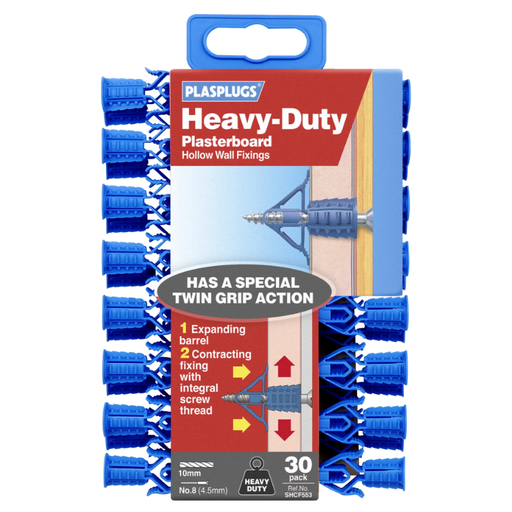
- Why It Stands Out: Securely hanging heavy items like shelving units or wall lights on plasterboard requires a specialised approach. These heavy-duty plasterboard fixings are engineered for that exact purpose. After drilling a 10mm hole, the fixing is inserted and the screw is driven in. This action causes the barrel to expand and contract, creating a firm anchor behind the board. The multi-thread technology helps ensure superior holding power where standard plugs would pull out.
- Pros:
- Designed for medium to heavyweight items in plasterboard.
- Expanding barrel creates a strong anchor in the cavity.
- Ideal for shelving, wooden battens and small mirrors.
- Who is it for: DIYers and installers in modern homes who need a dependable solution for mounting heavier objects onto plasterboard walls without compromising safety.
For All-Round Versatility: RAWLPLUG Brown UNO Plugs
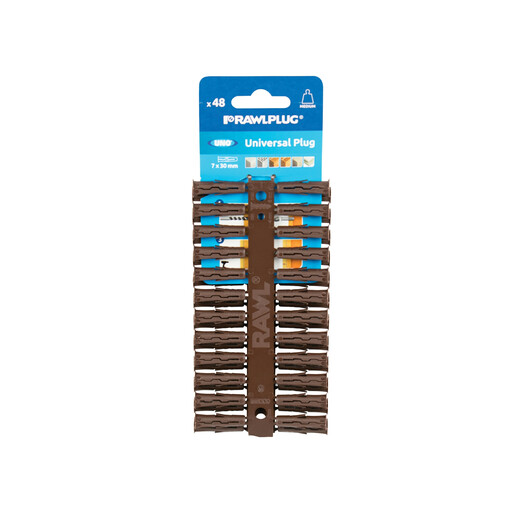
- Why It Stands Out: The Rawlplug UNO is a true universal wall plug, making it a highly practical choice for professionals and DIYers alike. Its unique design allows it to function effectively in almost any substrate, including concrete, brickwork, blockwork and even plasterboard. The plug expands throughout its entire length for an instant grip, while anti-rotation fins prevent it from spinning in the hole during installation. This versatility means you can carry one type of plug for multiple jobs.
- Pros:
- Truly universal, suitable for solid and some hollow materials.
- Anti-rotation features for a hassle-free installation.
- Expansion along the full length of the plug provides a secure hold.
- Who is it for: Tradespeople and home improvement enthusiasts who value efficiency and want a high-performance, all-in-one fixing that works reliably across a wide variety of wall types.
Looking for More Options?
If your project requires a different size, load capacity or a more specialised fastener, we have a wider selection available. From concrete screws to frame fixings, finding the right component is key to a professional finish.
Explore our full range of Nails & Fasteners to find the perfect solution for your needs.
Frequently Asked Questions about Wall Fixings
What is the difference between a wall plug and a cavity wall anchor?
A standard wall plug is designed for solid materials. It works by expanding within a drilled hole to create a tight friction fit. A cavity wall anchor, on the other hand, is a type of hollow wall fixing for materials like plasterboard. It is designed to pass through the board and then expand or deploy wings in the empty space behind it, clamping itself firmly to the back of the wall surface.
Can I reuse wall plugs?
It is generally not recommended to reuse wall plugs. Once a screw has been inserted and removed, the plastic or nylon is often deformed and loses its original shape and gripping power. For a secure and reliable hold, it is always advisable to use a new plug for each installation.
How do I know what size screw to use with a wall plug?
Most manufacturers provide clear guidance. The required screw size (e.g., No. 8 or 4.5mm) and drill bit diameter are typically printed on the packaging. Many assorted wall plugs also use a colour-coding system (e.g., yellow, red and brown) that corresponds to specific screw and load ranges, simplifying the selection process. Always check the manufacturer's instructions for a secure fit.


