
24/7 Customer Support

Free returns

Same-day & Next-day Delivery

Quality Guaranteed

Unlock Your Welcome Offers: FREE Delivery | Up to 80% OFF | Free 30-day JoyPlus trial
Download the APP
Choosing wallpaper adhesive is not simply a matter of picking the largest tub or the product with the strongest wording on its label. The correct wallpaper paste depends on the wallcovering, application method, room conditions and amount required. A mismatch can lead to bubbling, slipping, peeling or wasted product.
This guide explains the practical details UK DIY decorators, homeowners and professional decorators should check before buying, with suitable options for small rooms, full renovations and heavier wallcoverings.
An adhesive may be listed as suitable for several wallpaper types, but different wallcoverings can still require different paste strengths, application methods or drying conditions. Vinyl, embossed, textile and heavy wallcoverings place greater demands on adhesion than lightweight lining paper.
Always check the wallpaper manufacturer’s instructions before choosing between paste-the-wall adhesive and paste-the-paper adhesive. Some products support both methods, while others are intended for a particular application.
A product advertised as suitable for “up to 10 rolls” may cover fewer rolls if the wallpaper is heavily embossed, wide, highly absorbent or applied to a porous wall. Coverage also depends on paste thickness and surface preparation.
For a small feature wall, a ready mixed wallpaper paste may be convenient. For a larger project, a dry sachet or larger pack of wallpaper adhesive can be easier to store and more economical per roll. Treat the stated roll count as a guide rather than a guarantee.
Extra strong wallpaper adhesive is useful for heavier wallcoverings, but strength alone does not prevent installation problems. A paste that mixes unevenly can create lumps, while insufficient slip can make pattern matching difficult. A wall that is dusty, damp or poorly repaired can also undermine adhesion.
Look for a smooth consistency, clear mixing instructions and compatibility with your chosen wallpaper. Allow adequate drying time and maintain ventilation, particularly in kitchens, bathrooms and rooms with limited airflow.
Start with the wallpaper type rather than the adhesive brand. For standard paper, lining paper and many non-woven products, a general-purpose paste may be suitable. For vinyl or embossed designs, look for wording such as paste for vinyl, heavy wallcoverings or extra-strength use.
Some products can be mixed at different strengths. This can be practical when one decorating project includes lining paper in one room and heavier embossed wallpaper in another. However, follow the stated water-to-powder ratio rather than adjusting it by guesswork.
Paste-the-wall adhesive is applied directly to the prepared wall, which can make hanging long or non-woven wallpaper more manageable. Paste-the-paper adhesive is applied to the back of the wallpaper and may be preferred for traditional paper designs.
A product that supports both methods offers flexibility, but the wallpaper instructions should take priority. Check whether the adhesive is suitable for use with a brush, roller or both.
For even coverage, a dedicated wallpaper paste brush with broad synthetic bristles can help distribute adhesive across seams and edges. A pot clip is also useful for keeping the brush off the floor while working.
Check the stated roll coverage and pack size together. Options described as wallpaper adhesive for up to 10 rolls may suit a full room or multiple smaller projects, while a 4.5kg or 5kg tub covering up to five standard rolls may be more suitable for a bedroom, office or feature wall.
Dry powders should state their mixing time and required standing period. Ready mixed products remove water measurement and mixing from the process, but they can be heavier to transport and need suitable storage after opening.
For rooms exposed to humidity or heat, check whether the product is listed as mould resistant or heat resistant. These descriptions refer to product features, not a substitute for ventilation, damp control or proper surface preparation.
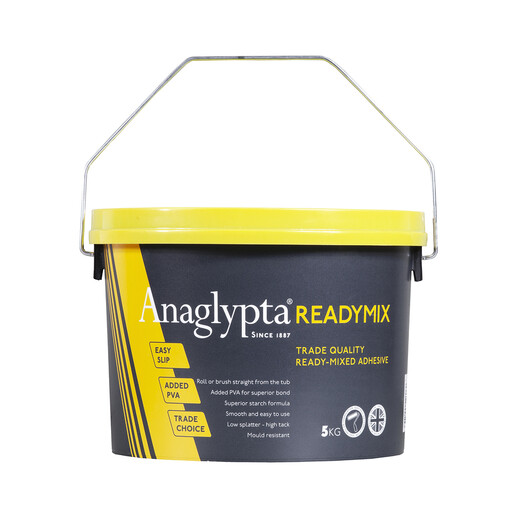
Why This Fits Their Persona: Ready mixed paste is useful for first-time decorators who want to avoid measuring powder and water. The 5kg tub is specified for up to five rolls, making it suitable for a feature wall or small-to-medium room project.
It removes the risk of an incorrect powder mix and is listed for both paste-the-wall and paste-the-paper application.
Ready to apply from the tub; suitable for a range of wallpaper types and up to five rolls.
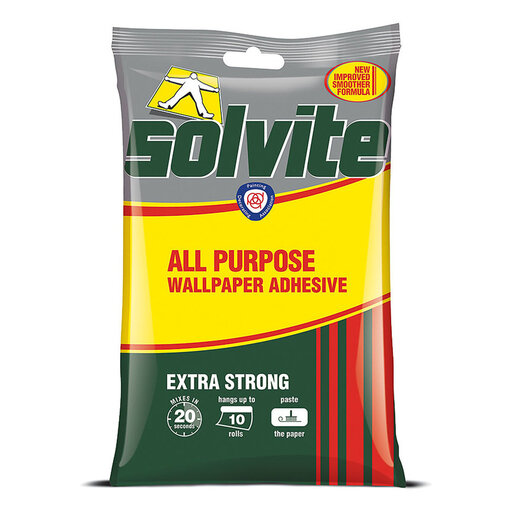
Why This Fits Their Persona: This dry adhesive is designed for decorators who want broad wallpaper compatibility, quick preparation and a pack size suited to a larger interior project.
The product description specifies an improved smoother formula, fast mixing in as little as 20 seconds and suitability for vinyl and other wallpaper types.
Specified for up to 10 rolls; offers slip for repositioning and can be used on plaster, plasterboard and previously papered walls when properly prepared.
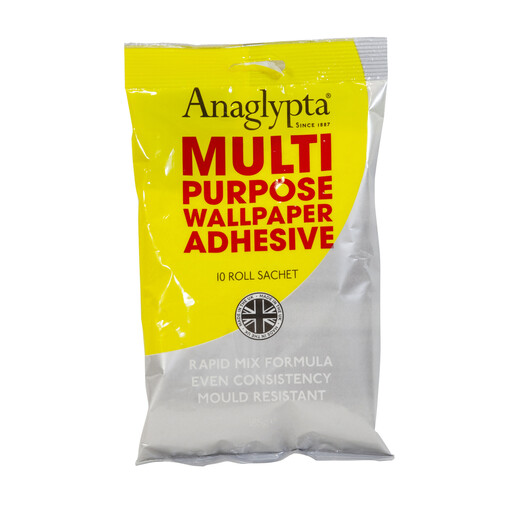
Why This Fits Their Persona: Its adjustable mixing strength suits decorators working with different wallcoverings, including lining paper, vinyl and heavy embossed wallpaper.
The sachet is mixed according to the wallcovering, rather than relying on one fixed consistency for every paper. The listed two-minute mixing time also supports efficient preparation.
Specified for up to 10 rolls; includes slip for pattern matching and a fungicide listed to inhibit mould growth.
We have compiled a complete, real-time list of products that fully satisfy these strict selection criteria and UK safety regulations.
It can be. Ready mixed wallpaper paste avoids measuring and mixing, so it is convenient for smaller decorating jobs or anyone who prefers a quicker setup. Check the tub’s coverage, storage instructions and compatibility with the wallpaper before opening it.
Storage life varies by product and packaging. Keep opened ready mixed paste sealed and follow the label instructions. Dry adhesive sachets should be stored somewhere cool and dry. Do not use paste that has changed noticeably in smell, texture or appearance.
Some products are listed with heat or mould-resistant features and may be suitable for interior areas with higher humidity. However, adhesive alone does not resolve condensation or damp. Ensure the room is properly ventilated, prepare the wall thoroughly and follow both the adhesive and wallpaper manufacturer’s instructions.