
24/7 Customer Support

Free returns

Same-day & Next-day Delivery

Quality Guaranteed

Unlock Your Welcome Offers: FREE Delivery | Up to 80% OFF | Free 30-day JoyPlus trial
Download the APP
Choosing between whole walnuts, walnut snacks, walnut kernels, walnut oil and walnut powder is not simply a matter of comparing pack sizes. The format, ingredient list, storage instructions and intended use can make a noticeable difference to value and convenience.
Whether you are shopping for walnuts UK households can use every day, a traditional Chinese snack for sharing or a baking ingredient, the following checks can help you avoid common purchasing mistakes.
Walnut biscuits, walnut cakes and confectionery may contain other prominent ingredients such as sugar, wheat flour, peanuts, sesame or maltose syrup. Always check the quantitative ingredient declaration where available. For example, Daliyuan HCD Walnut Shortbread contains 0.9% walnuts, while Huang Lao Wu Original Flavour Walnut Cake lists walnuts at 33%.
A product can still suit a particular occasion, but it should not be treated as equivalent to a bag of 100% walnut kernels.
Some products are labelled ready to eat, while others are intended for cooking. Morrisons Wholefoods Walnut Halves, for example, include instructions stating that they are not suitable for raw consumption and should be processed according to the packaging directions. By contrast, several paper-shell walnuts and packaged walnut snacks can be consumed directly.
Check the usage instructions before adding anything to breakfast, lunchboxes or a snack bowl.
Walnuts are tree nuts, and products containing them may also include peanuts, sesame, soya, milk or cereals containing gluten. Read the full allergen statement, particularly when buying walnut biscuits, mixed snacks or walnut powder.
Walnut products also contain natural oils that can affect flavour if stored poorly. Follow the label instructions, reseal opened packs where advised and keep products in a cool, dry place away from sunlight.
For a simple snack, look for walnuts or walnut kernels as the only ingredient. This makes it easier to compare products and understand what you are buying. Whole kernels are practical for porridge, salads and baking, while paper-shell walnuts offer a more hands-on eating experience but require a nutcracker.
For walnut cakes, soft cakes and biscuits, compare the walnut percentage alongside sugar, syrup and fat levels. These are confectionery products rather than direct substitutes for plain walnuts.
Smaller packs such as 110g, 128g or 168g can be convenient for occasional snacking, gifts or trying a new flavour. Larger options, including walnuts 500g and 700g packs, may be more suitable for families, regular baking or shared snack bowls.
A large pack only represents useful value if you can store it properly and consume it while the flavour remains fresh. Individual sachets can also reduce measuring and improve portability for work, university or school routines.
Compare nutrition per 100g rather than relying on phrases such as “nutritious”, “natural” or “healthy nut snacks”. Plain walnuts are naturally energy-dense, so serving size matters. Walnut-based drinks and powders may also include oats, millet, sugar, creamer, peanuts or glucose.
For walnut oil, check the bottle size, ingredient list and suggested applications. It is suitable for uses such as salad dressings, drizzling and certain Chinese cooking applications, but it should be selected for culinary convenience rather than treated as a nutritional supplement.
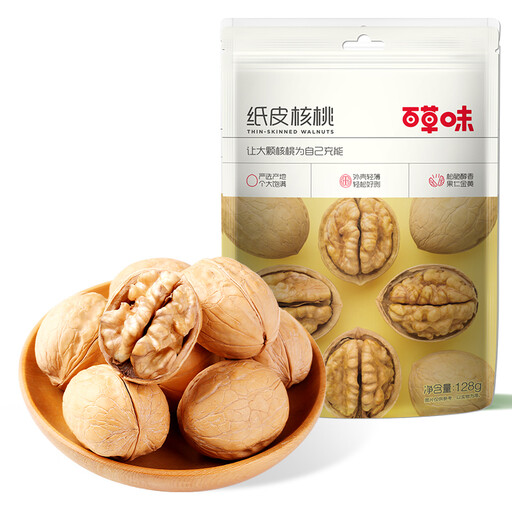
Why This Fits Their Persona: A smaller pack is a practical starting point for shoppers who want to try paper-shell walnuts without committing to a large quantity. The thin shells are described as easy to crack, and the walnuts are individually packed.
The ingredient list states walnuts only, with no added salt or sugar listed. Its ready-to-eat instructions are clear, unlike products intended for cooking.
128g pack; thin-shell format; individually packed; ready to eat.
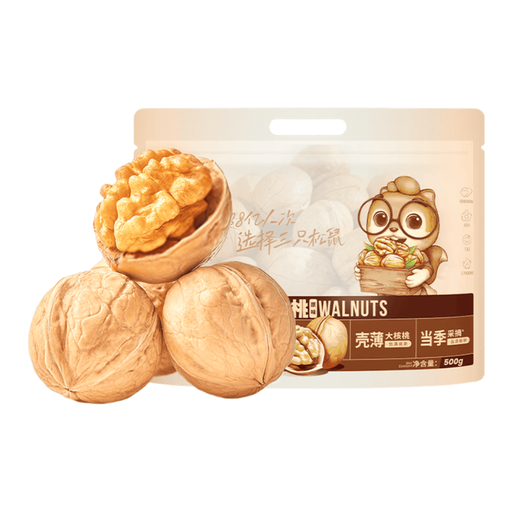
Why This Fits Their Persona: This larger pack suits households that want plain walnuts for regular snacking, salads or baking, while retaining a whole-kernel format.
It is listed as 100% walnuts, with no added salt, sugar or preservatives. The pack also specifies storage away from direct sunlight.
500g quantity; whole walnut kernels; zero salt listed; suitable for direct consumption.
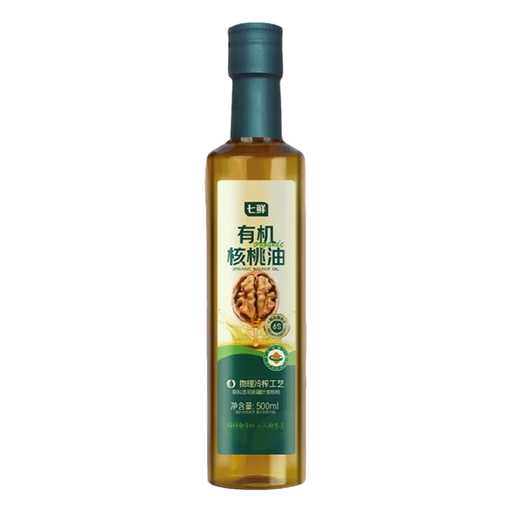
Why This Fits Their Persona: A 500ml bottle is designed for frequent kitchen use, including salad dressings, drizzling and listed Chinese cooking applications.
The bottle states walnut oil as the ingredient and gives specific usage guidance, making it easier to distinguish from flavoured dressings or blended oils.
500ml bottle; single-ingredient listing; suitable for dressings and drizzling.
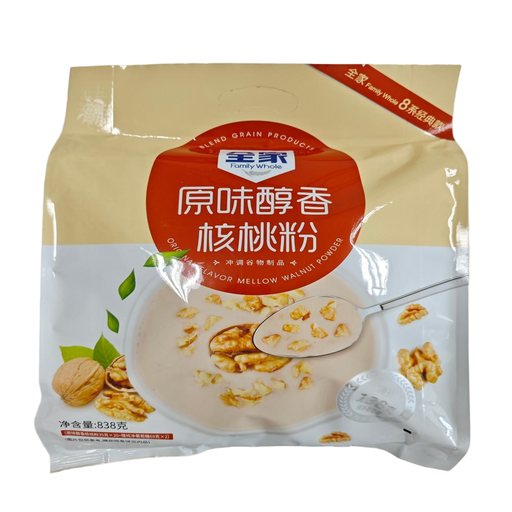
Why This Fits Their Persona: Individual 35g sachets offer a quick hot drink for busy mornings, office cupboards or student kitchens without weighing loose powder.
The pack states that walnuts account for 10% of the powder and clearly lists peanuts and oats, helping shoppers assess ingredients and allergens before purchase.
20 individual sachets; 700g walnut powder blend; preparation instructions included.
We have compiled a complete, real-time list of products that fully satisfy these strict selection criteria and UK safety regulations.
Plain walnuts can be included in a varied diet, but they are energy-dense. Use the serving guidance on the pack where provided and check the allergen information. They are not suitable for people with walnut or tree-nut allergies.
Most products should be kept in a cool, dry place away from direct sunlight. Reseal opened bags or containers and follow any product-specific instructions. Walnut oil should remain closed and stored as stated on its packaging.
No. These are prepared foods that may contain flour, sugar, syrups, palm oil, peanuts, milk or other ingredients. Check the walnut percentage and nutrition panel if you want to compare them with plain walnut snacks or kernels.