
24/7 Customer Support

Free returns

Same-day & Next-day Delivery

Quality Guaranteed

Unlock Your Welcome Offers: FREE Delivery | Up to 80% OFF | Free 30-day JoyPlus trial
Download the APP
As a Joybuy Product Recommendation Officer, my role is to help you navigate the crowded market of home essentials. When it comes to organising your clothes, the right wardrobe storage can transform a cluttered room into a calm, functional space. However, with so many options available, it's easy to make a purchase you'll later regret.
For many of us in the UK, particularly those in rented flats, student accommodation or new-build homes, built-in storage is often at a premium. This leads us to seek out freestanding or internal solutions, but this is where common pitfalls can catch you out. Before you buy, be aware of these frequent issues:
To ensure you get a durable and practical solution, focus on a few key specifications rather than marketing promises. These details determine the product's real-world performance and longevity.
For any freestanding wardrobe or garment organiser, the frame is its skeleton. Look for steel tubes, and pay attention to their diameter. A tube with a 16 mm diameter is significantly more robust than a 12 mm one. Also, check the manufacturer's stated maximum static load capacity for each hanging rail and shelf. A reliable rail should hold at least 10 kg, which is enough for heavy coats and jackets. Always look for reinforced connectors, as these are the points where a weak frame will fail first.
If you're considering a hanging wardrobe organiser to maximise vertical space, the shelf support is critical. Avoid basic cardboard. Instead, look for options with reinforced inserts, such as removable bamboo slats or thick, rigid boards. These provide a stable, flat surface that resists sagging, ensuring your folded clothes stay neat and the organiser maintains its shape. For the hanging mechanism, sturdy metal hooks that fit a standard wardrobe rail are preferable to fabric loops, which can stretch or tear over time.
The cover of a portable fabric closet does more than just conceal your clothes; it protects them from dust. Opt for a good quality non-woven fabric, which is generally lightweight and offers a degree of breathability to help prevent mustiness. Features like roll-up zip doors provide easy access, while handy side pockets are a practical addition for storing small items like socks, belts or keys, making them excellent clothes storage solutions for busy households.
Based on these practical criteria, here are a few options matched to different needs and living situations across the UK.
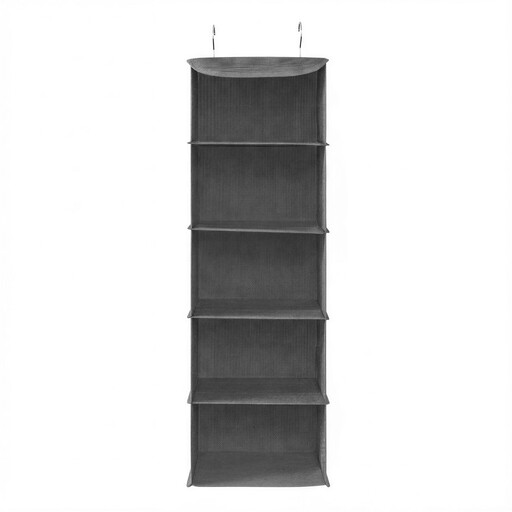
Why This Fits Their Persona: Ideal for someone in a small flat or dorm with a built-in wardrobe but limited shelving. This instantly adds vertical storage for jumpers, t-shirts and accessories without taking up floor space.
The inclusion of removable bamboo inserts provides firm support for each shelf, directly countering the common problem of sagging seen in organisers that use flimsy cardboard.
Ready to use straight out of the box with no assembly. Its foldable design makes it easy to store or move, and the sturdy metal hooks ensure a secure fit on the wardrobe rail.

Why This Fits Their Persona: A perfect freestanding wardrobe for someone needing a complete, non-permanent storage unit. It offers substantial capacity without the cost or hassle of wooden furniture, making it ideal for a tenancy or university term.
This model uses 1.5 cm diameter steel tubes and reinforced plastic joints. Each hanging rod supports up to 15 kg, preventing the frame from buckling under the weight of a full wardrobe.
Features four hanging sections and multiple shelves for versatile organisation. Assembly is tool-free, and it includes an anti-tip kit for added safety in a busy home.
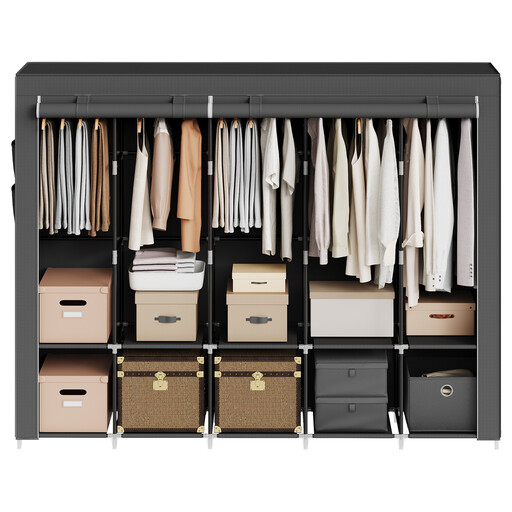
Why This Fits Their Persona: For homeowners or families needing a substantial supplementary closet for a guest room, loft or for storing out-of-season clothing. Its large size and multiple sections can accommodate an entire family's overflow.
This unit is built with a durable frame of 16 mm steel tubes and reinforced plastic joints. With 5 separate hanging rails, it distributes weight effectively to prevent the structural weakness seen in less robust models.
Offers extensive and versatile storage with 5 hanging sections and multiple shelves. The addition of side pockets provides quick access to smaller items.
We have compiled a complete, real-time list of products that fully satisfy these strict selection criteria and UK safety regulations.
This varies significantly, which is why checking the specifications is so important. A lower-quality model might only support 5 kg per rail, which is not suitable for much more than a few shirts. A more robust garment organiser with a steel frame, like the ones mentioned, can often hold 10 kg to 15 kg per rail, providing much more reliable and practical clothes storage solutions. Always check the total and per-shelf/rail load capacity before buying.
Firstly, ensure your clothes are completely dry before storing them. Secondly, choose a portable fabric closet made from a breathable, non-woven fabric. This allows for air circulation, which is key to preventing moisture build-up. For long-term storage, you can also place moisture absorbers or scented sachets inside, and occasionally leave the zip doors open on a dry day to air the contents.
Most modern portable fabric closets are designed for easy, tool-free assembly. They typically use a system of push-fit tubes and connectors, similar to assembling a tent. The instructions usually consist of clear diagrams and the process can often be completed by one person in under 30 minutes. Always ensure all tubes are pushed firmly into the connectors to create a secure and stable structure.