Post-move mud-stain cleaners
If moving boxes and furniture has left several muddy marks on an indoor mat, the size and depth of the cleaning job matter more than how neatly a machine fits in a cupboard.


For a few local stains, consider a compact spot cleaner; for embedded dirt or several muddy areas, compare larger-capacity machines and models with a motorised hand tool. Before buying or using one, check that the doormat’s maker permits the proposed wet-cleaning method, solution and drying approach.
If moving boxes and furniture has left several muddy marks on an indoor mat, the size and depth of the cleaning job matter more than how neatly a machine fits in a cupboard.
If protecting the mat’s fibres, colour or backing is the priority, start with its exact care instructions. Turtle Mat’s guidance illustrates why cleaning and drying methods need to be checked for the particular mat.
If the doormat is one of several small jobs, a portable cleaner may also be useful on surfaces approved by its maker. VAX and Rug Doctor describe spot-cleaner uses that include rugs, upholstery or vehicle interiors.
For consumers cleaning a washable doormat after a house move, establish the mat’s permitted care method before choosing between a machine for isolated marks and one intended for a broader, muddier clean-up.
| Concern | What to check | Who this matters to |
|---|---|---|
| Embedded mud | Look at the intended cleaning task and whether a dedicated or motorised stain tool is included. | If mud has been pressed into the pile, I need to deal with more than a surface mark. Roughly 37% of consumers put embedded-dirt removal first. |
| Mat care | Check the exact mat’s permitted cleaning method, solution and drying instructions, including any backing restrictions. | I would rather change cleaning method than risk using one the mat maker rules out. Around 27% of consumers make mat-care compatibility their primary concern. |
| Drying | Check how the mat maker says to dry the mat and when it may go back on the floor. | If the entrance mat needs to go back into use, I need a drying method that follows its care instructions. About 18% of consumers put that need first. |
| Storage and other uses | Compare carrying and storage requirements, included tools and the surfaces approved for each machine. | I have limited cupboard space and other small textile-cleaning jobs, so a manageable appliance matters more to me. Roughly 18% of consumers prioritise compact, multi-surface ownership. |
Mats can have different care requirements for their fibres and backing. Turtle Mat, for example, gives different instructions for different mat types.
Find the exact mat’s label or maker’s guide before using an extraction tool, detergent, heat or a drying cycle.
Rug Doctor’s Portable Spot Cleaner manual prohibits shampoo and foaming detergent; it instructs users to stop and empty the recovery tank if foam appears.
Choose a formula permitted by the selected machine and the mat, then follow its dilution and safety-label instructions.
A few marks on one mat are a different task from cleaning several heavily soiled areas after a move. VAX positions its SpotWash Max Duo for muddy, high-traffic areas, while its SpotWash Duo is presented for everyday spot cleaning.
Count the areas you plan to clean, then compare the tools and tank capacities of models suited to that workload.
The Health and Safety Executive explains that hazard and precautionary statements on cleaning-product labels indicate how a product should be used safely and whether protective equipment is needed.
Read the full label before use and follow its stated precautions.
VAX offers portable spot cleaners for everyday marks as well as a model it positions for muddier, high-traffic cleaning.
Rug Doctor presents its Portable Spot Cleaner for stains on carpets, upholstery, fabric and vehicle interiors.
BISSELL’s spot-cleaner range includes the SpotClean HydroSteam 3689E, identified in its UK product support.
These portable spot cleaners offer different ways to tackle local stains when the doormat permits wet cleaning. Compare their stated tools and configurations against the size of your clean-up; the mat’s care instructions still take precedence.
 No image available
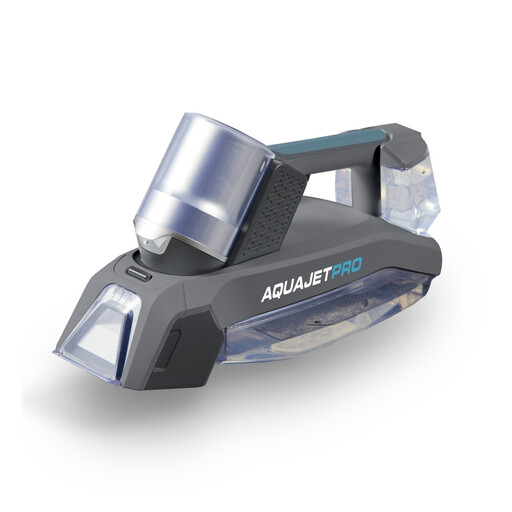
Consider this cordless model for local marks when the mat permits wet cleaning; check that its rotating brush is suitable for the mat’s surface.
The named configuration has an 80 W rating, a 0.3 L clean-water tank and a 0.4 L dirty-water tank. Consider those tank sizes if several areas need cleaning.
 No image available
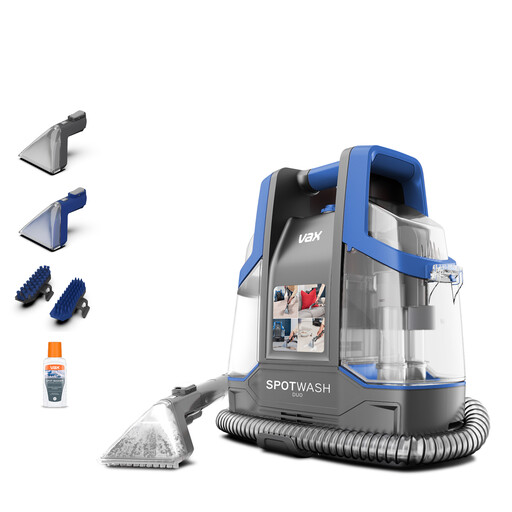
Consider this model for everyday marks and other approved household spot-cleaning tasks. VAX describes separate attachments for everyday and messier clean-ups.
VAX lists a 400 W rating for CDCW-CSXA. If carrying weight matters, confirm the weight of the exact variant before choosing it.
 No image available
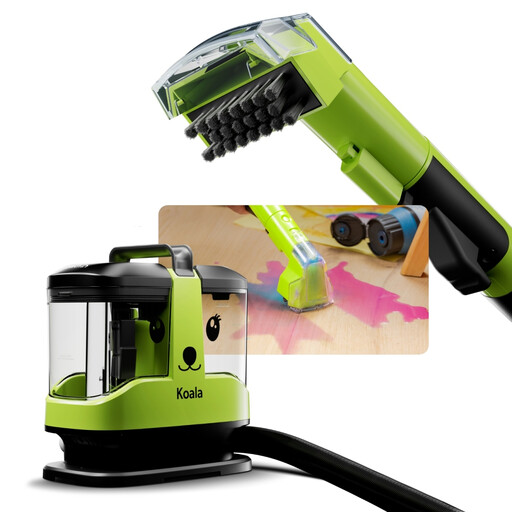
For targeted stains, check whether the machine’s cleaning method and tool suit your mat’s fibres and backing.
The named SC02 variant has a 450 W rating. Check its instructions for a permitted cleaning formula before use.
 No image available
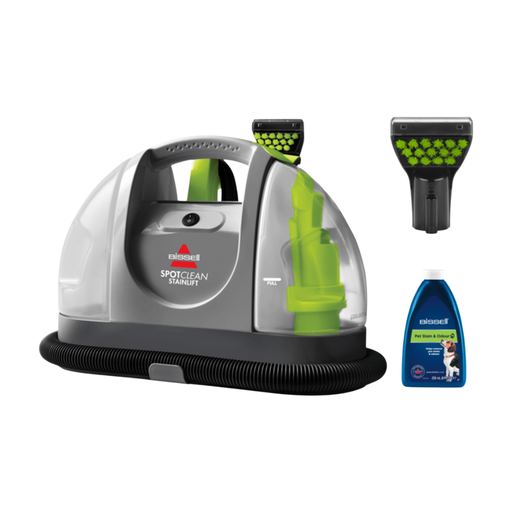
Consider this portable cleaner for a local stain only if the doormat’s instructions permit the proposed wet-cleaning method.
Check the 2067E instructions for the suitable tool and cleaning formula. This is a different model from BISSELL’s SpotClean HydroSteam 3689E.
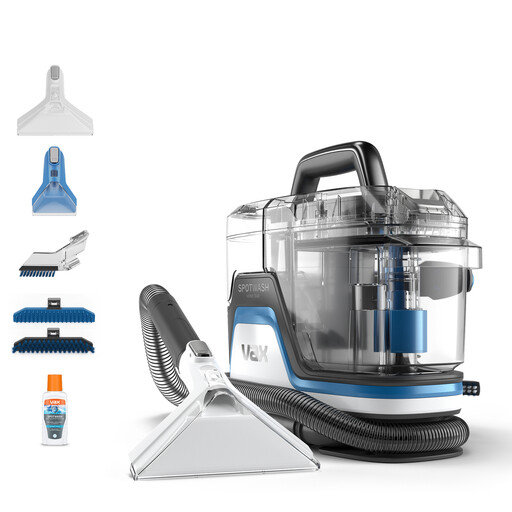 No image available
If stains extend across more of the mat, compare this model’s included wash tools with the area you need to clean.
Avoid using it on delicate or water-sensitive fabric where the appliance instructions prohibit that use, even if the mat is described as washable.
No: a washable label alone does not establish that wet extraction suits the mat’s fibres or backing. Turtle Mat gives different care directions for different mat types, so check the instructions for your exact mat before choosing a method, solution or drying cycle.
Use a solution permitted by both the appliance instructions and the mat’s care guidance. Rug Doctor’s Portable Spot Cleaner manual, for example, prohibits shampoo and foaming detergent and specifies intended cleaning products; check the directions for your own model rather than applying that rule to every machine.
Return it only after drying it in the way its maker specifies. For its indoor mats, Turtle Mat allows low-heat tumble drying or natural drying and says not to place the mat on a damp floor; other mats may have different instructions.
Read the full product label and follow its hazard and precautionary statements. The Health and Safety Executive explains that these statements indicate safe-use measures and any protective equipment needed for the labelled product.