
24/7 Customer Support

Free returns

Same-day & Next-day Delivery

Quality Guaranteed

Unlock Your Welcome Offers: FREE Delivery | Up to 80% OFF | Free 30-day JoyPlus trial
Download the APP
A doormat seems like a simple purchase, but choosing the wrong one can lead to frustration, wasted money and even a dirtier home. As a Joybuy Product Recommendation Officer, my role is to help you navigate the market and find a practical solution that genuinely works. Many products make bold claims, but a few common pitfalls catch UK buyers out time and again. Before you buy, let's look at the issues that separate a great entrance mat from a useless one.
The most frequent complaints we see stem from three key failures:
A truly effective washable doormat should solve these problems, not create new ones.
To avoid these traps, focus on a few core specifications. These are the non-negotiable features that determine a mat's performance and longevity in a typical UK home.
The single most important feature for safety and stability is the backing material. This is what prevents the mat from becoming a slip hazard in your entryway.
The surface material, or pile, does the heavy lifting of cleaning shoes. The right material is crucial for creating an effective dirt trapper mat.
Many households benefit from a two-mat system: a coarse outdoor mat for scraping and an absorbent door mat inside to catch the rest.
A mat is only truly washable if it's built to withstand a washing machine. This means the fibres must be securely bonded to the backing. Furthermore, an eco-friendly doormat isn't just about using recycled materials; it's about durability. A mat that lasts for years is far more sustainable than one that needs replacing every few months.
Based on these practical criteria, we've matched a few products to different household needs. Instead of focusing on marketing hype, this selection prioritises materials and construction that solve the common problems identified earlier.
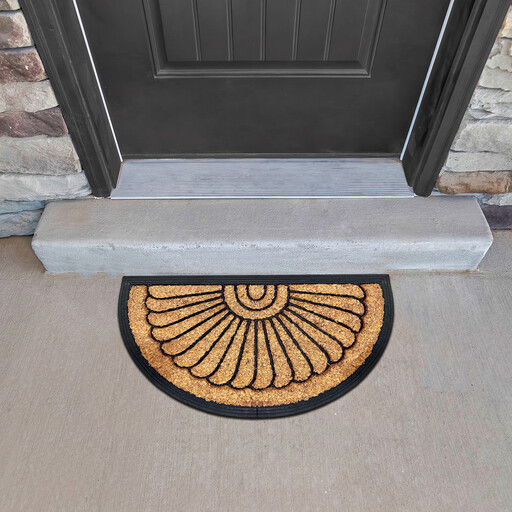
Why This Fits Their Persona: Perfect for those who want their front door mat to be a decorative feature. The half-moon shape and cheerful sunflower design add character to a porch or conservatory, offering a warm welcome without sacrificing function.
The heavy-duty rubber base provides excellent grip, directly countering the "non-slip myth". As a coir mat, it is not machine washable, thus avoiding the "washable nightmare" associated with poorly made washable mats.
Combines strong scraping performance from natural coir fibres with a stable, durable rubber backing. The decorative design enhances kerb appeal.

Why This Fits Their Persona: Ideal for busy family homes where performance and ease of cleaning are paramount. Its cotton pile is highly effective at trapping mud and water from shoes and paws and its eco-friendly construction appeals to the environmentally aware consumer.
The highly absorbent cotton pile tackles the "absorbent illusion" by genuinely trapping moisture. Its durable construction is designed for machine washing, avoiding the "washable nightmare" of disintegration.
Superior moisture and dirt absorption combined with genuine machine-washable convenience. The non-slip backing ensures it stays securely in place in high-traffic areas.
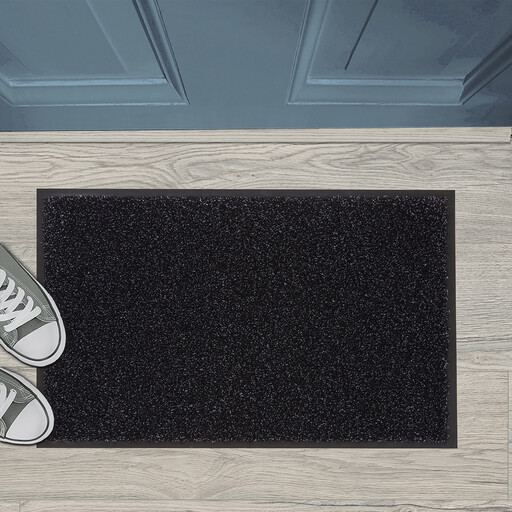
Why This Fits Their Persona: For those who appreciate clean lines and understated design. The solid charcoal colour blends seamlessly into modern and minimalist interiors, providing high performance without drawing attention to itself.
This mat delivers on the core functions of stability and absorbency without relying on gimmicks. The robust rubber backing and dense cotton pile provide a reliable solution that works as advertised.
Its sleek, plain design offers a sophisticated look while the cotton surface provides excellent dirt and moisture trapping. It is fully machine washable for simple maintenance.
We have compiled a complete, real-time list of products that fully satisfy these strict selection criteria and UK safety regulations.
This depends entirely on the amount of foot traffic it receives. For a busy family home with pets or children, washing it every 2-4 weeks is a good guideline to maintain its absorbency and appearance. In a quieter household, once every 1-2 months may be sufficient. Always refer to the manufacturer's care label for specific instructions.
Caution is advised here. High heat from a tumble dryer can damage or melt the rubber backing on many mats, causing it to crack, become brittle or lose its non-slip properties. The safest method is to air dry the mat. Laying it flat or hanging it over a line will help it maintain its shape and prolong the life of the backing.