
24/7 Customer Support

Free returns

Same-day & Next-day Delivery

Quality Guaranteed

Unlock Your Welcome Offers: FREE Delivery | Up to 80% OFF | Free 30-day JoyPlus trial
Download the APP
A washable hallway runner rug can make an entrance, landing or kitchen feel warmer while helping protect hard flooring from everyday dirt. However, not every runner marketed as “easy care” or “non-slip” performs in the same way. The right choice depends on construction, dimensions, cleaning instructions and how the rug will be used.
Before choosing a hallway rug runner, watch for these common problems:
“Washable” without clear care instructions
Some rugs may tolerate occasional spot cleaning but are not suitable for a washing machine. Check whether the product specifies a machine-wash temperature, drying method and whether tumble drying is prohibited. A rug that must be washed at 30°C and line dried requires different care from one designed for more frequent cleaning.
A non-slip backing treated as a guarantee
A non-slip runner rug can move if placed on a dusty, damp or uneven surface. Backing materials such as TPR or other rubberised finishes can improve grip, but the floor should still be clean, dry and level. Always check the rug after installation and avoid using it where edges curl upwards.
Choosing by appearance alone
A narrow runner may leave exposed strips along a hallway, while a thick rug may catch beneath doors. Pattern and colour also affect how visible daily marks are. A beige runner rug can complement light interiors, whereas a grey runner rug may be more forgiving of visible dust and entrance traffic.
For high-traffic areas, look for fibres that balance durability, cleaning convenience and underfoot comfort. Polypropylene is a synthetic fibre commonly selected for resistance to everyday staining, fading and wear. The Washamat Prague runners use polypropylene and feature a woven diamond pattern.
A 100% PET runner made from recycled plastic bottles may appeal to shoppers looking for an eco-friendly runner rug. The Likewise Knightsbridge Pawprints Brown uses recycled PET fibre, while its textured surface provides a softer feel underfoot.
Material alone does not determine longevity. Check the backing, thickness, stitching and whether the pattern is woven or printed. A well-defined woven pattern may help disguise light marks, but cleaning and drying instructions remain important.
A machine washable runner rug is practical for homes with pets, children or muddy footwear, but care instructions must be followed. Confirm:
The Prague Natural and Prague Charcoal runners are described as machine washable and should be air dried fully before being placed back on the floor. The Knightsbridge Pawprints Brown specifies machine washing at 30°C, washing separately, line drying and avoiding the tumble dryer.
Measure the usable floor area rather than relying on a visual estimate. Leave enough clearance for doors, cupboards and furniture, particularly in narrow hallways or galley kitchens.
A 67x180cm runner rug offers more coverage along a medium-length corridor or in front of a kitchen run. A 50x150cm runner rug can suit a shorter hallway, entrance or compact kitchen space. If the rug is placed near an external door, check that it does not obstruct the threshold or create a raised edge.
For safety and floor protection, lay the rug flat on a clean, dry surface. Reposition it if the edges lift, the backing begins to curl or the runner moves during normal walking.
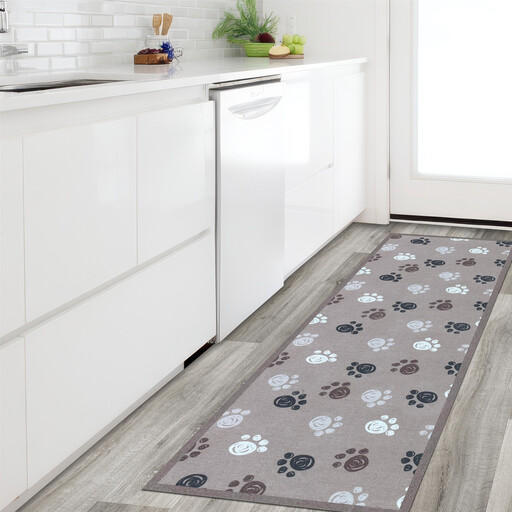
Why This Fits Their Persona: Its 50x150cm format suits smaller hallways, entrances and kitchens where a full-length runner would be difficult to place. The pawprint design also adds character to pet-friendly homes.
The product description states a 30°C machine-wash setting and specifies line drying, making the care process clearer than a vague “easy-clean” label.
Made from 100% recycled PET fibre, with TPR slip-resistant backing and compatibility with tiled, laminate and wooden floors.

Why This Fits Their Persona: The soft mocha and cream diamond pattern works with contemporary or traditional interiors, making it suitable for shoppers prioritising a coordinated hallway or kitchen scheme.
It combines a stated machine-washable design with a non-slip underside, addressing two common concerns instead of relying only on decorative appeal.
67x180cm coverage, polypropylene construction, patterned woven finish and a beige colour group suited to varied décor.
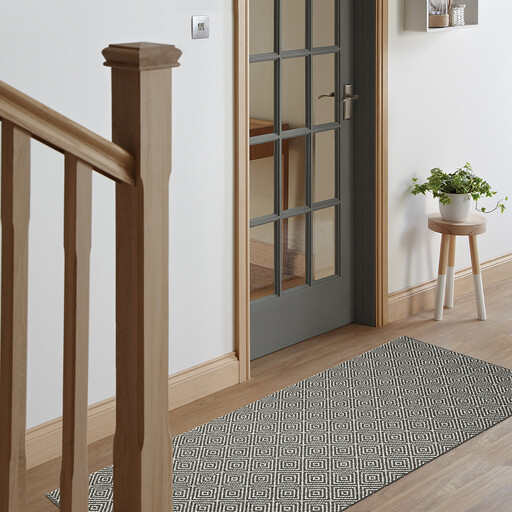
Why This Fits Their Persona: The charcoal grey colour and 67x180cm size suit busy hallways, entrance areas and kitchen floors where regular foot traffic can quickly make lighter surfaces look marked.
The product information specifies polypropylene fibres, machine washing and non-slip backing, giving practical details for demanding indoor areas.
Stated resistance to stains, fading and wear, alongside a sugar-flecked diamond pattern in a grey colour group.
We have compiled a complete, real-time list of products that fully satisfy these strict selection criteria and UK safety regulations.
Vacuum or shake out loose dirt before washing, following the product’s care label rather than assuming every rug can use the same programme. Do not return a runner to the floor while it is damp, as moisture can affect flooring and reduce grip.
Inspect the backing periodically, especially if the rug is used near a frequently opened door. Replace or reposition it if the surface becomes damaged or the runner no longer lies flat. Keep all indoor runners away from open flames and direct heat sources.
Yes, selected designs can be used as a kitchen runner rug, provided they are intended for indoor use and placed away from hobs, ovens and open flames. Choose a size that does not interfere with cupboard doors or appliances, and clean spills promptly.
There is no universal schedule. Lightly used hallway rugs may need occasional washing, while homes with pets, children or frequent outdoor access may require more regular care. Vacuuming between washes can reduce the amount of dirt entering the fibres. Always follow the stated washing temperature and drying instructions.
A non-slip backing can help reduce movement on smooth surfaces, but performance depends on the floor being clean, dry and level. Test the runner after laying it down, particularly on polished wood, laminate or tiled flooring. Do not rely on the backing alone if the rug continues to slide or curl.