What matters when choosing?
Start with the normal shared wash load and the portion that must be dried immediately. Then check programme limits, routine energy use and the care instructions for the aprons.
| Concern |
What to check |
Who this matters to |
| Shared-load capacity |
Compare rated wash and dry capacities in kg with the usual combined load; measure the installation space. |
When several aprons need cleaning together, I want enough room for the normal load without discovering that drying requires an unexpected second batch. Around 34% of consumers would put shared-load capacity first. |
| Drying turnaround |
Check the combined wash-and-dry programme’s load limit and duration, not just its wash-only time. |
If another housemate needs the machine soon, I need to know when the aprons can actually come out dry. For around 33% of consumers, turnaround would be the primary concern. |
| Running costs |
Compare the appliance energy labels and consider how often the usual load would leave a larger drum underfilled. |
When the household shares appliance use, I want energy information we can compare alongside our normal load size. Running costs would come first for around 20% of consumers. |
| Fabric care and rinsing |
Check care-label compatibility, suitable programmes, variable spin and whether the model offers extra rinse. |
With printed or delicate aprons, or when detergent removal matters, I need controls that suit the garments rather than a larger drum alone. Around 13% of consumers would prioritise fabric care and rinsing. |
Which? explains that washer-dryer washing capacity exceeds drying capacity. For energy comparisons, Energy Saving Trust advises looking beyond the A-to-G rating to the appliance’s energy-use information; capacity matters when a machine is routinely underfilled. Check each apron’s care label before choosing a drying or high-spin programme.
Relevant brands to consider
These model examples show different capacity and feature combinations; the details do not apply to every washer-dryer made by each brand.
Beko
The freestanding BM3DT68342 is an 8kg wash / 5kg dry example for households that can divide a larger wash into smaller drying batches.
- Beko states that its 5kg wash-and-dry programme takes under three hours and that sensor drying stops at the selected dryness level.
- The stated 28-minute programme washes 8kg but does not describe an 8kg wash-and-dry cycle.
LG
The W4X1085NWK offers an 8kg wash / 5kg dry format for consumers comparing fabric-care and maintenance controls.
- LG lists 6 Motion Direct Drive, Steam and Tub Clean for this model.
- Its 5kg drying limit means a full 8kg wash would need splitting before drying. Check apron labels before using any care programme.
Bosch
The WNG254R1GB provides a 10.5kg wash capacity and a 6kg wash-and-dry limit for households considering larger shared loads.
- Bosch specifies Auto Dry, a small-load Wash & Dry 60 feature, 1400rpm and 70dB for this model.
- Its 590mm stated depth needs checking against the installation space, and its washing capacity remains greater than its combined-cycle limit.
Haier
The HWD90-B14367GUUK is a freestanding 9kg wash / 6kg dry option for a shared house that can accommodate its dimensions.
- Haier specifies 1400rpm and dimensions of 595 × 598 × 850mm for this model.
- Check access and hose space beyond the appliance dimensions; Haier’s hygiene and maintenance statements are manufacturer claims, not a substitute for apron care instructions.
Joybuy washer-dryer choices
These integrated and freestanding models list 9kg washing and 6kg drying capacities. They suit a comparison where the household expects larger shared apron loads, provided the usual drying batch fits the selected programme and the appliance fits its installation space.
 No image available
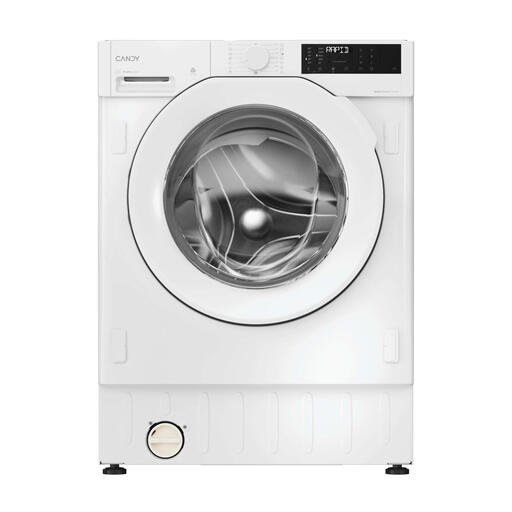
Candy BC4S496M6D8-80 Integrated Washer-Dryer, 9kg/6kg
Consider this integrated model if a 6kg drying batch meets the household’s needs and there is suitable cabinetry. Its stated washing capacity is 9kg, so a full wash load cannot all be dried at once.
Check cabinet-door compatibility and installation space. Confirm the combined programme’s load and duration for the aprons you intend to wash.
View on Joybuy
 No image available
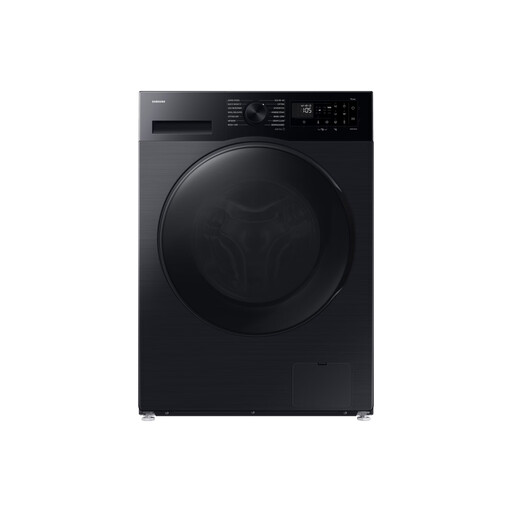
Samsung Series 5 AI Energy WD90DG5G34BBEU Washer-Dryer, 9kg/6kg
This freestanding model is worth considering when housemates need up to 6kg of suitable aprons dried in a batch. Its stated 9kg washing capacity is higher than its drying capacity.
Check the intended wash-and-dry programme’s load limit and time. If extra rinsing matters, confirm that the exact model offers it.
View on Joybuy
 No image available
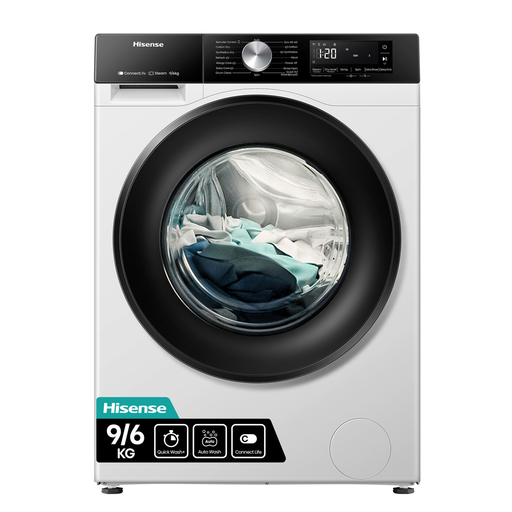
Hisense 3S Series WD3S9043BW3 Washer-Dryer, 9kg/6kg
This freestanding 9kg wash / 6kg dry model is another option for a shared batch that fits within the drying limit. Its stated 1400rpm spin speed does not establish how long a combined cycle will take.
Do not treat the listed Quick Wash as a wash-and-dry time. Check the combined programme’s load and duration before planning apron turnaround.
View on Joybuy
 No image available
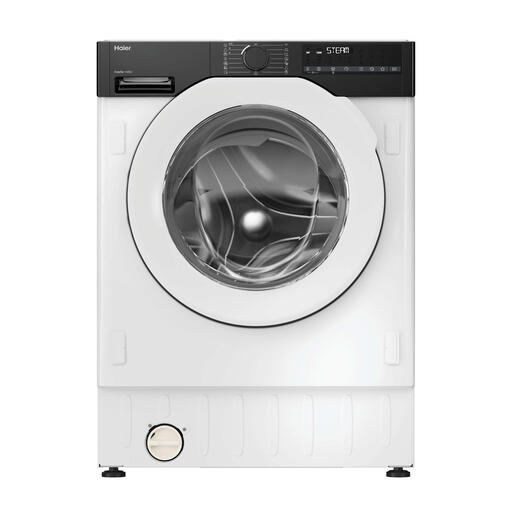
Haier Series 6 BHA6S696M6D9-80 Integrated Washer-Dryer, 9kg/6kg
Choose this integrated format only if the shared house has a suitable cabinet and installation arrangement. It lists 9kg washing, 6kg drying and 1600rpm spin; a full wash load exceeds the drying limit.
Confirm cabinet-door compatibility, installation access and the combined programme’s load and time before committing to it.
View on Joybuy
 No image available
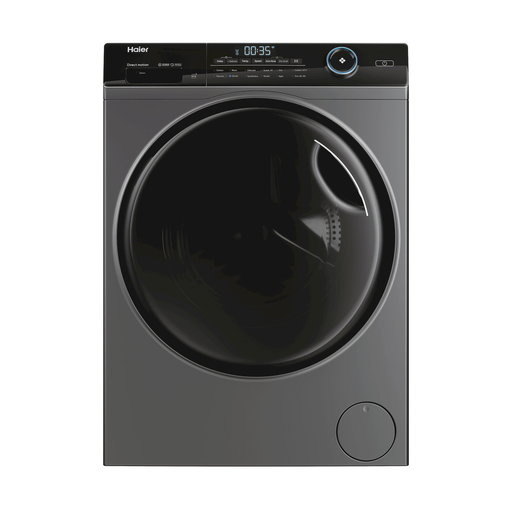
Haier HWD90B14959S8NUK I-Pro Series 5 Washer-Dryer, 9kg/6kg
This freestanding model lists 9kg washing, 6kg drying and 1400 spin for households planning a larger apron batch. Split a full wash load if it exceeds the drying limit.
Check the exact installed depth and hose clearance. When comparing running costs, use this model’s energy label to confirm its combined-cycle rating.
View on Joybuy
Common questions
Can I wash a full load of aprons and dry them all without stopping?
Not if the load exceeds the washer-dryer’s lower drying limit. Compare the dry weight of the aprons with the exact model’s wash-and-dry programme limit, and remove or split items before drying when necessary.
Which programme should I use for washable aprons?
Choose a programme that follows each apron’s care label, including its washing temperature, spin and tumble-drying instructions. Prints, coatings or trims may call for different treatment even when the main fabric is washable.
Is extra rinse worth looking for?
It is worth checking if removing more detergent is a household priority. Which? notes that an extra rinse can remove more detergent, but it also adds time and can use more water; confirm that the particular model has the option.
Can we plug a washer-dryer into an extension lead?
Avoid using an extension lead. Electrical Safety First warns that a washing machine is a high-power appliance that can overload one, particularly alongside other large appliances. Follow the washer-dryer manufacturer’s connection instructions and arrange competent installation.
What should renters settle before buying an integrated model?
Confirm that the cabinet, door, connections and installation space suit the exact appliance, and agree any changes with the landlord or agent beforehand. An integrated format alone does not establish that it will fit existing cabinetry or that alterations are permitted.


