Shared-house laundry organisers
If you coordinate loads for several housemates, compare wash capacity for separate bath-mat loads without assuming the same amount can go through a drying cycle.


Choose a freestanding washer-dryer only after checking that each bath mat’s care label permits machine washing and, if needed, tumble drying. For a shared house, compare wash capacity with the smaller drying limit, then check the machine’s dimensions and noise information against the property. A larger wash capacity can help with shared loads, but it does not mean the whole load can be dried in one cycle.
If you coordinate loads for several housemates, compare wash capacity for separate bath-mat loads without assuming the same amount can go through a drying cycle.
A washer-dryer may be useful when there is no separate dryer or dedicated drying area, provided the mat permits tumble drying and the load stays within the appliance’s drying limit.
Check the installation space and delivery route, and speak to the accommodation provider before changing an existing appliance arrangement.
Start with the mat’s care label, then compare the capacities you would use for washing and drying. Fit, noise and programme limits matter most once you know how the machine will be used in the house.
| Concern | What to check | Who this matters to |
|---|---|---|
| Shared-load capacity | Compare wash capacity in kg and follow the bath mat’s care label and the appliance manual when planning a separate load. | If I organise laundry for several housemates, I need room to schedule bath-mat washes without repeatedly splitting loads. Around 40% of consumers put shared-load capacity first. |
| Drying space | Compare the separate wash-and-dry limit and check whether the mat permits tumble drying. | When indoor drying space is scarce, I want to finish permitted loads in the machine, even if I have to remove items after washing. Drying convenience comes first for around 30% of consumers. |
| Fit and noise | Measure the appliance space and delivery route; compare published noise figures for the exact models under consideration. | If the machine must pass through narrow access points or run near bedrooms, I need to consider both installation and disruption. Around 20% of consumers prioritise fit and noise. |
| Small-load turnaround | Check the weight limit and whether a quoted quick programme covers washing alone or washing and drying. | With an irregular timetable, I may need a small, care-label-compatible load ready sooner rather than a faster cycle for every housemate’s laundry. Around 10% of consumers put small-load turnaround first. |
Bosch UK lists its WDU8H541GB at 10 kg for washing but 6 kg for a wash-and-dry cycle; Beko UK lists the BMND8545U at 8 kg wash and 5 kg dry. Washing near the higher limit can leave items to unload before drying.
Plan machine-dried loads around the lower limit as well as each mat’s care instructions.
A machine’s drying programme does not establish whether a particular mat or its backing is suitable for tumble drying.
Read the individual care label and air-dry the mat if tumble drying is not permitted.
A washer-dryer that fits the intended space may still be difficult to get through a doorway, corridor or lift.
Check the exact model’s dimensions and measure the full delivery route before ordering.
Beko UK describes a 28-minute wash programme for an 8 kg load on the BMND8545U, while its stated UltraFast wash-and-dry programme is for up to 5 kg in under three hours. Those are different programme claims, not a promised result for a bath mat.
Check the relevant programme’s load limit and the mat’s care label before relying on a quoted time.
A reference for a larger-capacity model where shared-house load planning and published measurements matter.
A reference for households considering an 8 kg wash and 5 kg dry model with a stated small-load wash-and-dry option.
A reference for a 9 kg wash and 6 kg dry capacity on the WD90HG5U34BBEU.
A reference for care-label-led programme selection when considering the 9 kg wash and 6 kg dry FWY696WWLN1.
These freestanding washer-dryers offer 8 kg wash and 5 kg dry or 10 kg wash and 6 kg dry capacities for planning shared-house loads. Check each bath mat’s care label before deciding whether to use the drying cycle.
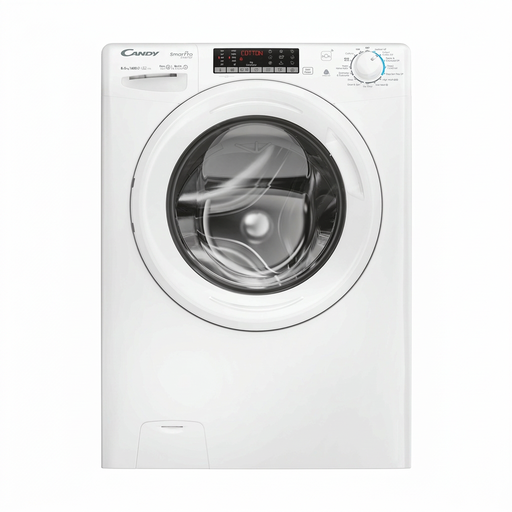 No image available
Consider this freestanding model for separately planned bath-mat washes in a shared house. Its stated capacities are 8 kg wash and 5 kg dry, with a 1400 rpm spin speed. Reduce a larger washed load before drying, and check the mat’s care label.
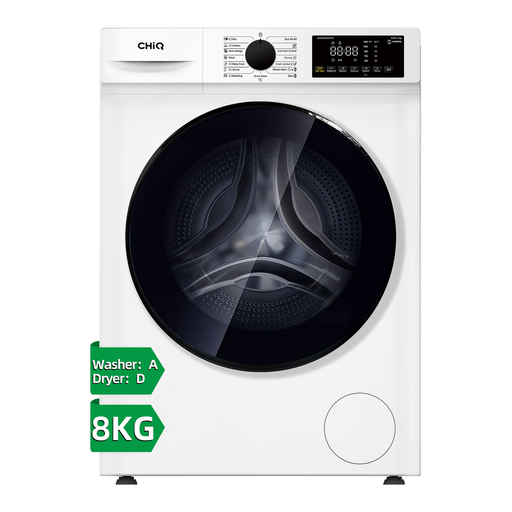 No image available
This freestanding model offers an 8 kg wash and 5 kg dry capacity for planned shared-house loads. Its title states a 1400 rpm spin speed. Check the exact dimensions against the space and delivery route, and keep machine-dried loads within the lower limit.
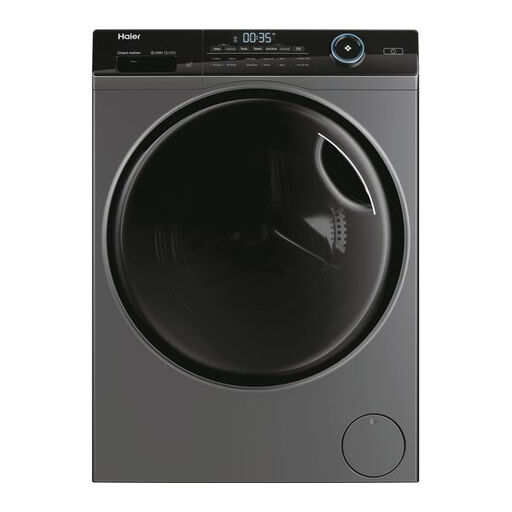 No image available
Its 10 kg wash capacity offers a larger stated limit for organising shared-house washes, while machine drying is limited to 6 kg. Check the mat’s drying instructions and measure the intended space and delivery route before ordering.
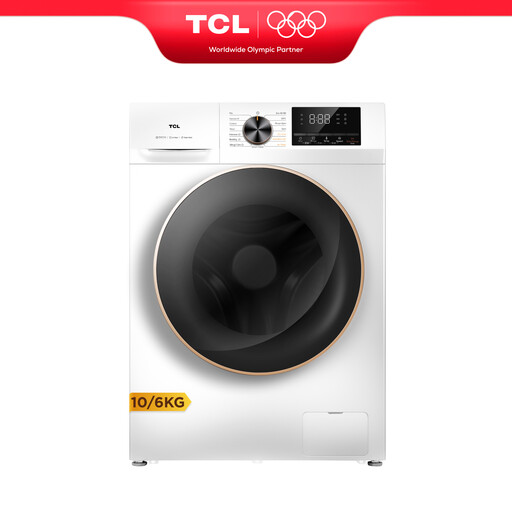 No image available
This freestanding model states 10 kg washing and 6 kg drying capacities, alongside a 1400 rpm spin speed. Plan a smaller load if you intend to dry it in the machine; check exact dimensions, noise information and the mat’s care label before buying.
No: check the individual mat’s care label for machine-washing instructions and, separately, permission to tumble dry. LG UK advises choosing a wash cycle that matches the care label; a washable label alone does not establish drying suitability.
Only if the load is within the washer-dryer’s lower drying limit and its items permit tumble drying. Bosch UK lists the WDU8H541GB at 10 kg wash and 6 kg wash-and-dry, while Beko UK lists the BMND8545U at 8 kg wash and 5 kg dry; a larger washed load needs reducing before drying.
Measure the intended appliance space and the full delivery route, including doors, lifts and corridors. Samsung UK advises checking that the packaged appliance can pass through; use dimensions for the exact model you intend to order rather than those of a related model.
Compare published noise figures for the exact models and agree on times for high-spin cycles. Lower decibel figures indicate less measured noise, but how disruptive a cycle feels also depends on installation and the building.