Shared-house laundry coordinators
Students organising repeated clothing and pyjama loads who need to plan when washing ends, drying begins and the next housemate can use the machine.


A washer-dryer is a practical choice for a student house if it needs washing and drying in one appliance and has a suitable place to install it. For cotton pyjamas and other shared laundry, choose by the smaller wash-and-dry capacity, not just the wash capacity: a full wash load may need to be divided before drying. Check garment care labels, the machine’s programme limits, fit, combined-cycle energy information and spin noise before deciding.
Students organising repeated clothing and pyjama loads who need to plan when washing ends, drying begins and the next housemate can use the machine.
Renters considering one appliance for both jobs who need to measure the intended space and delivery route, check socket access and confirm that installation is permitted.
Housemates placing a machine near bedrooms or shared rooms who want to compare published spin-noise figures and energy information for the cycles they expect to use.
Start with the amount the household needs to dry in one run, then check whether the machine fits and whether its programmes suit the pyjamas’ care labels. Compare energy information for the combined wash-and-dry cycle if the drying function will be used regularly.
| Concern | What to check | Who this matters to |
|---|---|---|
| Drying capacity | Compare the rated wash-and-dry load with the wash-only load. Check the programme limit for the load you intend to dry. | When several housemates have laundry to finish, dividing a full wash load adds another drying turn; around 31% of consumers put enough drying capacity first. |
| Fit and disturbance | Measure the installation space, door clearance and delivery route. Compare published spin noise in dB for the exact models. | If the machine will sit near a bedroom or shared study space, fitting it without undue disruption takes priority; roughly 25% of consumers put fit and disturbance first. |
| Energy information | Compare like-for-like combined-cycle energy and water figures on the label and product information sheet, rather than using a wash-only class. | When drying will be frequent, understanding the electricity and water used by that cycle matters most; around 25% of consumers prioritise this information. |
| Turnaround and fabric care | Check cotton-programme instructions, quick-cycle load limits and each garment’s washing and drying care label. | If pyjamas need to be ready between shared laundry slots, a suitable programme for the actual load comes first; approximately 19% of consumers prioritise turnaround and fabric care. |
The load a washer-dryer can wash and dry continuously can be smaller than the load it can wash. Bosch and Haier publish examples with 9kg wash capacity but 5kg or 6kg wash-and-dry capacity.
Use the wash-and-dry limit for laundry you want dried immediately. If you fill the machine to its wash-only limit, plan to remove items for air-drying or split the drying load.
Splitting a load means another drying cycle and a longer wait for the machine.
A wash-only energy class does not describe the complete wash-and-dry cycle. Energy Saving Trust explains that appliance labels provide model-specific energy information.
If the house will use the dryer regularly, compare the exact models’ combined-cycle figures and product information sheets on the same basis.
A machine may fit its final position but be difficult to move through a doorway or corridor. Room for the open door, connections and installation also matters.
Measure the appliance space and access route before ordering, locate a suitable wall socket, and confirm that the property permits the proposed installation.
Electrical Safety First advises avoiding overnight drying where possible, keeping the appliance clean and following its instructions.
Plan drying for a time when someone is awake and able to respond. Follow the model’s cleaning instructions, register it for recall information and avoid using an extension lead.
These examples show capacity and installation details worth checking on individual models; a brand name alone does not establish the right fit for a shared house.
Bosch lists UK washer-dryers with different wash and wash-and-dry capacities.
Haier lists freestanding 9kg wash and 6kg dry models, including the HWD90-B14959S8NU1.
Samsung lists an 8kg wash and 5kg dry configuration in the WD80TA046BE/EU.
The WD3S9043BW3 is listed by Joybuy as a 9kg wash and 6kg dry freestanding option.
These washer-dryers cover freestanding choices with 9kg/6kg or 8kg/5kg wash and dry capacities, plus an integrated 9kg/6kg option for a suitable fitted kitchen. Decide whether the home can accommodate an integrated or freestanding machine before comparing load sizes.
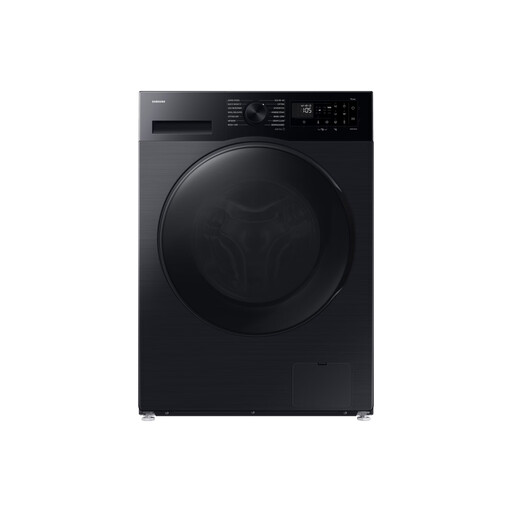 Image unavailable
A freestanding choice for a shared house planning wash-and-dry loads within a 6kg drying limit.
The product name specifies 9kg washing, 6kg drying and a black finish. Check the cotton-programme load limit and combined-cycle product information sheet for the exact model.
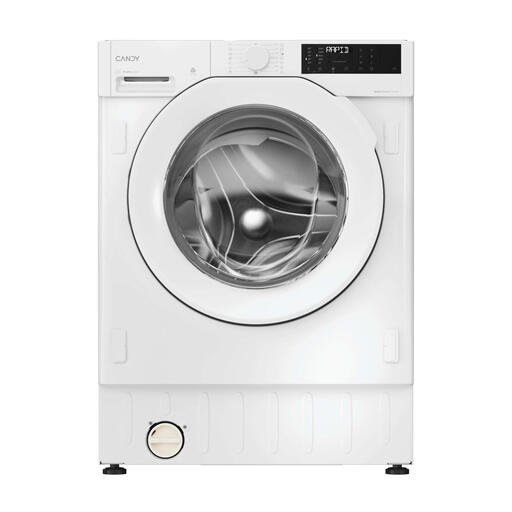 Image unavailable
Consider this integrated model only if the student house has compatible fitted cabinetry and installation is permitted.
The product name specifies 9kg washing, 6kg drying, a 1400rpm spin and a white finish. Confirm the cabinet-door arrangement, cotton-programme limits and combined-cycle label for this variant.
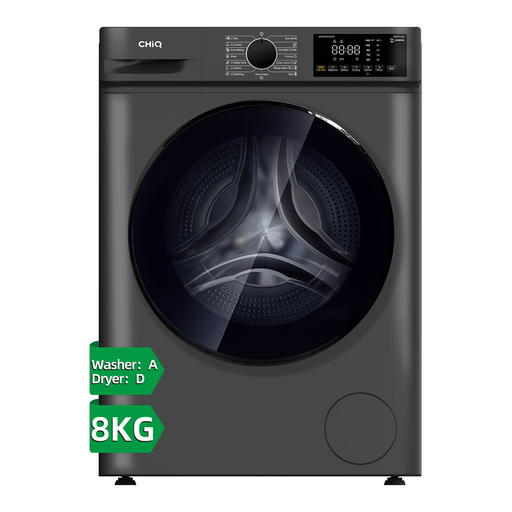 Image unavailable
This capacity suits a household willing to keep continuous wash-and-dry loads within 5kg or divide larger washes before drying.
The product name specifies 8kg washing, 5kg drying, a 1400rpm spin and a dark graphite grey finish. Check cotton-programme limits and the published spin-noise figure for the exact model.
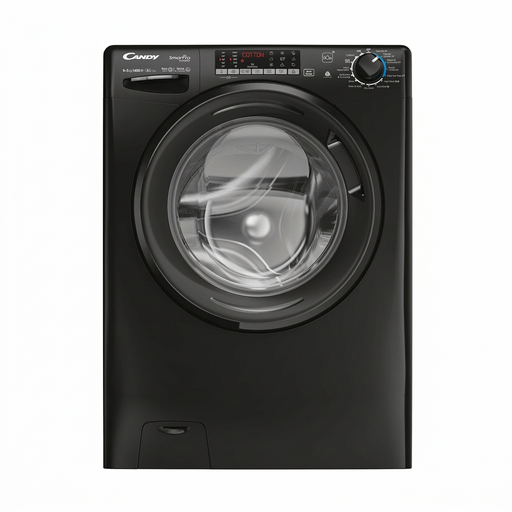 Image unavailable
A freestanding option for smaller drying batches where housemates can leave time to split a larger wash load.
The product name specifies 8kg washing, 5kg drying, a 1400rpm spin and a black finish. Compare its combined-cycle label and cotton-programme instructions before choosing it for regular pyjama loads.
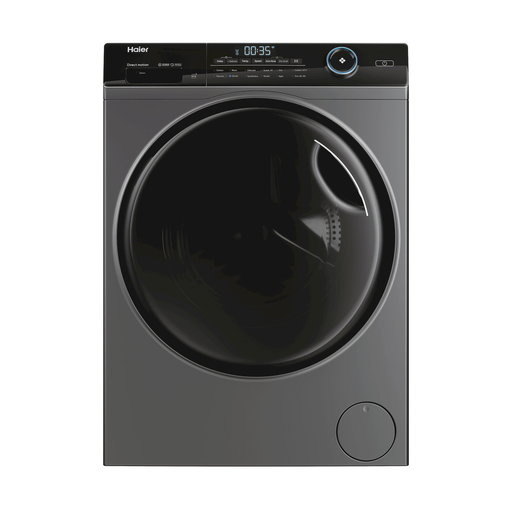 Image unavailable
A freestanding 6kg-dry option to consider when several housemates expect to dry laundry in one run.
The product name specifies 9kg washing, 6kg drying, a 1400rpm spin and a graphite finish. Confirm this variant’s cotton-programme limits, combined-cycle label and spin-noise figure before purchase.
Only if the exact machine and selected programme permit a 9kg wash-and-dry load. The Bosch and Haier examples discussed here pair 9kg wash capacity with a lower 5kg or 6kg drying capacity, so a full wash would need to be divided or partly air-dried.
Compare the combined wash-and-dry figures for the exact models, not a wash-only class. Energy Saving Trust explains that labels provide energy information, while GOV.UK guidance describes the label and product information sheet requirements for products in scope; check the capacity, energy and water figures on a like-for-like cycle basis.
Plan for a suitable wall socket rather than an extension lead. Electrical Safety First warns that a large appliance can overload an extension lead when used with other appliances; follow the machine’s installation instructions and check the property’s rules before fitting it.
Follow the exact model’s instructions for cleaning lint and fluff from the areas it identifies. Electrical Safety First also advises avoiding overnight or unattended drying where possible, so allow time for a cycle when someone is awake and able to respond.
Not in every respect: GOV.UK notes differences in energy-labelling requirements between Great Britain and Northern Ireland. If the machine will be delivered to Northern Ireland, check the applicable label and product information sheet for that purchase rather than assuming the Great Britain requirements apply unchanged.