Households with urgent shirt loads
If you often need a few cotton shirts washed and dried for work, school or an event, the quick programme’s stated load limit matters more than the machine’s maximum wash capacity.


Choose a washer-dryer whose drying capacity covers the shirt loads you actually want to wash and dry in one cycle; the larger wash capacity does not tell you how much it can dry. Then check the cotton programme, drying controls and any quick-cycle load limit, alongside the machine’s dimensions and energy information.
If you often need a few cotton shirts washed and dried for work, school or an event, the quick programme’s stated load limit matters more than the machine’s maximum wash capacity.
A combined machine can meet the need for washing and drying without a separate tumble dryer. Check that its drying capacity covers your usual shirt load and that the appliance fits the available space.
If avoiding excessive drying or extra ironing matters to you, compare the exact model’s drying controls and care programmes. Check each shirt’s care label before using them.
Start with the load you need to dry in one cycle, then decide whether small-load speed or drying control matters more. Confirm installation fit before settling on a model.
| Concern | What to check | Who this matters to |
|---|---|---|
| Drying capacity | Compare the combined-cycle or drying limit with your usual shirt load, rather than using the wash-only capacity. | If I want to put my usual shirt load through washing and drying without removing garments midway, the smaller dry limit decides whether that works. Around 28% of consumers would put this need first. |
| Quick wash-and-dry | Check both the programme duration and its stated load limit; a quick wash programme alone does not establish a quick drying option. | When I need a few shirts ready at short notice, a documented small-load wash-and-dry cycle matters more to me than full-drum speed. This would be the main concern for roughly 28% of consumers. |
| Shirt-care controls | Check the exact model’s cotton programme and drying controls against garment care labels. | I would rather manage drying and ironing effort than choose on capacity alone, especially when shirts have different care instructions. About 22% of consumers would prioritise this need. |
| Fit and energy information | Measure the installation space and access route; compare the exact model’s UK energy label and product information sheet. | Before choosing a machine, I need to know it will fit and that I can compare its running information for the cycles I expect to use. For around 22% of consumers, that would be the primary concern. |
A full wash load may need splitting before drying. Which? explains that washer-dryers have a lower drying capacity than washing capacity.
Match the stated wash-and-dry capacity to the shirt load you intend to complete in one cycle.
A rapid programme may apply only to a small load. Bosch, for example, describes Wash & Dry 60 on its WDU8H541GB as a small-load programme.
Read the exact programme’s load limit and conditions before treating speed as a deciding feature.
A manufacturer’s saving claim may depend on a particular cycle, load or test. It does not replace standardised information for comparing exact models.
Use the UK energy label and product information sheet, and read the conditions attached to any additional claim.
A machine that fits the measured bay may still need space for its door, connections and the clearances specified in its installation instructions.
Measure the access route as well as the bay, then follow the model-specific installation manual, including its instructions on levelling and removing transport bolts before use.
Relevant if you want to compare combined-cycle capacity with stated drying and shirt-care features on a specific model.
Relevant if fabric-sensing and motion-control features are part of your model comparison.
Relevant if you are comparing fabric-sensing features on particular washer-dryer models.
Relevant if you want to compare freestanding and integrated options across different stated capacities.
These freestanding washer-dryers give you stated wash and dry capacities to compare for cotton-shirt loads. Check each model’s programme manual for the cotton settings, drying controls or small-load cycle you need.
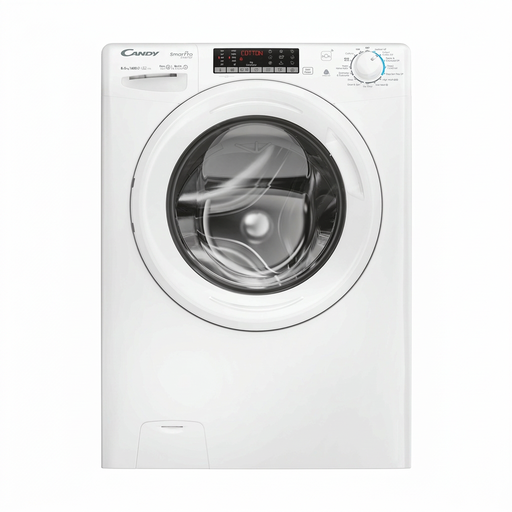 No image available
Consider this model if your usual combined shirt load fits its stated 5 kg dry limit. It has an 8 kg wash capacity and a stated 1400 RPM spin speed. Check the programme manual if a cotton cycle or quick wash-and-dry option is essential to you.
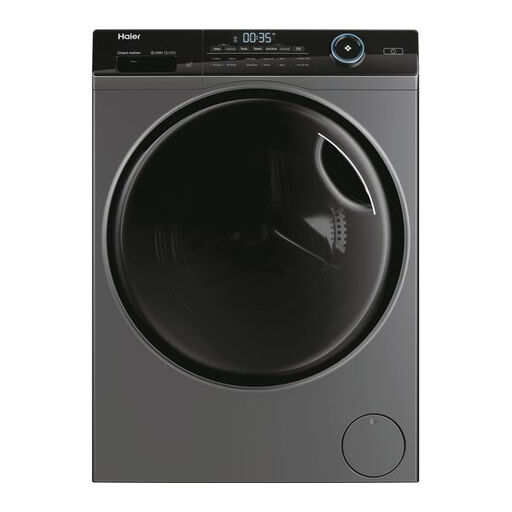 No image available
This model is worth comparing if you need a stated 6 kg dry limit alongside its 10 kg wash capacity. Before relying on it for shirt care, check the exact cotton programme and drying controls in the manual.
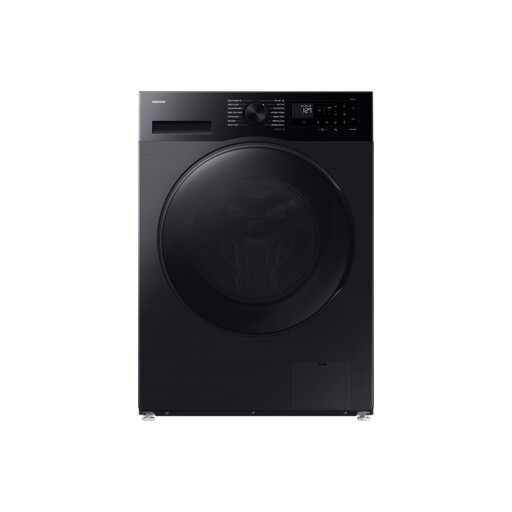 No image available
If you also run larger wash-only loads, compare its 11 kg wash capacity separately from the 6 kg dry limit that governs a combined shirt load. Confirm the cotton and wash-and-dry programme conditions for this exact model.
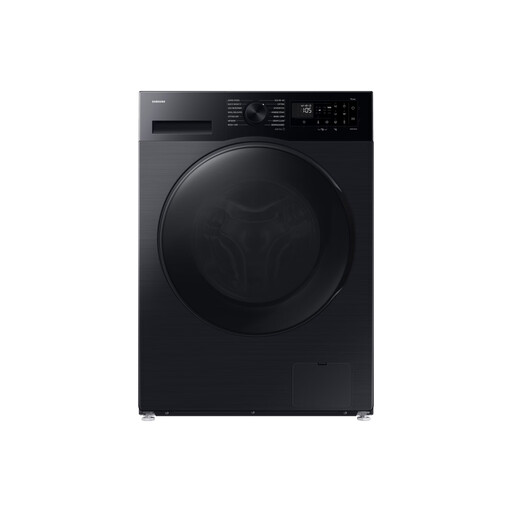 No image available
This variant pairs a stated 9 kg wash capacity with a 6 kg dry limit, so use the latter when planning a shirt load to finish in one cycle. Check its own manual for cotton settings, drying controls and any rapid-cycle load limit.
 No image available
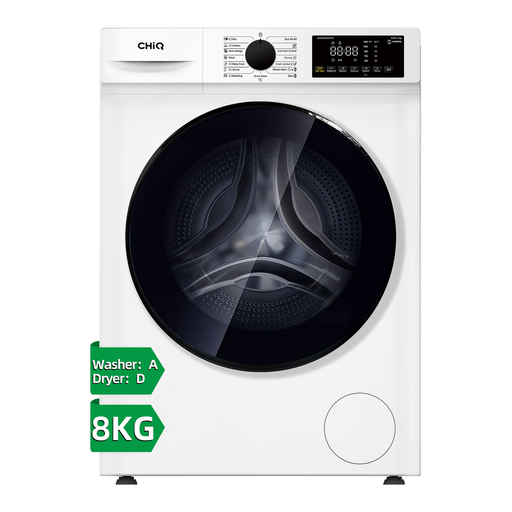
Consider the stated 5 kg dry limit if you expect to complete smaller shirt loads in one cycle; the wash capacity is 8 kg. Check the model’s dimensions and required clearance, as well as its cotton and drying programmes, before choosing it for a tight space.
Only if the load also fits the model’s lower drying or combined-cycle capacity. Which? notes that washer-dryer drying capacity is lower than washing capacity, so a wash filled to its maximum may need splitting before drying.
Check the load limit for the exact programme before counting on it. Bosch describes Wash & Dry 60 on its WDU8H541GB as a small-load option; its duration should not be assumed to apply to a full load.
Measure the installation bay and access route, including door clearance, and check the model-specific instructions for connections and positioning. Follow the manual’s directions for removing transport bolts before first use and levelling the appliance.
Compare the exact models’ energy labels and product information sheets, paying attention to the cycles relevant to your use. UK Department for Energy Security and Net Zero and Office for Product Safety and Standards guidance says in-scope products must display an energy label at the point of sale, including on a website.
No feature establishes that result for every cotton shirt. Compare the named feature on the exact model, read its programme conditions and follow each garment’s care label rather than treating a manufacturer’s fabric-care claim as a guaranteed outcome.