Small-space table-linen washers
If one appliance must take the place of separate washing and drying machines, check the space needed for connections and the open door, not just the appliance’s stated dimensions.


Choose a washer-dryer for cotton tablecloths only after checking the installed space and deciding whether you need to dry the whole washed load without splitting it. Compare wash capacity with the lower wash-and-dry capacity separately, then check each tablecloth’s care label before relying on a cotton or drying programme.
If one appliance must take the place of separate washing and drying machines, check the space needed for connections and the open door, not just the appliance’s stated dimensions.
If you would rather not remove some tablecloths between washing and drying, compare the complete wash-and-dry capacity with the wash capacity. Bosch and AEG list these as separate figures on their cited models.
If coloured or frequently used tablecloths need careful treatment, start with their care labels. Richard Haworth’s table-linen guidance also cautions against chlorine bleach on coloured items.
Start with the space the installed appliance can occupy, then decide how much of a washed tablecloth load must be dried in one cycle.
| Concern | What to check | Who this matters to |
|---|---|---|
| Fit and clearance | Measure usable depth in front of pipes and plugs, plus door-opening space. Allow around 25 mm at each side and roughly 50–150 mm behind a freestanding appliance; follow the exact model’s installation instructions. | With little floor or cabinet space, I need the appliance, its connections and its open door to fit. Physical fit comes first for around 42% of consumers. |
| Wash and drying loads | Compare both capacity figures on the exact model, and consider the tablecloths’ weight and bulk. Bosch lists its WNA144V9GB at 9 kg for washing but 5 kg for a complete wash-and-dry cycle. | I want to finish drying a washed load without removing part of it first; around 33% of consumers would make continuous drying capacity their primary concern. |
| Fabric care and cycle choice | Check each tablecloth’s care label against the available wash and dry settings. If appliance drying will be routine, compare the exact model’s wash-only and complete-cycle energy information too. | For coloured tablecloths used often, I want suitable care settings and a clear picture of the cycles I will use. Those choices are the main concern for around 25% of consumers. |
The drying limit can be lower. Bosch lists 9 kg wash and 5 kg wash-and-dry capacities for the WNA144V9GB, while the cited Beko BM5D59645U and AEG LWX60966B models list 9 kg wash and 6 kg dry capacities.
Plan an uninterrupted cycle around the complete-cycle capacity. If your washed load exceeds it, check the manual and care labels before splitting or drying the load another way.
A machine can fit between cabinets yet leave too little room for hoses, plugs or its open door. Its stated depth is not the full installed depth.
Measure around the connections and check the exact installation document, including cabinet-door and hinge requirements for an integrated model.
Colour, finish and the individual care label affect how a tablecloth should be washed and dried. Richard Haworth advises against chlorine bleach on coloured table linen.
Shake out debris, sort cloths where their labels call for it, and use a treatment only when the textile guidance permits it.
The definitions published by legislation.gov.uk distinguish a washing cycle from a complete washing-and-drying cycle. Wash-only information therefore does not describe the whole routine.
Compare the exact model’s wash-only and complete wash-and-dry information if you expect to dry tablecloths in the appliance regularly.
These manufacturer examples illustrate capacity and installation trade-offs; check the dimensions and instructions for any model you are considering.
The freestanding WNA144V9GB provides a reference point for comparing appliance depth with separate wash and continuous-cycle capacities.
Beko lists freestanding and integrated washer-dryers, making the fitting format worth deciding before comparing individual models.
The condenser LWX60966B is another 9 kg wash / 6 kg dry example for consumers comparing complete-cycle capacity.
These freestanding and integrated washer-dryers offer different stated wash and dry capacities. Use the figures to narrow your choices, then check installation requirements and each tablecloth’s care label for the model you select.
 No image available
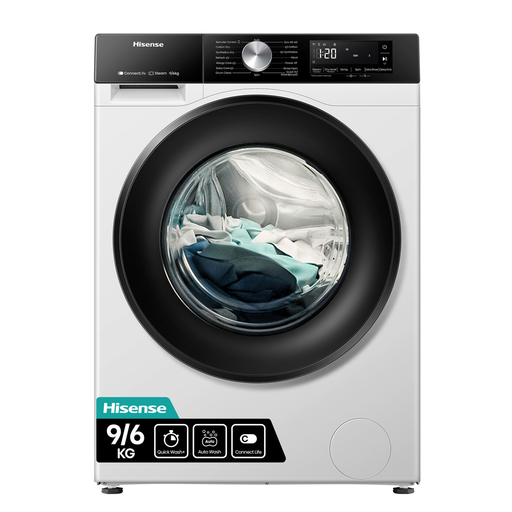
A freestanding option to consider if you want to wash tablecloths in larger loads but can keep a continuous wash-and-dry load within the lower drying limit.
The product name states 9 kg washing, 6 kg drying and 1400 rpm. Check the installed depth, door clearance and permitted fabric settings before choosing it.
 No image available
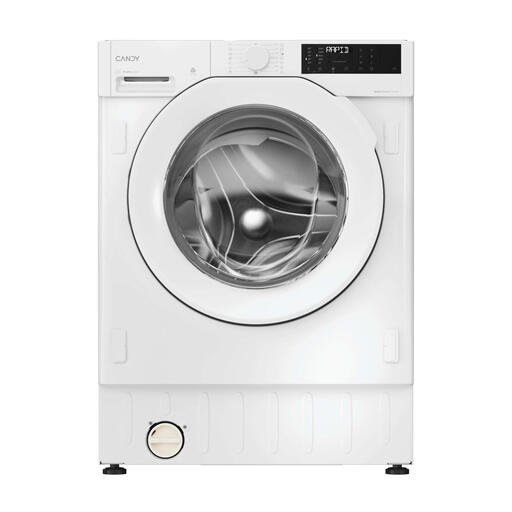
Consider this integrated model only if your cabinetry can accommodate the appliance and its door arrangement.
The product name states 9 kg washing, 6 kg drying and a 1400 spin. Confirm the cabinet, hinge and service clearances against its installation instructions.
 No image available
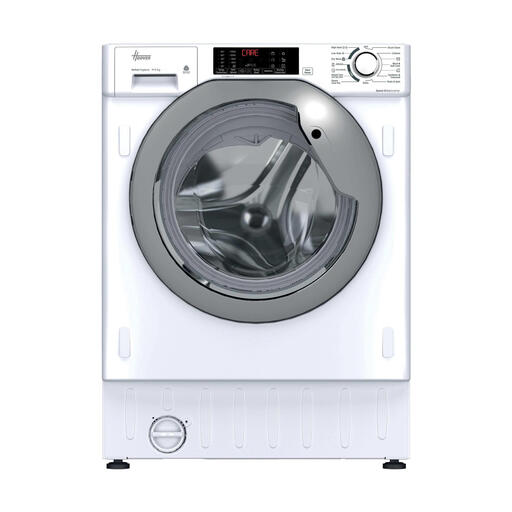
This integrated model may suit a compatible cabinet if washing a larger load matters more than drying all of it without splitting it.
The product name states 9 kg washing and 5 kg drying. Plan the drying load around 5 kg, and check cabinet fit and the tablecloths’ care labels.
 No image available
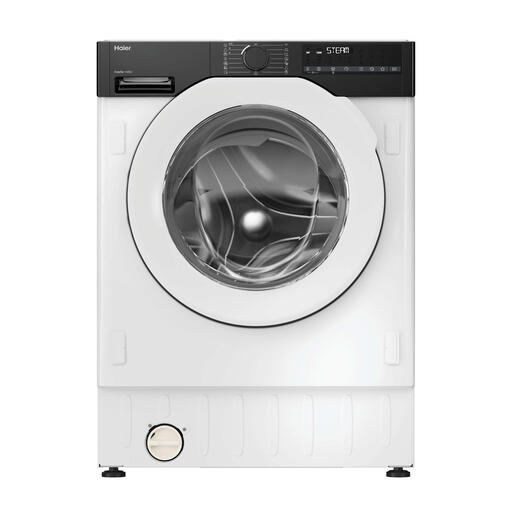
This is another option for compatible kitchen cabinetry when the stated continuous drying capacity is important to your tablecloth routine.
The product name states 9 kg washing, 6 kg drying and 1600 rpm. Check the cabinet-door arrangement, service clearance and suitable fabric settings.
 No image available
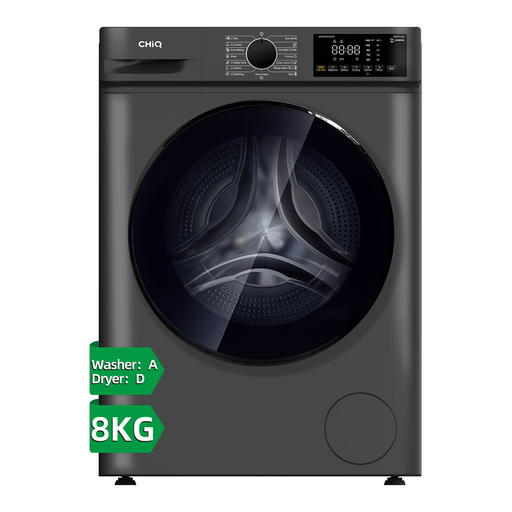
Consider this freestanding model if its washing and smaller continuous drying limits suit the tablecloth loads you expect to handle.
The product name states 8 kg washing, 5 kg drying and a 1400 spin. Check the complete installed space and whether the care labels permit appliance drying.
Not on a model whose complete wash-and-dry limit is below 9 kg. Bosch lists 9 kg washing and 5 kg wash-and-dry capacity for the WNA144V9GB; the cited Beko BM5D59645U and AEG LWX60966B models list 9 kg wash and 6 kg dry. Check the exact model’s lower limit and each tablecloth’s care label.
Allow space for the actual connections rather than measuring to the wall alone. Allow roughly 50–150 mm behind the appliance and around 25 mm at either side; check the chosen model’s installation instructions and make sure its door can open.
The cited AEG LWX60966B condenses drying moisture and drains it away rather than using an external tumble-dryer vent. Check that model’s drainage, electrical and other installation requirements; do not assume every washer-dryer uses the same arrangement.
Follow each tablecloth’s care label before choosing a wash temperature, drying setting or stain treatment. Richard Haworth’s table-linen guidance advises shaking out debris and avoiding chlorine bleach on coloured table linen; any treatment must also be suitable for the particular cloth.
Compare wash-only information with the complete wash-and-dry information for the exact model. The definitions published by legislation.gov.uk distinguish those cycles, so a wash-only figure does not describe a routine that includes appliance drying. GOV.UK’s cited washer-dryer standards material applies to England, Scotland and Wales; if buying for Northern Ireland, check the applicable local requirements.