Families with frequent full loads
If household laundry regularly fills the washer, the smaller drying limit determines how much can finish in the same cycle.


Choose a washer-dryer by the load you need to dry, not just its larger wash-capacity figure: a full family wash may need splitting before drying. Decide whether the machine must be freestanding or integrated, then check its installation requirements, cotton-care controls and wash-and-dry energy information.
If household laundry regularly fills the washer, the smaller drying limit determines how much can finish in the same cycle.
When separate washing and drying machines will not fit, the choice between freestanding and integrated construction depends on the available space and installation.
If cotton underwear is washed often, check the available programme, spin and rinse controls against garment care labels rather than relying on the programme name alone.
Start with the amount you expect to wash and dry together. Once that load is clear, check where the appliance will fit and whether its controls suit the garments you wash.
| Concern | What to check | Who this matters to |
|---|---|---|
| Wash and drying loads | Compare both capacities in kg and the manual’s limit for the intended wash-and-dry programme. | If I regularly wash a full family load, I need to know how much can stay in the drum for drying. Around 31% of consumers put practical wash-and-dry capacity first. |
| Space and installation | Choose freestanding or integrated construction; check the opening, required clearances and connections against the model’s instructions. | When one machine must fit a particular laundry space or kitchen cabinet, getting the installation right is my first concern. For around 25% of consumers, fit and installation take priority. |
| Cotton-care controls | Check the cotton programme, temperature and spin choices, and whether an extra-rinse option is available; follow each garment label. | I wash cotton underwear often and want settings I can adjust to suit the items in the load. Around 25% of consumers chiefly prioritise garment-care and rinse control. |
| Drying energy use | Read the separate wash-only and wash-and-dry energy information, particularly if drying will be frequent. | If I expect to use drying regularly, its ongoing energy use matters more to me than the headline wash capacity. That is the primary concern for around 19% of consumers. |
A machine specified to wash 10kg may dry only 6kg in a combined cycle, so a full wash could need splitting before drying.
Compare the two load limits and check the intended programme in the model manual.
An integrated machine needs a suitable cabinet and door arrangement; a matching capacity does not establish installation compatibility.
Choose the installation type first, measure the opening and check the model’s dimensions and fitting instructions.
According to Which?, drying in a washer-dryer uses substantially more energy than washing, so frequent use makes the combined-cycle figures important.
Compare the relevant energy-label information and consider how often you will use the drying cycle.
Seller details, product marking and instructions matter when assessing an electrical appliance, especially when buying from a seller outside the UK.
Follow GOV.UK’s consumer-safety advice: check for appropriate marking, the manufacturer’s name and address, and instructions suitable for the appliance before buying.
These brands offer relevant models to compare; specifications and installation requirements belong to the particular model, not every machine bearing the brand name.
A reference point for a higher-capacity freestanding family washer-dryer.
Offers freestanding and integrated washer-dryers across different capacity bands.
A reference point when comparing built-in capacity with cabinet fit.
These freestanding and integrated washer-dryers offer different wash and drying load limits for family laundry. For cotton underwear, check each model’s programme list and the garments’ care labels before choosing.
 No image available
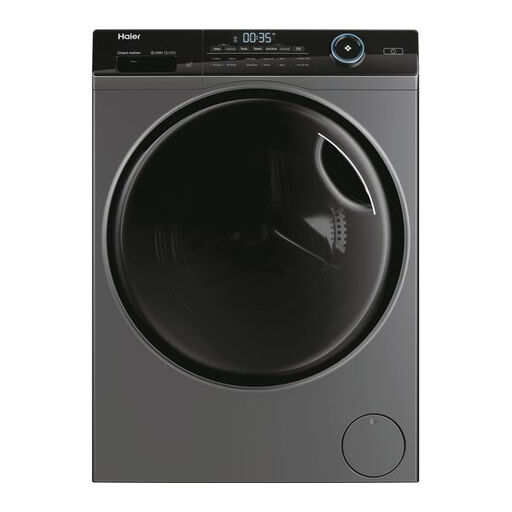
For a freestanding laundry space where larger family washes are common. The stated 10kg wash capacity exceeds the 6kg drying limit, so a full wash may need splitting before drying.
The product name gives A/D energy ratings; check the label and the model’s cotton, spin and rinse options for your intended use.
 No image available
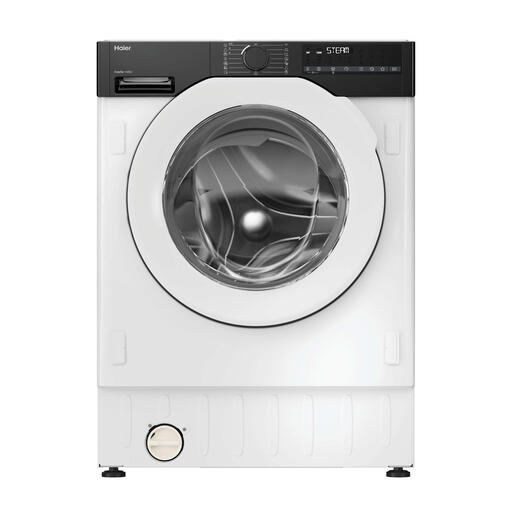
For family laundry where the machine must fit into a suitable kitchen cabinet. Its stated 9kg washing and 6kg drying limits mean a full wash cannot all remain in the drum for drying.
The product name specifies 1600rpm. Check cabinet and installation requirements, plus the cotton, spin and rinse controls, against the exact model documentation.
 No image available
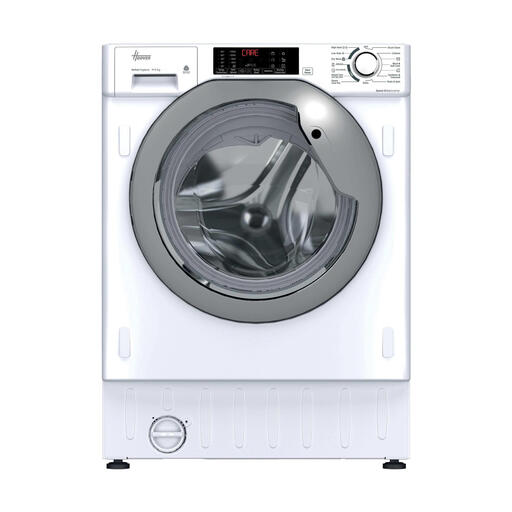
For a fitted installation where a 5kg drying load meets the household’s needs. The stated 9kg wash capacity is larger, so a full wash may need splitting before drying.
Check the cabinet, connections and installation instructions, along with the exact model’s cotton, spin and rinse options.
 No image available
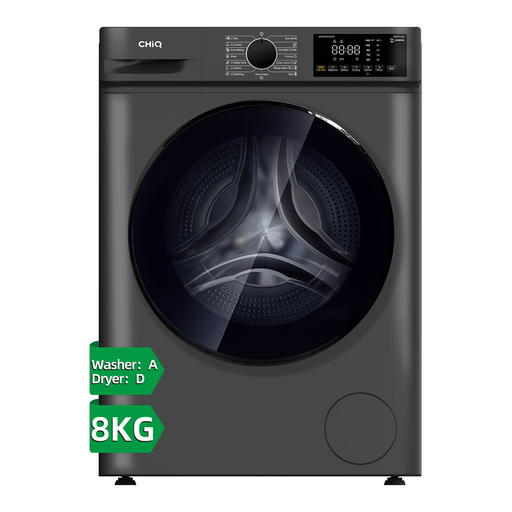
For a freestanding position where an 8kg wash and 5kg drying limit suit the planned loads. Drying a full wash may require removing some laundry first.
The product name specifies a 1400 spin and A/D ratings. Check installation clearances and the model’s cotton, spin and rinse options.
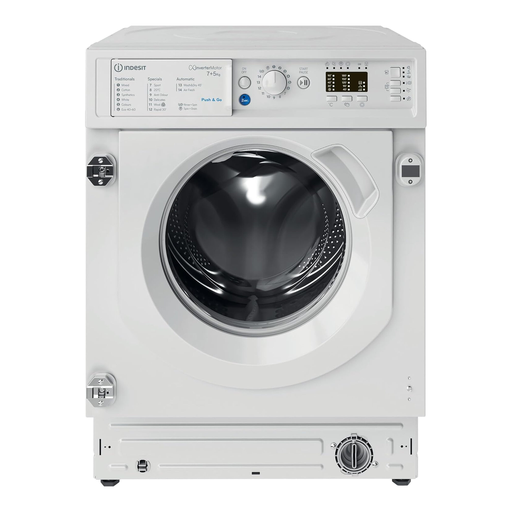 No image available
For a fitted kitchen where a 7kg wash and 5kg drying limit match the usual laundry loads. A full wash may need splitting if it will also be dried.
The product name states a 59.5cm width; compare all dimensions and installation requirements with the cabinet, then check the model’s cotton, spin and rinse options.
Only if that load is within the machine’s lower combined wash-and-dry limit. For example, Bosch specifies 10kg washing but 6kg for a combined cycle on the WDU8H549GB; check the capacity of your chosen model and programme.
Look for a cotton programme, adjustable spin and an extra-rinse option if removing more detergent residue matters to you. Which? notes that extra rinsing can help remove more detergent, but the garment label and model manual should determine the setting and whether an item can be tumble dried.
The freestanding washer-dryers covered by Beko’s UK guidance use condenser drying and do not need an external vent hose. Check the exact model’s instructions for its water supply, wastewater drain, power outlet and floor requirements.
Compare the wash-and-dry energy information as well as the drying load limit. Which? reports that drying in a washer-dryer uses substantially more energy than washing, making the combined cycle particularly relevant when you expect to use it frequently.
Check for appropriate product marking, the manufacturer’s name and address, and clear instructions. GOV.UK’s consumer-safety advice particularly highlights these checks when buying from a seller outside the UK; confirm the information for the appliance you intend to purchase.