Space-limited utility-room users
If the room cannot comfortably accommodate side-by-side machines, one appliance may make sense. Measure the space needed for connections and opening the door as well as the appliance itself.


A freestanding washer-dryer suits a utility room with space for one appliance, provided its drying capacity can handle the loads you want to finish without transferring them. Choose an integrated model only for suitable cabinetry; if you regularly dry larger loads and have enough height, consider a separate washer and dryer arranged vertically. Check garment-care labels, installation clearances and the exact model’s energy information before deciding.
If the room cannot comfortably accommodate side-by-side machines, one appliance may make sense. Measure the space needed for connections and opening the door as well as the appliance itself.
For regular cotton-underwear loads, check the exact model’s cotton programme, drying controls and permitted drying load alongside each garment’s care label.
If you expect to dry much of every wash load, the separate drying-capacity figure matters. A single-drum washer-dryer may require you to remove or split a full wash load before drying.
Choose when: You have a suitable space for one appliance and want to wash and dry small loads in the same drum.
Trade-off: The rated drying load can be smaller than the washing load; Bosch Home UK lists an 8 kg wash and 5 kg wash-and-dry model.
Choose when: The utility-room cabinetry is designed for an integrated appliance and its furniture door.
Trade-off: Cabinet dimensions and access to connections must suit the exact model; an integrated machine is not interchangeable with a freestanding one.
Choose when: Drying larger loads matters more and the room can accommodate a taller arrangement.
Trade-off: Height, access and installation requirements differ from a single-drum machine. LG UK specifies its WT1210WWF WashTower at 12 kg washing and 10 kg drying.
For regular cotton-underwear laundry, decide whether the room can take your preferred setup, then judge each machine by the load you actually intend to dry.
| Concern | What to check | Who this matters to |
|---|---|---|
| Fit and access | Measure the appliance bay, connections and door-opening space; confirm whether it takes a freestanding or integrated model. | If the utility room is tight, I need to connect and load the machine without obstructing access. Around 36% of consumers would put fit and installation first. |
| Drying capacity | Compare the rated wash and dry loads separately, using the dry figure for a continuous wash-and-dry cycle. | When I plan to dry most of a wash load, avoiding a second drying batch matters more than the headline wash capacity. Roughly 29% of consumers would prioritise usable drying capacity. |
| Cotton-load care | Check the exact cotton programme, permitted load and drying options against the garment-care labels. | With frequent underwear loads, I want a suitable programme and control over drying rather than assuming every cotton item can follow the same cycle. Around 21% of consumers would put cotton-load care first. |
| Energy and time | Compare the exact model’s energy label and product information sheet; check the load and programme conditions behind quick-cycle claims. | If I run the machine often, I want to understand the labelled energy information and how long my intended programme takes. Roughly 14% of consumers would make energy and time their primary concern. |
A full wash load may exceed the machine’s drying limit, leaving you to remove items or dry them in batches.
If you want an uninterrupted wash-and-dry cycle, compare both rated capacities on the exact model and plan the load around its drying limit.
Pipes, plugs and the open door can affect whether a washer-dryer is practical to install and load.
Measure in front of projecting connections and follow the model’s installation instructions for clearance and appliance type.
Fast wash-and-dry claims can depend on a named programme and load. Beko UK, for example, describes an under-three-hour cycle for up to 5 kg on its BMND8545U.
Check the stated programme and load before using a claimed cycle time to plan your routine.
Electrical Safety First warns that a washing machine can overload an extension lead, creating a fire risk.
Plan for an appropriate fixed socket and follow the appliance manufacturer’s electrical instructions, using a competent installer where needed.
Bosch Home UK lists freestanding and integrated washer-dryers with different wash and dry capacity combinations.
Beko’s BMND8545U is a freestanding 8 kg wash and 5 kg dry option with brand-described sensor drying.
Haier UK lists both integrated and freestanding washer-dryers, including integrated 9 kg wash and 6 kg dry examples.
LG offers single-drum washer-dryers and a distinct vertically arranged WashTower format.
These washer-dryers offer one-appliance options for utility rooms: freestanding models for an open appliance space and an integrated model for suitable cabinetry. Compare their stated drying loads with your usual cotton-underwear batch, then check the programme and installation instructions for the exact model.
 No image available
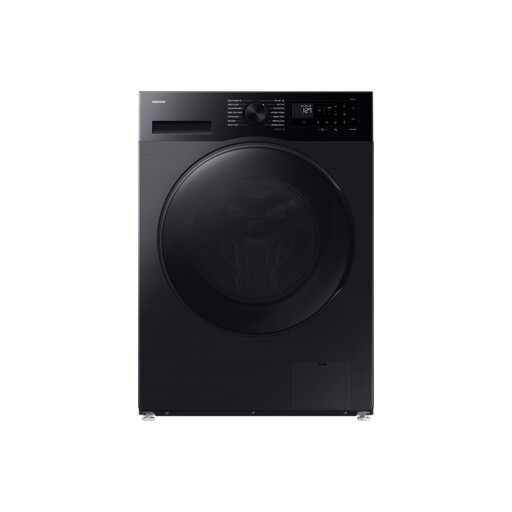
A freestanding one-appliance option if your planned drying batch fits its 6 kg rated dry load.
The stated washing capacity is 11 kg; check the cotton programme, garment-care labels and installation clearances before choosing it for regular underwear loads.
 No image available
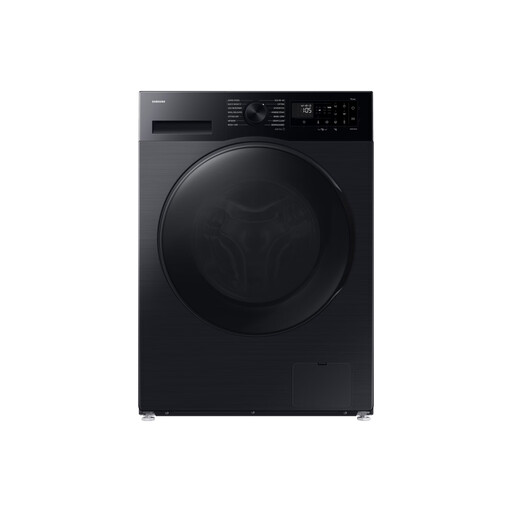
This freestanding model suits consideration when one drum is preferable and a 6 kg drying limit covers the intended batch.
Its stated wash capacity is 9 kg. Check the exact cotton programme, care labels and space for connections and door opening.
 No image available
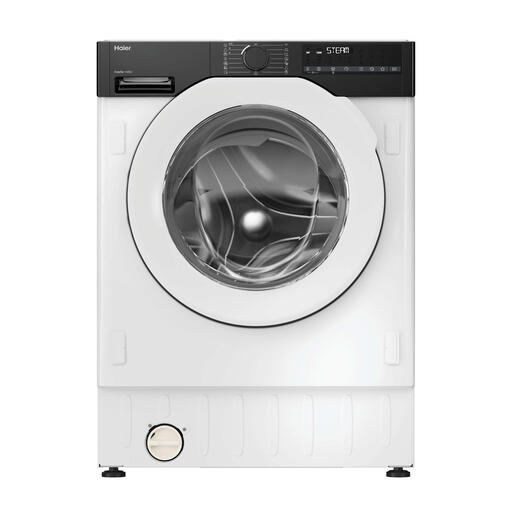
Consider this integrated model only if the utility-room cabinet and furniture door can accommodate it.
Its stated capacities are 9 kg washing and 6 kg drying, with a 1600 rpm spin specification. Check cabinet and service clearances, the cotton programme and garment-care labels before purchase.
 No image available
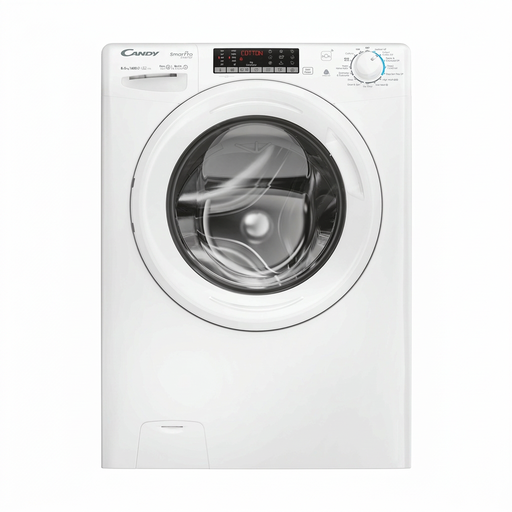
This freestanding model is worth considering if you want stated drying controls for smaller, frequent loads.
It lists an 8 kg wash capacity, 5 kg dry capacity and 1400 rpm spin. Check the cotton programme and its permitted load, as well as the exact wash-and-dry energy label.
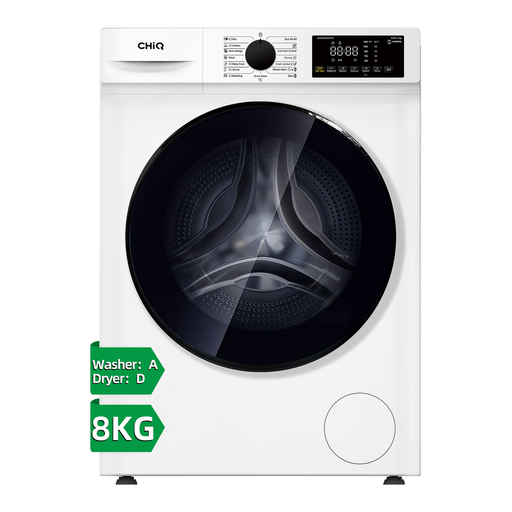 No image available
This freestanding washer-dryer is an option to assess where a single appliance must fit a restricted utility-room space.
Its stated capacities are 8 kg washing and 5 kg drying, with a 1400 rpm spin specification. Measure the full installation space and check the cotton programme against your garments’ care labels.
Only if the exact model’s rated drying capacity allows that load. An 8 kg wash / 5 kg dry model has a 5 kg drying limit, so consult its manual and reduce or split a larger load before drying.
Follow the exact manufacturer’s installation instructions and measure from projecting pipes and plugs, not just the wall. A common guideline is around 25 mm on either side and roughly 50–150 mm at the rear for ventilation and connections; also allow room to open the door.
Plan for an appropriate fixed socket instead. Electrical Safety First warns that a washing machine can overload an extension lead and create a fire risk; follow the washer-dryer manufacturer’s electrical instructions.
No. Check each garment’s care label and the machine’s instructions for the permitted wash and dry settings; a named cotton programme alone does not establish that every item can be tumble-dried.