Small-flat curtain washers
If a washer-dryer has to share a compact kitchen or utility space, measure beyond the empty gap: connections, ventilation and the open appliance door all need room. Freestanding machines need side and rear clearance.


Choose a washer-dryer that fits the installation space and can hold your curtains within its wash capacity. If you want to dry them in the machine, also check the lower drying capacity and make sure the curtain care label permits tumble drying. A freestanding model allows more flexibility in placement; an integrated model must fit the cabinetry and its installation requirements.
If a washer-dryer has to share a compact kitchen or utility space, measure beyond the empty gap: connections, ventilation and the open appliance door all need room. Freestanding machines need side and rear clearance.
If avoiding damage to washable curtains matters most, start with the fabric’s care label rather than the appliance’s programme names. Dunelm advises checking the label because care instructions vary between curtains.
If one appliance needs to handle both jobs, plan separately for washing and drying. Which? explains that a washer-dryer’s drying capacity is lower than its washing capacity, so a full wash load may need to be split or air-dried.
Decide where the appliance can go before comparing capacities. If it must sit behind a fitted kitchen door, check integrated models against the cabinet and fitting arrangement; otherwise, assess a freestanding model’s full installation clearance. In either case, the curtain label determines whether washing and machine drying are appropriate.
| Concern | What to check | Who this matters to |
|---|---|---|
| Installation fit | Measure the usable height, width and depth, allowing for connections, ventilation and door opening. For a fitted kitchen, check cabinet and door compatibility. | If the appliance has to fit a tight alcove, I need to know that pipes and an open door will not obstruct it. Around 42% of consumers put installation fit first. |
| Curtain care and capacity | Check the curtain label and dry load against both stated capacities; confirm that a suitable wash programme is available and that tumble drying is permitted. | I want to wash my curtains without assuming the entire load can go straight into a drying cycle. Curtain care and capacity come first for around 33% of consumers. |
| Noise and energy information | Compare the exact models’ stated noise figures, energy labels and product information sheets, paying attention to the cycles being described. | When the machine is close to my living space, its operating noise and running information affect my choice. Around 25% of consumers prioritise those details. |
Which? notes that washer-dryers dry less than they wash. A curtain load within the wash limit may therefore exceed the drying limit.
Compare the dry curtain load with both figures for the exact model; split the load or air-dry it when necessary.
Splitting the load can mean another drying cycle or space to hang part of the curtains.
Rear pipes and plugs, ventilation space and the open door can reduce the usable installation area. Allow around 25 mm at either side and roughly 50–150 mm at the back for a freestanding machine; check the chosen model’s own requirements too.
Measure the available space with connections and access in mind before ordering.
Curtain-care instructions vary by fabric. Machine washing permission does not establish that a drying cycle is suitable.
Follow the curtain label, remove hooks and other fittings before cleaning, and air-dry when tumble drying is not permitted.
Connected energy features can depend on particular programmes, settings and account requirements. A manufacturer’s conditional claim does not establish what a different household will save.
Compare the exact appliances’ energy labels and product information sheets, then read the conditions attached to any connected feature.
The freestanding WNG25401GB offers a model-specific reference point for checking capacity and depth.
The built-in HWDB10B14858U1UK is a reference for households needing an appliance behind a compatible kitchen door.
The WD90DG5B15BEEU gives buyers a 9 kg wash and 6 kg dry model to assess alongside connected features.
These freestanding models offer separate wash and dry capacities for planning a curtain load. Check the curtain label, available programmes and installation fit before choosing either one.
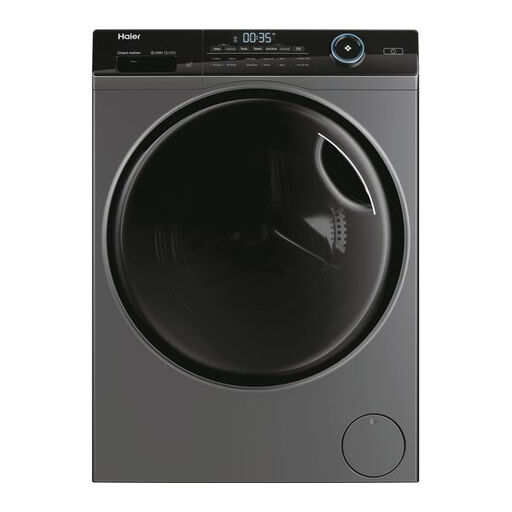 No image available
Consider this freestanding model if its installation requirements suit your flat and your curtain load fits its stated capacities.
Its product name states 10 kg washing and 6 kg drying capacity. Check the available wash programmes and use the drying function only if the curtain label permits it.
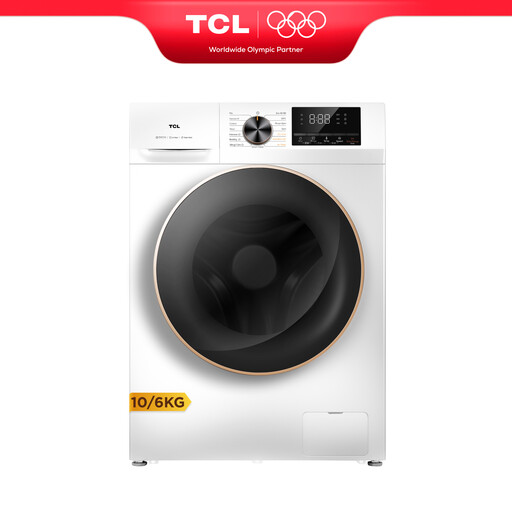 No image available
Consider this freestanding model if a 10 kg wash and 6 kg dry capacity accommodates your curtains and the appliance fits your space.
The product name states a 1400 spin figure. Confirm the exact dimensions, noise information and available programmes before choosing it for a small flat or a particular curtain fabric.
Only if their care label permits tumble drying and the load fits the washer-dryer’s stated drying capacity. Dunelm advises checking curtain-specific care instructions, while Which? notes that a washer-dryer’s drying capacity is lower than its washing capacity.
Measure the installation height, width and usable depth, including room for pipes, plugs and opening the door. For freestanding machines, guidance suggests around 25 mm at each side and roughly 50–150 mm behind; also follow the exact appliance’s installation instructions.
Compare energy labels and product information sheets for the exact washer-dryers and pay attention to which cycles the figures describe. GOV.UK says products within the scope of energy-information rules must be supplied with an accurate printed energy label and accompanied by a product information sheet.