Choose a washer-dryer by the amount your household needs to dry in one cycle, not just its larger wash capacity. A 9–10kg wash and 6kg dry model gives a busy shared house more drying capacity than an 8kg wash and 5kg dry model, but either may require a full wash load to be split before drying. If housemates regularly need to wash one load while drying another, separate appliances avoid the single-drum queue where space allows.
Who is this for?
Housemates managing face-cloth laundry
You want programmes that suit the cloths’ care labels and may value an extra-rinse option when detergent removal matters. Royal United Hospital Bath NHS Trust’s 60°C advice concerns heavily soiled laundry or laundry used by someone with a known infection; it is not a blanket instruction for every face cloth.
Households with room for one appliance
You need washing and drying in one machine and can accommodate the fact that it cannot wash a second load while drying the first. Which? advises comparing the two stated capacities: the smaller drying figure determines the maximum load for a continuous wash-and-dry cycle.
Busy households sharing a laundry schedule
Several people need access to the machine, making drying capacity, cycle duration and the exact model’s noise information useful checks. A larger drum also needs to make sense for the loads you normally run; Which? notes that larger washer-dryers can be less efficient when underfilled.
What matters when choosing?
Start with the loads that need drying, then check how face cloths should be washed and whether one drum can meet the household’s schedule. If loads frequently need washing and drying at the same time, consider whether there is room for separate appliances.
| Concern | What to check | Who this matters to |
|---|
| Face-cloth care and rinsing |
Check each cloth’s care label against the available temperatures and programmes; look for an extra-rinse option if wanted. |
If I wash face cloths frequently, I want a suitable cycle without assuming every cloth needs a hotter wash. Around 25% of consumers put cloth care and rinsing first. |
| Drying capacity |
Compare the rated drying capacity in kg with your usual load, not just the wash capacity. |
When several housemates’ laundry is waiting, I want to avoid splitting every load before drying; around 25% of consumers make drying capacity their primary concern. |
| One-appliance convenience |
Check the wash-and-dry load limit and programme, then consider whether the drum can be occupied for both stages. |
If there is space for only one machine, I need selected loads washed and dried without a separate dryer. Roughly 31% of consumers prioritise that one-appliance arrangement. |
| Shared-house fit and use |
Check dimensions, access and installation requirements, the exact model’s noise figure and whether its capacity suits typical loads. |
With housemates nearby, I need the machine to fit the property and work safely without choosing a drum that is routinely underfilled; around 19% of consumers put these practical checks first. |
Buying pitfalls
-
Choosing by wash capacity alone
A full wash load may exceed the machine’s lower drying limit, leaving part of the laundry waiting for another drying cycle. Which? distinguishes the wash and dry capacities when explaining washer-dryer selection.
Compare the rated wash-and-dry capacity with the batches your household actually intends to dry.
-
Assuming a 60°C cycle suits every face cloth
Fabric-care limits differ. Royal United Hospital Bath NHS Trust’s 60°C guidance applies to heavily soiled laundry or items used by someone with a known infection, not automatically to routine face-cloth washing.
Read the cloth’s care label and check the model’s available programmes before choosing a cycle.
-
Buying the largest drum for consistently small loads
Extra capacity is useful only when the household can make use of it; Which? notes that larger washer-dryers can be less efficient when underfilled.
Compare the capacity with typical shared-house loads rather than choosing solely by the largest wash figure.
-
Overlooking installation and electrical arrangements
A freestanding label does not establish that a machine will fit the available space or electrical setup. Electrical Safety First warns that using an extension lead with other large appliances can cause an overload and fire risk.
Measure the space and access route, check water and drainage connections, and follow the model’s electrical installation instructions.
Brands to consider for these washer-dryer formats
Bosch
Bosch’s UK washer-dryer range includes different wash and dry capacities for households comparing load sizes.
- Bosch Home UK lists 9kg wash and 6kg dry and 10kg wash and 6kg dry options in its range.
- Figures vary by model: the Bosch WNA144V9GB is specified at 9kg for washing and 5kg for a wash-and-dry cycle.
LG
LG’s UK range includes 9kg wash and 6kg dry washer-dryers with model-dependent programme and connected features.
- LG specifies 9kg washing and 6kg drying for the FWV696WSE, alongside programmes including Cotton, Mix and Wool.
- An LG listing marks the FWV696WSE discontinued; check availability and the precise features of any model under consideration.
Haier
Haier’s UK range includes 10kg wash and 6kg dry formats, with installation types and programmes that vary by model.
- Haier lists 10kg wash and up to 6kg dry models; a named X5 model offers Rapid, Eco and Intense programme choices.
- Check the exact model’s installation type, programmes and energy information rather than applying one product line’s features across the range.
Beko
Beko offers UK 8kg wash and 5kg dry formats, including freestanding and integrated models.
- Beko lists an 8kg wash and 5kg dry freestanding model; a named integrated model has sensor-drying programmes.
- Programme conditions and features depend on the exact model, and older model listings may be discontinued.
Joybuy washer-dryers for shared-house laundry
These 9–10kg wash and 6kg dry models are options to compare when several housemates share laundry loads and sometimes need to dry them in the same appliance. Check the installation type and face-cloth programme details for the particular model before choosing.
 No image available
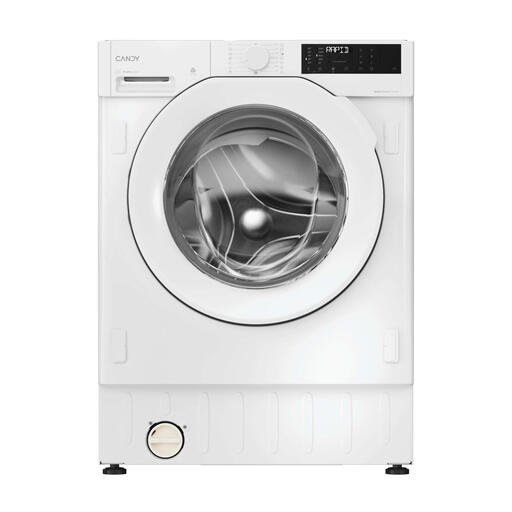
Candy BC4S496M6D8-80 integrated washer-dryer, 9kg/6kg
Consider this model if the shared house needs an integrated machine for laundry batches that may also need drying.
Its stated capacities are 9kg for washing and 6kg for drying, with a 1400rpm spin. Confirm cabinet-door fit and check the available temperatures and rinse settings against your face-cloth care labels; a full wash load exceeds the drying limit.
View on Joybuy
 No image available
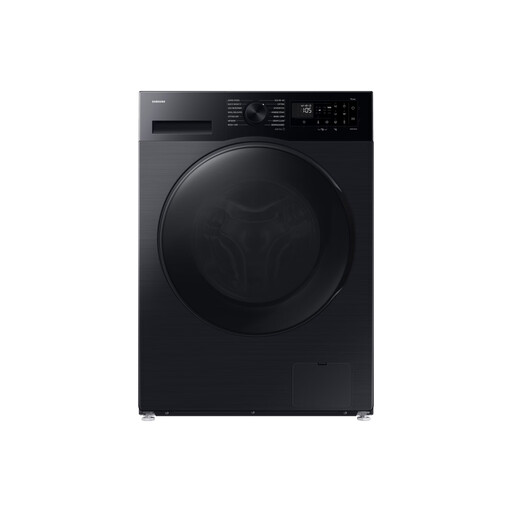
Samsung Series 5 AI Energy WD90DG5G34BBEU washer-dryer, 9kg/6kg
Consider this 9kg wash and 6kg dry model when housemates want selected loads to move from washing into drying in one appliance.
Check its programme temperatures and rinse options against the face-cloth labels. A programme name such as Hygiene Steam does not establish a particular outcome for the cloths, and loads above 6kg need dividing before drying.
View on Joybuy
 No image available
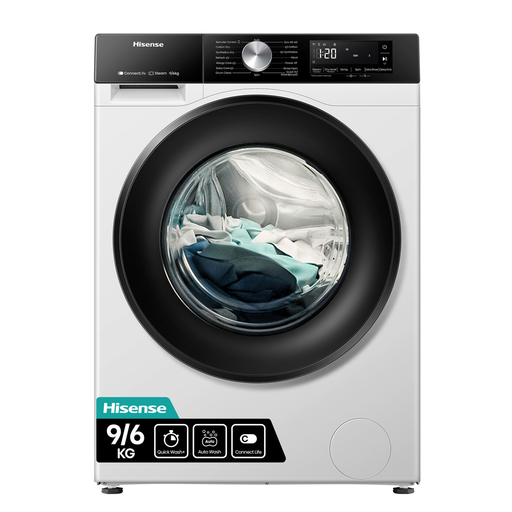
Hisense 3S Series WD3S9043BW3 washer-dryer, 9kg/6kg
This 9kg wash and 6kg dry model is an option for shared laundry where only part of a larger wash batch needs machine drying.
The product name specifies a 1400rpm spin. Confirm how this particular model must be installed, and compare its temperature and rinse options with your face-cloth care labels.
View on Joybuy
 No image available
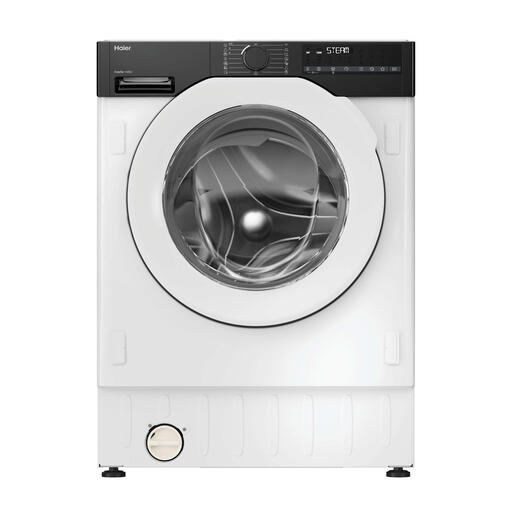
Haier Series 6 BHA6S696M6D9-80 integrated washer-dryer, 9kg/6kg
Consider this integrated model only if the property can accommodate its cabinet-door installation.
The stated capacities are 9kg wash and 6kg dry, with a 1600rpm spin. Confirm the installation requirements, the exact drying specification and the programmes suitable for your face cloths before choosing it.
View on Joybuy
 No image available
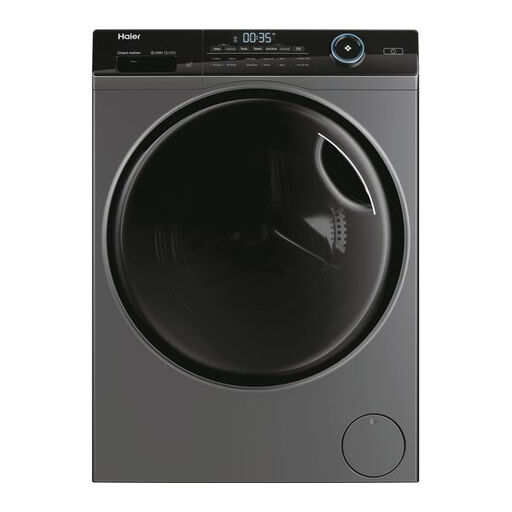
Haier I-Pro Series 5 HWD100-B14959S8NU1 washer-dryer, 10kg/6kg
This model suits consideration where several housemates can make use of a 10kg wash capacity while drying no more than 6kg in one cycle.
Check that its dimensions suit the property and that its temperature and rinse options suit the face cloths. The larger wash rating does not increase the 6kg drying limit.
View on Joybuy
Frequently asked questions
Must face cloths always be washed at 60°C in a shared house?
No: choose a cycle permitted by each cloth’s care label rather than treating 60°C as a rule for routine washing. Royal United Hospital Bath NHS Trust’s 60°C guidance specifically concerns heavily soiled laundry or laundry used by someone with a known infection.
Why does a washer-dryer have two capacity figures?
One figure is its wash capacity and the smaller figure is its drying capacity. As Which? explains, a load that fills the washing allowance may need to be divided before drying, so compare the dry rating with the amount your housemates normally need to finish in one cycle.
Can I connect a washer-dryer through an extension lead?
Do not assume an extension lead is suitable: follow the model’s installation instructions and check the available fixed socket arrangement. Electrical Safety First warns that an extension lead used with other large appliances can become overloaded and create a fire risk.
Which energy information should I compare?
Compare the energy label and product information for the exact model, paying attention to the information for washing and for wash-and-dry use. GOV.UK notes that energy-labelling arrangements differ between Great Britain and Northern Ireland, so check the documentation applicable to your delivery location.


