Families drying frequent everyday loads
If socks, underwear and schoolwear regularly need to be ready in one wash-to-dry sequence, compare the amount you usually dry with the machine’s drying limit, not just its washing capacity.


Choose by drying capacity first if you want a family load to wash and dry without removing items: a washer-dryer’s drying limit is lower than its washing limit. For regular cotton socks and other everyday laundry, also compare the combined wash-and-dry energy information, check the programme and rinse controls you need, and measure the intended installation space.
If socks, underwear and schoolwear regularly need to be ready in one wash-to-dry sequence, compare the amount you usually dry with the machine’s drying limit, not just its washing capacity.
A washer-dryer can combine the two tasks in one appliance position, provided the space and water, waste and power connections suit the exact model. If it must sit behind a kitchen door, check the cabinet fitting as well.
For cotton items washed for someone with sensitive skin, an extra-rinse option may be worth checking alongside capacity. Which? notes that an extra rinse can help remove more detergent from laundry.
| Concern | Buying check | Who this matters to |
|---|---|---|
| Drying capacity | Compare the wash and dry limits separately, then check the combined programme’s load limit against your usual load. | If I need the usual family load ready without stopping to take items out, the dry limit governs my choice; around 37% of consumers put drying the load in one go first. |
| Energy and water information | Compare the combined wash-and-dry figures on the energy label and product information sheet, not just wash-only information. | When I expect to dry laundry regularly, I want figures for the cycle I will actually use; roughly 27% of consumers make combined-cycle resource information their main concern. |
| Cotton and rinse controls | Check for a cotton programme and, if useful, an extra-rinse option; follow garment care labels. | If detergent removal matters for our cotton laundry, I need controls that let me adjust the routine; around 18% of consumers prioritise programme and rinse options. |
| Space and installation | Measure the full appliance space and check connections; for an integrated model, confirm cabinet-door compatibility. | If the appliance must fit a particular kitchen or utility-room position, a suitable installation comes before extra features; about 18% of consumers put fit first. |
A load that reaches the washing limit may exceed the lower drying limit, so part of it must be removed before drying. Beko’s freestanding range guidance and Which? both distinguish the two capacities.
Compare both kilogram figures and the limit for the programme you intend to use. Base wash-to-dry convenience on the amount you normally need to dry at once.
Wash-only information does not describe the combined cycle you plan to use for socks and other family laundry.
Compare the combined wash-and-dry information for each shortlisted model on its energy label and product information sheet.
Capacity does not establish whether a machine will fit. For example, Bosch lists a depth of 590 mm for the WNG25401GB, while LG lists 620 mm for the FWY606WWLN1.
Measure the position and check the exact model’s full dimensions, connection requirements and installation instructions before ordering.
Which? says integrated washer-dryers offer fewer model choices than freestanding machines. Concealed installation also depends on compatible cabinetry and fittings.
Choose an integrated format when fitting the appliance behind a kitchen door is a requirement; otherwise compare freestanding models against the same laundry needs.
Beko’s UK freestanding range offers different wash and dry capacities for capacity-led comparisons.
Bosch is relevant when comparing a larger wash capacity with a smaller load that can complete a combined cycle.
LG’s FWY606WWLN1 provides a 10 kg wash / 6 kg dry model to consider where installation depth is part of the decision.
These freestanding and integrated washer-dryers offer different stated wash and dry limits for everyday family laundry. Compare the dry limit with your usual load; choose an integrated model only if the cabinet installation suits your room.
 No image available
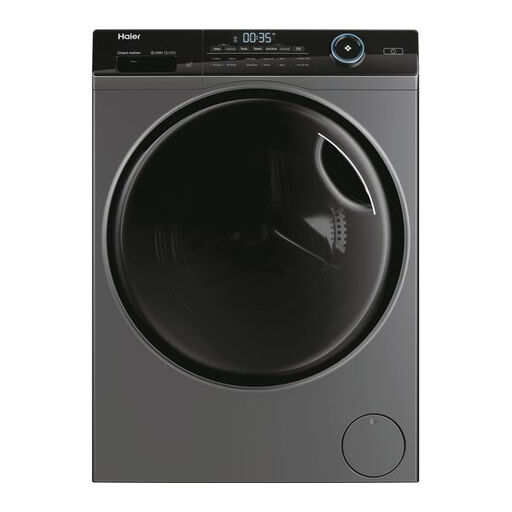
Consider this freestanding model if a 6 kg drying limit suits the amount of family laundry you normally dry at once. Its stated washing capacity is 10 kg, so a full wash load would exceed the drying limit. Check the cotton and rinse controls you need in the manual.
 No image available
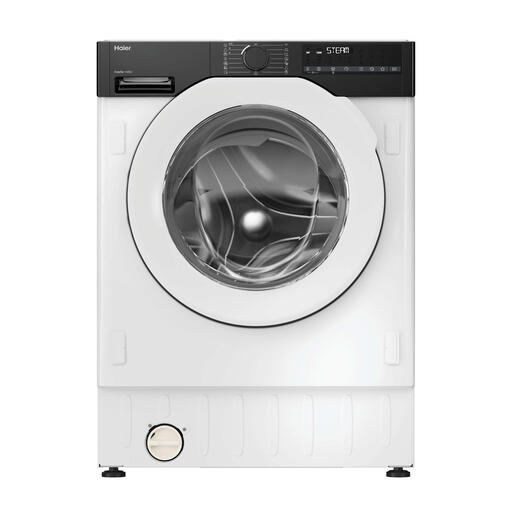
Consider this integrated model if you need a washer-dryer behind a compatible cabinet door and normally dry no more than its stated 6 kg limit. The title also states 9 kg washing capacity and 1600 rpm. Confirm cabinet and service compatibility, along with the programme controls you need.
 No image available
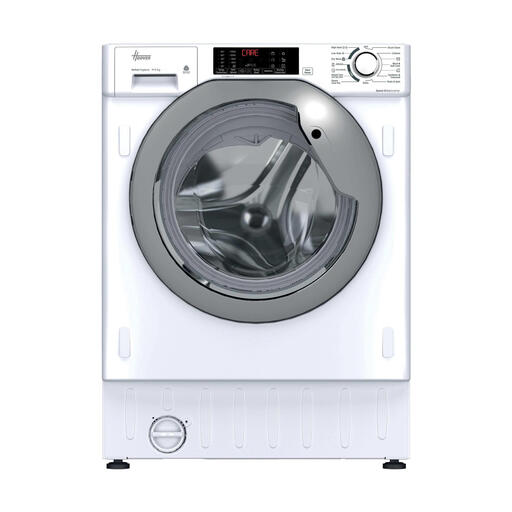
This integrated model is worth comparing if your usual dry load fits within 5 kg and the intended cabinet can accommodate it. The stated washing capacity is 9 kg, so drying a full wash load would require splitting it. Check the load limit of any short programme you plan to use.
 No image available
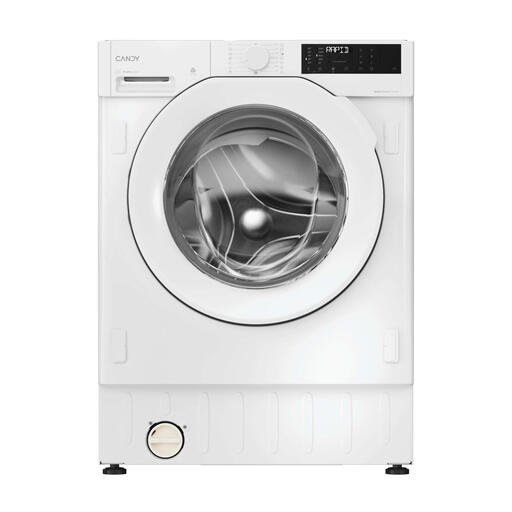
Consider this integrated model where a 6 kg drying limit meets your usual needs and a cabinet-door installation fits the room. Its title states 9 kg washing capacity and 1400 rpm. Before comparing energy performance, check the exact model’s energy label and product information sheet.
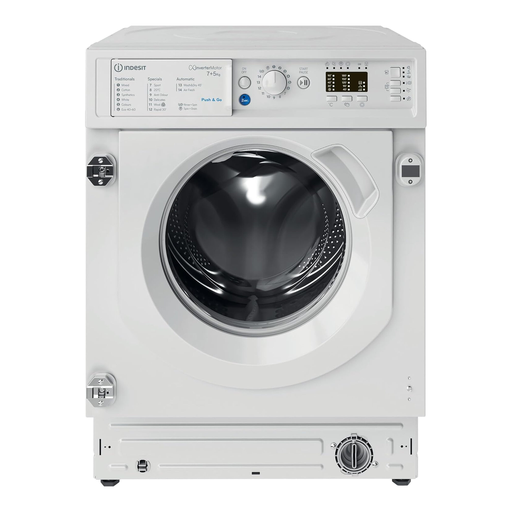 No image available
This integrated model may suit a household whose usual dry load stays within 5 kg and whose cabinetry fits the appliance. Its title states 7 kg washing capacity and a 59.5 cm width. Check the full installation dimensions and any cotton or extra-rinse controls you need.
Only if the load is within the model’s lower drying limit and the selected programme’s limit. Washer-dryers have more washing than drying capacity, so check both figures before relying on an uninterrupted cycle.
Look for a cotton programme that suits the socks’ care labels and consider an extra-rinse option if detergent removal matters to your household. Which? notes that an extra rinse can help remove more detergent; check the exact machine’s controls before buying.
The Beko freestanding washer-dryers described in its UK range guidance use condenser drying and do not need an externally vented hose. Confirm the drying system and installation instructions for the exact model you choose rather than assuming every washer-dryer works the same way.
Compare the figures for the combined wash-and-dry cycle on each model’s energy label and product information sheet. A wash-only rating does not describe the full routine you intend to use.
Choose integrated construction when the appliance needs to sit behind a compatible kitchen door, not simply because you need one machine for two tasks. Which? says integrated washer-dryers offer fewer choices than freestanding models, so check the cabinet fitting and compare both formats if either could work in your space.